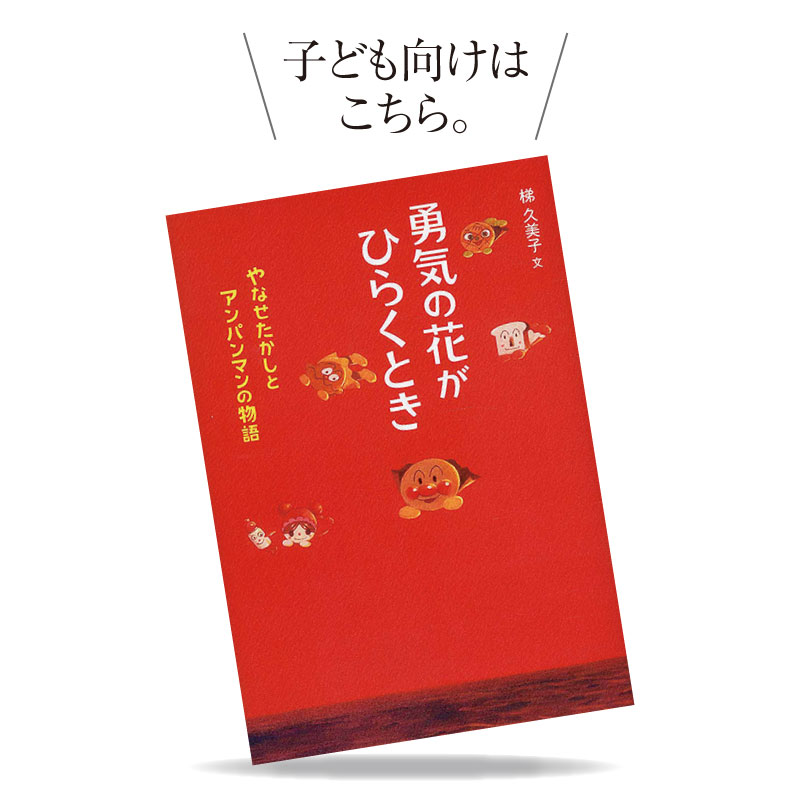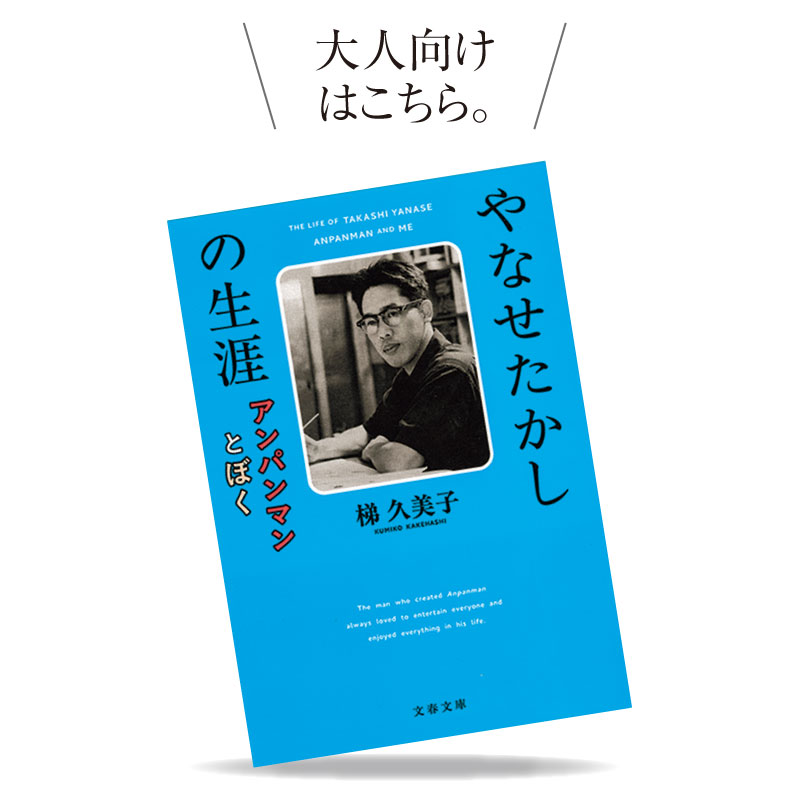



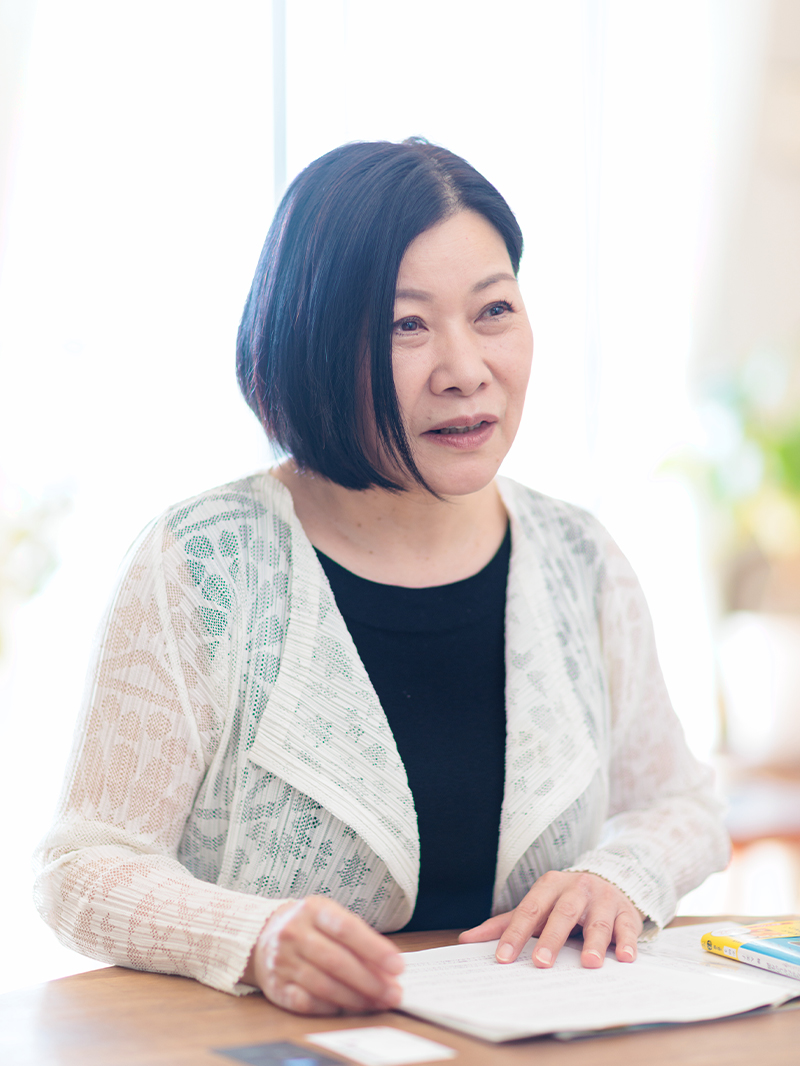
The biography of the creator of the nationally beloved character Anpanman, titled The Life of Takashi Yanase: Anpanman and Me (Bunshun Bunko), was published in March 2025. The author is Kumiko Kakehashi, a non-fiction writer from Kumamoto Prefecture. She is someone who has been in close contact with his personality and creative work ever since she became a member of the editorial staff for the magazine Shi to Meruhen (Poetry and Fairy Tales), where Takashi Yanase served as the editor-in-chief.
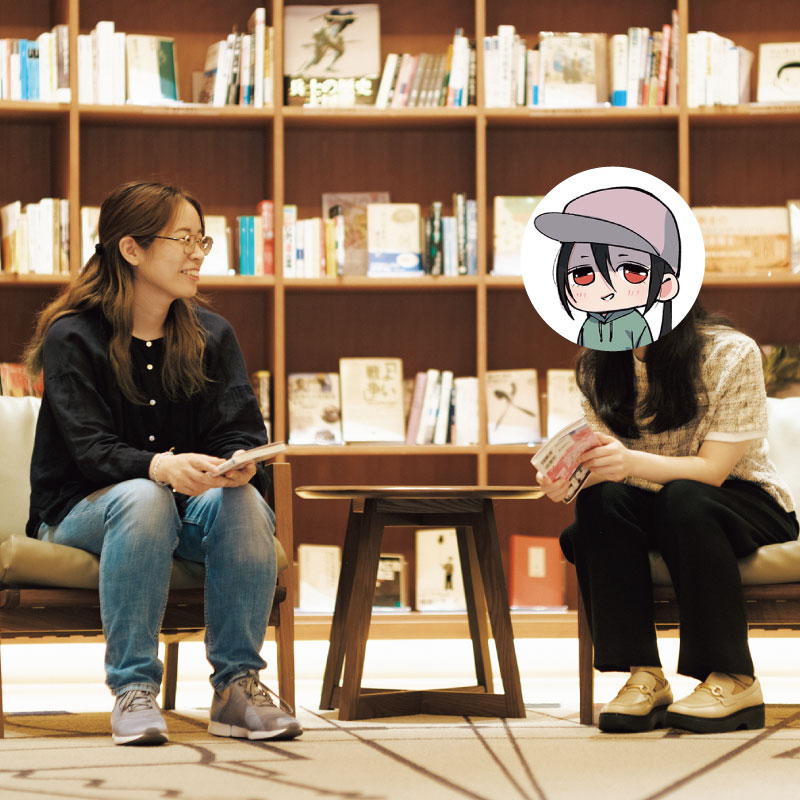
It was early July 2025, a time of lush, vibrant greenery. We visited Ms. Kakehashi, who says, “Sensei is my one and only mentor,” to hear about the lessons she learned from her teacher.
To Editor-in-Chief Yanase’s Shi to Meruhen (Poetry and Fairy Tales).
Twelve years have already passed since Takashi Yanase passed away. As someone who has looked up to him as a mentor and worked alongside him since we first met when I was in my early twenties, I published a biography this spring, hoping to convey the life and philosophy of a man who lived through the entirety of the Showa era. I would like to speak about the things I learned from him.
As a student, I was an avid reader of Shi to Meruhen (Poetry and Fairy Tales), the magazine for which he served as editor-in-chief, and I even submitted my own poems to it. The 1970s, when this magazine was first launched, was the height of the so-called subculture era. While flashy colors and gaudy depictions were the mainstream, Shi to Meruhen, which I discovered in the magazine section of a bookstore, stood out all the more for its simplicity and lyricism. With the “Editor’s Note” placed at the very beginning, it was also refreshing to have Editor-in-Chief Yanase—the “person behind the scenes,” so to speak—addressing the readers in his own words.
Eventually, I found myself wishing to work in such a world, and after graduating from university, I took a job at Sanrio, the publisher of the magazine. This was the catalyst that led me to step into the world of publishing. I was truly fortunate that the first person I encountered in the publishing industry was Mr. Yanase, who was both an outstanding editor and a one-of-a-kind creator.

Kumiko Kakehashi
Non-fiction Writer
Born in Kumamoto City in 1961. After graduating from the Faculty of Letters at Hokkaido University, she worked as an editor for the magazine Shi to Meruhen (Poetry and Fairy Tales) under Editor-in-Chief Takashi Yanase before embarking on her career as a writer.
In 2005, she received the Oya Soichi Non-fiction Award for her debut work, So Sad to Fall in Battle: General Tadamichi Kuribayashi, Commander-in-Chief of Iwo Jima (Shincho Bunko). This book has been translated and published in eight countries worldwide. Her other works include Tamiki Hara: A Portrait of Death, Love, and Loneliness (Iwanami Shinsho) and With This Father: The Years of the Daughters (Bungeishunju).
For her work The One Who Goes Mad: Miho Shimao, Wife of “The Sting of Death” (Shincho Bunko), she was awarded the Yomiuri Prize for Literature, the Minister of Education, Culture, Sports, Science and Technology’s Art Encouragement Prize, and the Kodansha Non-fiction Award.
I believe the most important thing I learned from Sensei was his attitude toward life. No matter who the person was, he would reach out a helping hand if they were in trouble. He usually maintained a certain professional distance and a composed demeanor with business associates, but whenever someone was in a crisis, he would without fail come to their aid.
Before I began researching Sensei again for the biography, I used to think that the best thing a human being could do was to be “kind.” To treat even a complete stranger, whom one might never meet again, with the utmost gentleness. However, I now believe that Sensei was someone who went beyond that and continued to practice “love.” I feel I learned from him that what separates kindness from love lies in whether or not it is accompanied by the courage of self-sacrifice. Because Sensei possessed that kind of courage at all times, he was able to offer and share his own time and heart when he saw someone in need. In other words, he was able to love. I feel that the Anpanman depicted in his picture books is imbued with this very philosophy.
I myself once asked Sensei to create a picture book when I was a freelance editor in my late twenties. Sensei readily agreed, and he even worked on a sequel the following year. However, through my research for the biography, I discovered that at that time, his wife, Nobu, was suffering from a serious illness, and he was incredibly busy with the start of the Anpanman TV anime adaptation. Without showing even a hint of how difficult those times were, he fulfilled my request with his usual professional manner. Once again, I am filled with a deep sense of gratitude.
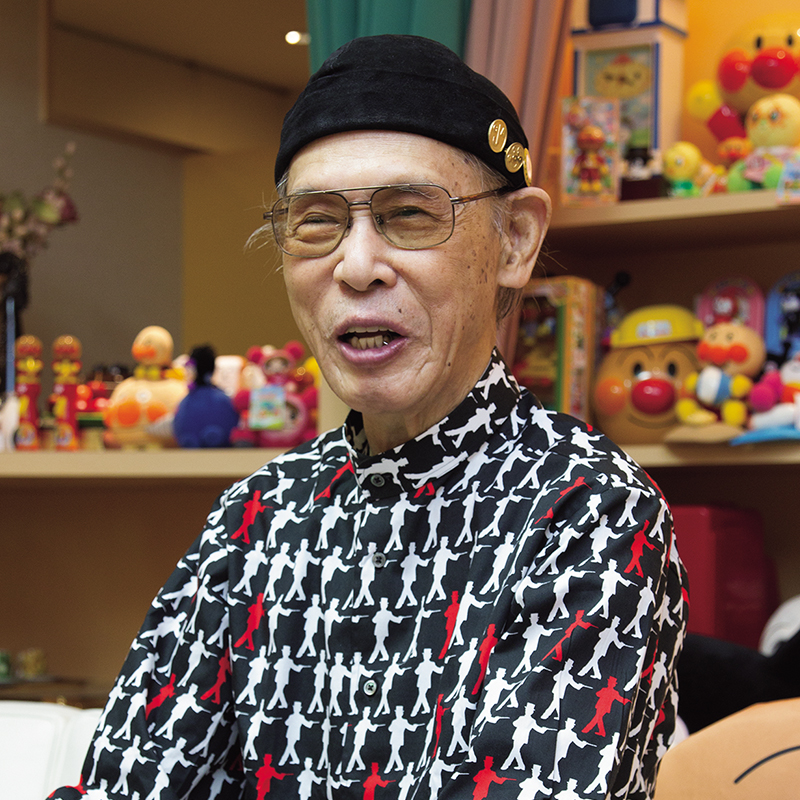
Takashi Yanase
Born in 1919 in Kochi Prefecture. Real name: Takashi Yanase (柳瀬 嵩). After graduating from the Department of Craft Design at Tokyo Higher School of Arts and Crafts (now Chiba University), he joined the advertising department of Tokyo Tanabe Pharmaceutical. He was drafted into military service, and after his discharge, he worked as a magazine editor for the Kochi Shimbun newspaper.
In 1947, he moved to Tokyo. After working in the advertising department of Mitsukoshi Department Store, he became an independent manga artist in 1953. He also worked in stage design, songwriting, and radio and television writing. In 1967, he received the Weekly Asahi Manga Award for Bo-shi. In 1973, he founded the magazine Shi to Meruhen (Poetry and Fairy Tales), published by Sanrio, and served as its editor-in-chief. That same year, he released Anpanman (published in Froebel-kan’s monthly picture book series Kinder Ohanashi Ehon). In 1988, the TV anime series Soreike! Anpanman (Go! Anpanman) began broadcasting. He passed away in 2013 at the age of 94.
(Photo courtesy of Yanase Studio)
The reason for choosing “Manga Artist” as his professional title.
Picture book author, poet, designer, stage designer, and director. Furthermore, as the lyricist for children’s songs such as “Tenohira wo Taiyo ni” (Hands to the Sun), Sensei was a pioneer among so-called “multi-creators.” Yet, the professional title he kept until the day he died was always “Manga Artist.”
I used to wonder why that was, but I realized something while conducting extensive research for his biography. It was the feelings of his brother, Chihiro, who was an irreplaceable presence for Sensei. When Sensei was in his third year of junior high school, he entered a newspaper manga contest and was awarded first prize. When he gave Chihiro some pocket money from that prize, Chihiro reportedly said with a happy smile, “Sorry, Brother, I’ll be counting on you again.” Sensei never forgot that for the rest of his life.
Eventually, Chihiro died in the war as a Navy officer. “You will surely become great, Brother.” “Brother, please live and keep drawing.” The only time Sensei was able to give money he had earned through his drawings to the brother who believed in his talent without a shadow of a doubt was during that manga contest. He had wanted to give him more. This feeling remained within Sensei forever.
Whether it was for his family, his comrades during his military service, or his friends from his student days, Sensei had a tendency to try to live his life by carrying the feelings and wishes of those who had passed away. I believe that, too, was a form of Sensei’s love.
I believe that the reason he kept “Manga Artist” as his title throughout his life was because, to Chihiro, he was a manga artist—and it was a resolution to live on by carrying the wishes of the brother who had supported him.
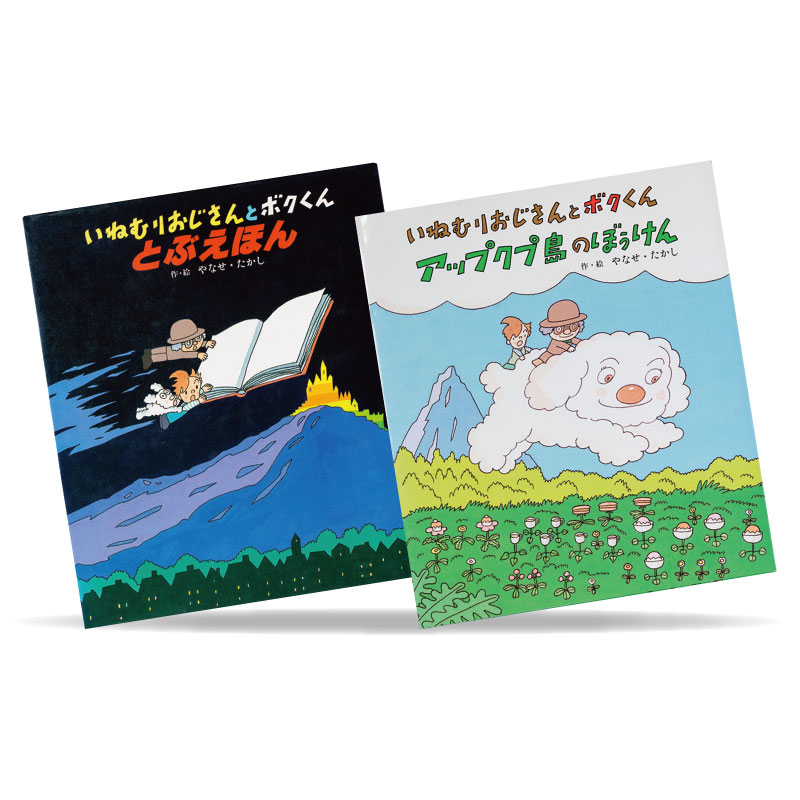
Upon a request from Ms. Kakehashi, who had left Sanrio and become a freelance editor, Takashi Yanase created the picture book “The Dozing Old Man and Boku-kun: Adventure on Upukupu Island” (right) in 1989. The following year, the sequel, “The Flying Picture Book” (left), was also published. The character designs, rich colors, and manga-style panel layouts are striking. They are currently out of print.
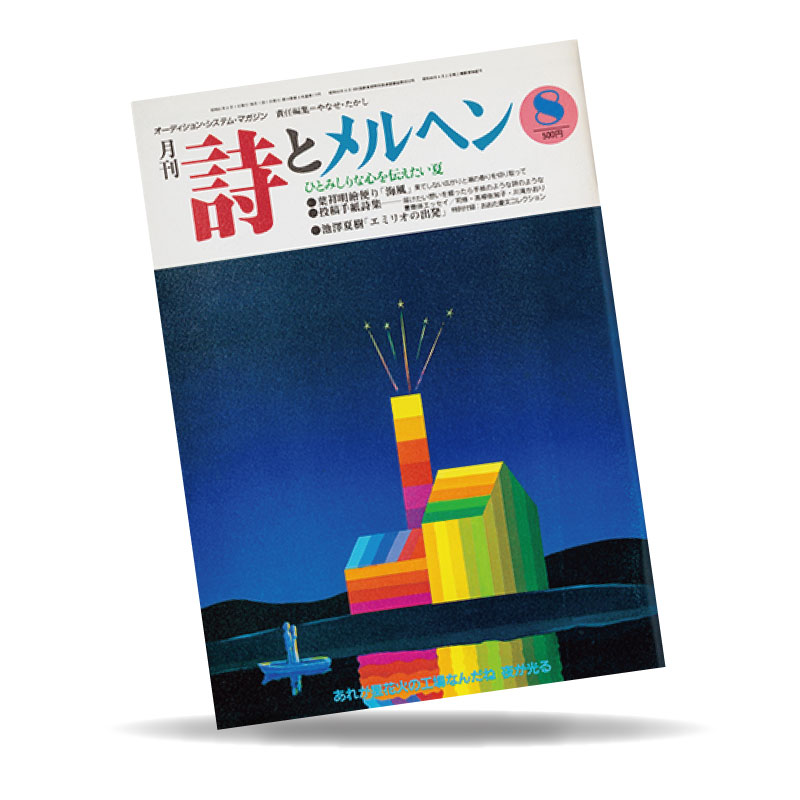
The magazine Shi to Meruhen (Poetry and Fairy Tales), where Ms. Kakehashi learned editing under Editor-in-Chief Takashi Yanase.