


Did you know that there is a popular specialty soup shop in Yamaga City, Kumamoto Prefecture?
The soups, carefully crafted using fresh vegetables harvested from their own fields, have become a topic of conversation, drawing many visitors from both within and outside the prefecture.
Situated in the countryside, this peaceful shop known as “Kochi Biyori” is a renovated traditional Japanese home over 100 years old.
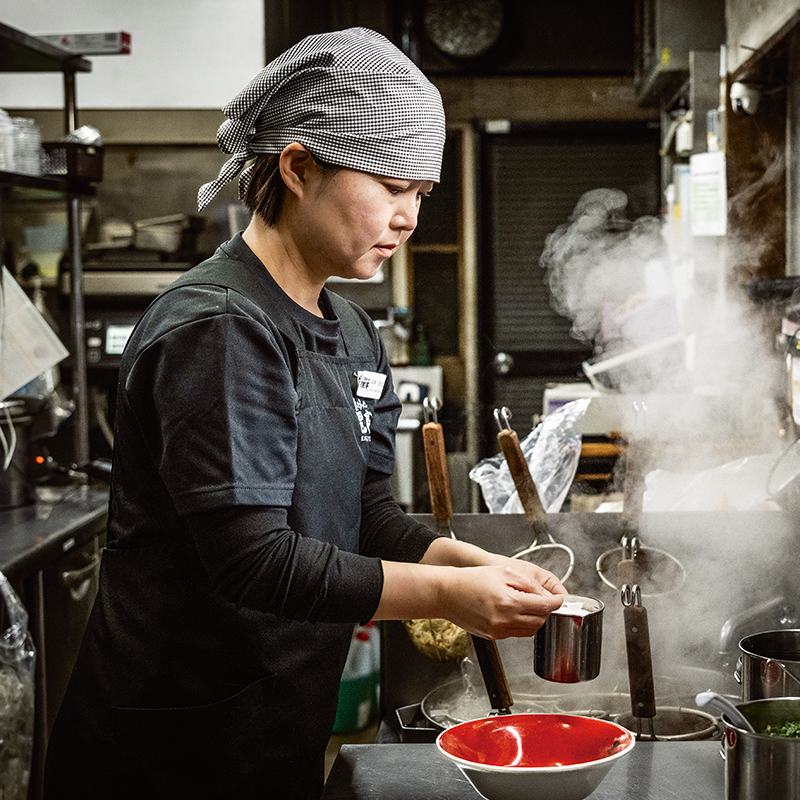
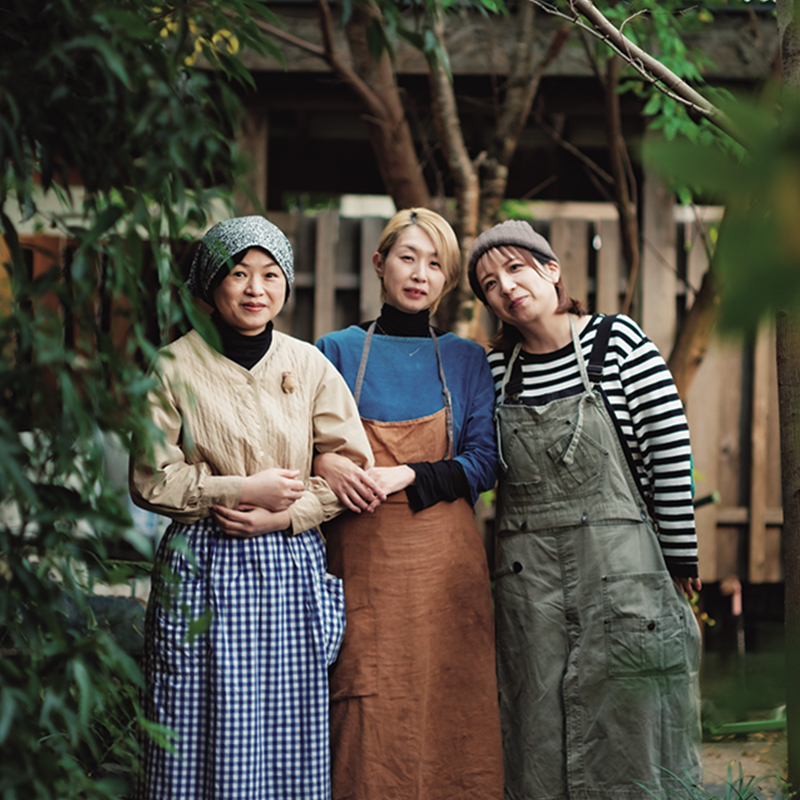
Inside the stylish interior, which looks as if it stepped right out of a picture book, wonderful chefs—who also look like they belong in a storybook—simmer and stir the soup, pouring each bowl with an abundance of love.
Now, let’s take a look together at the fairytale-like world of this soup shop.

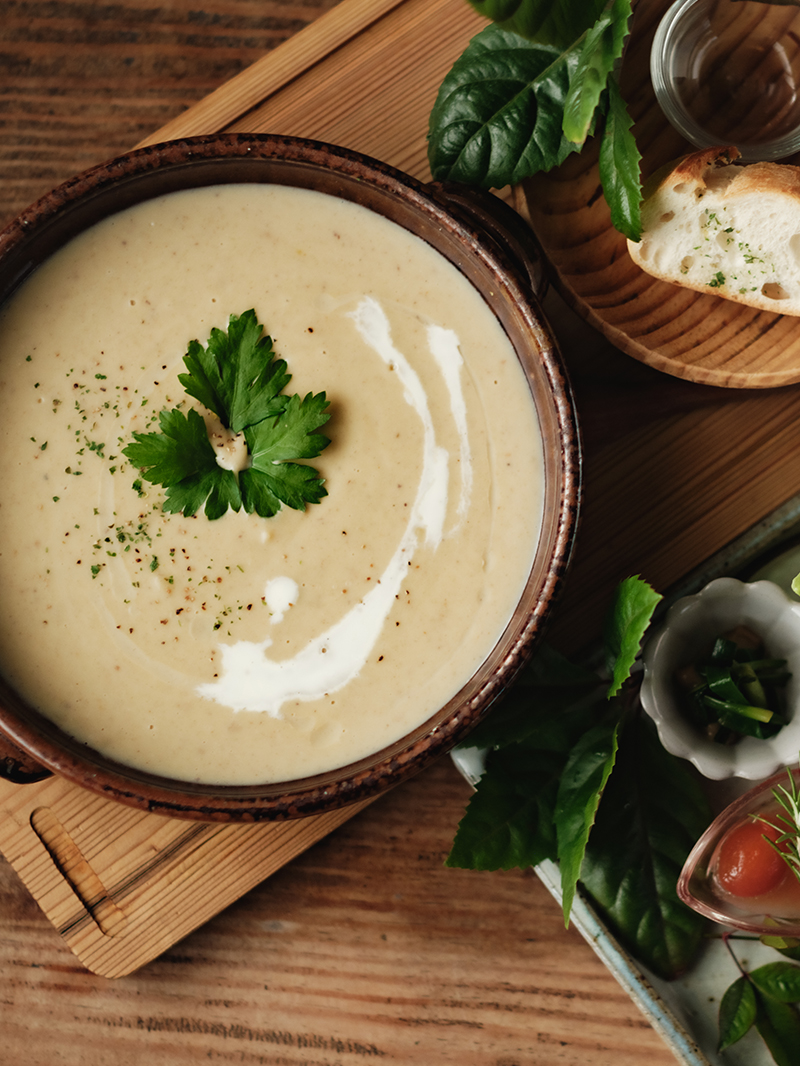
Yamaga Japanese Chestnut Potage 2,000 yen (tax included) A milky soup finished with chestnuts, onions, fresh cream, milk, and salt.
The fresh vegetables are from the family farm.
On the day of the interview, before visiting the shop, I was shown the farm that the owner, Ms. Eri Yamabe, takes such pride in. The farm is located at her family home, about an hour’s drive from Yamaga, where the shop is situated. It is her mother who manages the farm. “I believe that food safety is vital,” says Ms. Yamabe. “After all, there is a completely different level of reassurance when it comes to things my own mother has raised with such devoted care.”
On this day, they were harvesting winter vegetables such as turnips and Chinese cabbage. As the sunlight hits the morning-picked vegetables, they sparkle brilliantly, making me feel my throat gulp in anticipation. According to Ms. Yamabe, the freshness is such that “the moment you cut them, the vegetables themselves seem to snap open with juiciness.”
Why do these vegetables look so incredibly delicious? As the interview progressed, the secret began to reveal itself. For the sake of the mother, Ms. Yamabe’s father plows the fields with a tractor and handles the weeding, striving to keep the farm beautiful. It is all for the sake of her mother’s smile. The mother, in turn, is devoted to pesticide-free cultivation for the sake of those who eat the food, paying close attention to color and shape; she even staggers the planting times of the same vegetables to ensure she can provide Ms. Yamabe with a constant supply of fresh produce. Then, Ms. Yamabe faces the vegetables and “talks” to them, thinking, “I’d like to serve this one today; perhaps this one tomorrow,” harvesting only the amount needed for that day. In her desire to please her customers, she fills her car to the brim and heads back to the shop.
Here, consideration for people takes priority over production efficiency. I felt that this very philosophy is what leads to the creation of delicious vegetables that bring joy to those who eat them.

The vegetables harvested today include white turnips, red turnips, Chinese cabbage, daikon radish, okra, Kintoki carrots, mustard greens, lettuce, tomatoes, shiitake mushrooms, and more.

Hand-harvesting wild-growing Italian basil. It is said that when added to the soup, it adds a distinctive accent to the flavor.
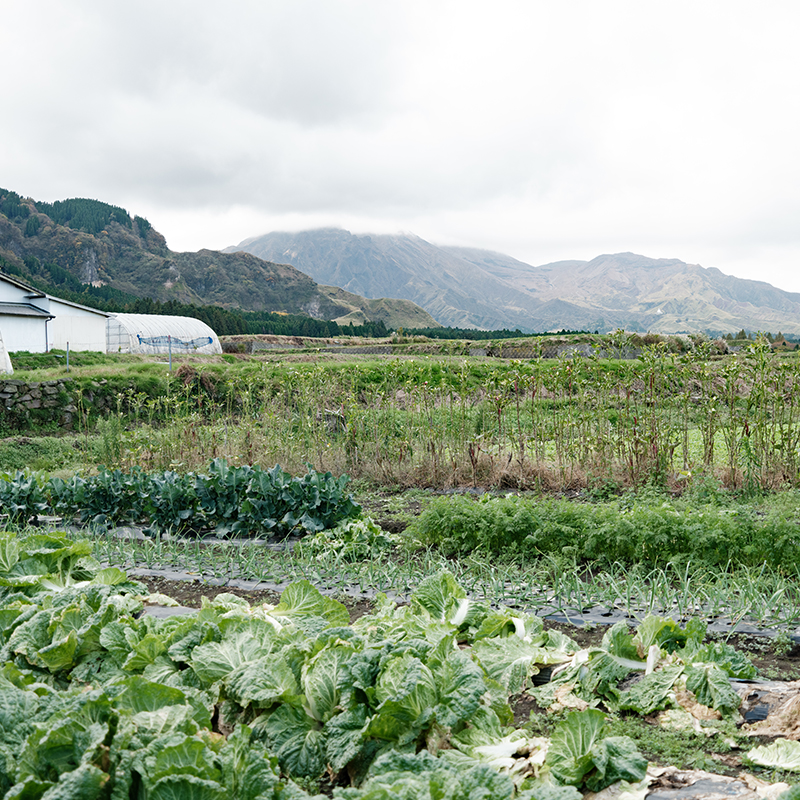
The family farm is overlooked by the Five Peaks of Mount Aso. Even small-sized vegetables are chopped and mixed into the soup or used to add a splash of color to the plate.

Ms. Eri Yamabe harvesting vegetables at her family farm in Aso City. Committed to pesticide-free farming, vinegar is used for soil disinfection and as a pest repellent. Her 71-year-old mother, who still works in the fields today, reportedly hand-makes everything from pickles and dressings to yuzu kosho.
Drinking it satisfies the body and lightens the heart.
With my appetite nicely whetted by the farm interview, it was finally time to taste the soup at the shop. First, I had the “Yamaga Japanese Chestnut Potage,” recommended for this season (the interview took place in November). I caught the aroma of chestnut with the very first spoonful. The moment it entered my mouth, I was struck by its impact. It was sweet, rich, and so delicious that it warmed me to my very core. The fluffy texture of the chestnuts and the creamy soup coated my tongue. In fact, Yamaga City (*) is one of Japan’s leading chestnut-producing regions and boasts the highest production volume in Western Japan. Yamaga Japanese chestnuts are a local specialty used even by famous hotels and confectioneries outside the prefecture. This luxurious potage made by simmering them is apparently so popular that some people visit from outside the prefecture specifically for it.
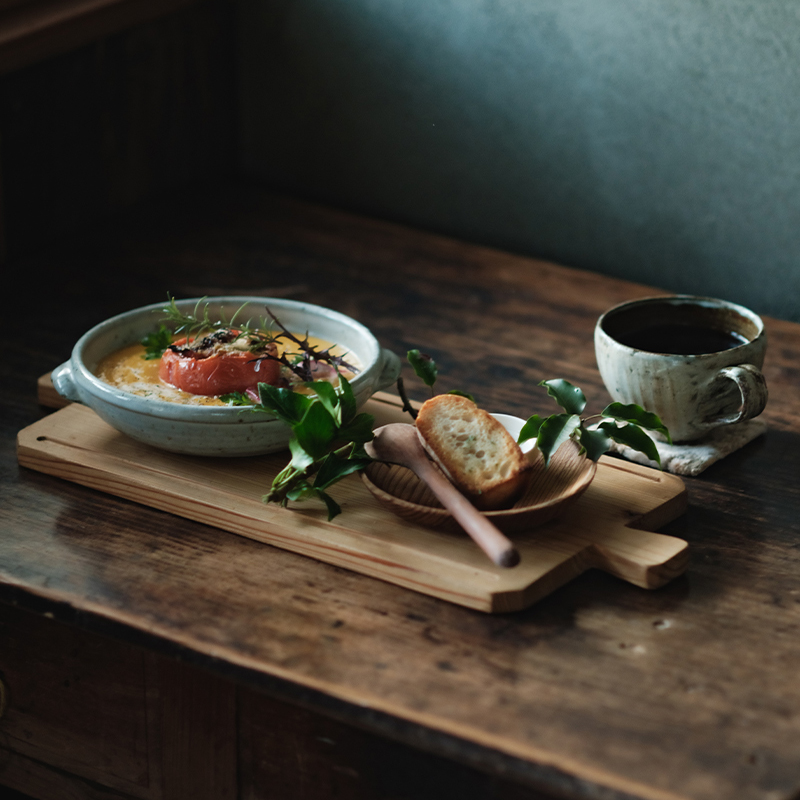
Next, I had the “Pumpkin Potage with a Whole Floating Tomato,” which uses vegetables harvested that day from the mother’s farm. The tomato is slow-roasted in the oven and can be added as a topping to any soup of your choice for an additional 200 yen. The acidity of the tomato joined the sweetness of the pumpkin, resulting in a flavor that was refreshing yet substantial. Combined with the savory aroma of the roasted tomato, I finished the entire bowl in no time.
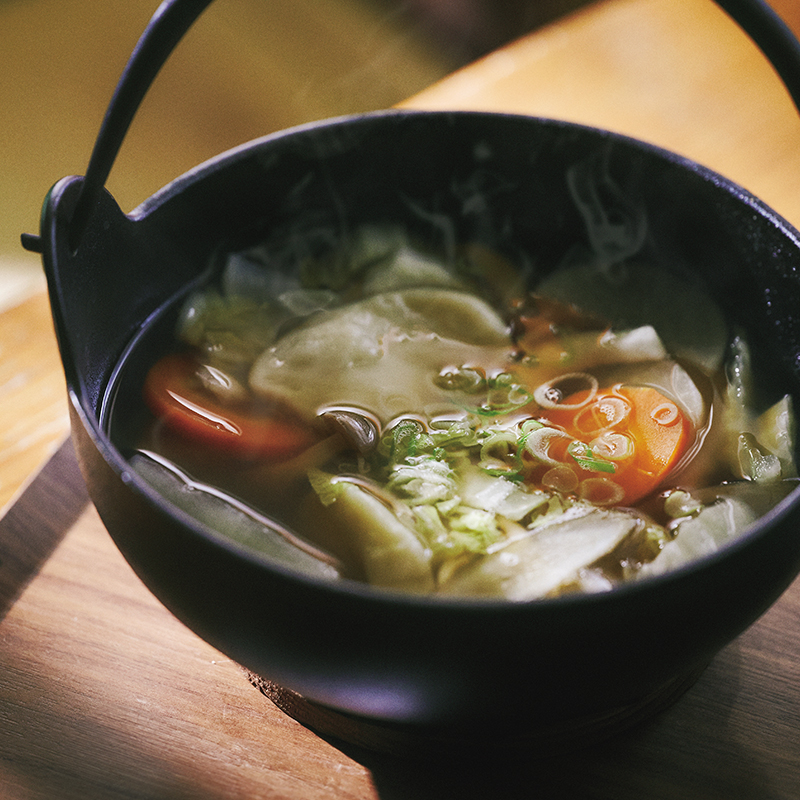
Finally, I had the “Sea, Forest, and Town Bakery Soup,” which allows you to fully enjoy the vegetables from the farm. This features clam chowder ingredients like shrimp and squid inside a boule (a round French loaf) baked by a local bakery. The colorful vegetables arranged around it were freshly picked that day. Between the gentle flavor of the clam chowder and the satisfying volume reminiscent of an hors d’oeuvre, my body was satisfied and it felt as though my heart grew lighter.
(*) Information based on the Ministry of Agriculture, Forestry and Fisheries’ 2022 Statistics on Fruit Production and Shipment, and the 2022 Kumamoto Prefecture Fruit Promotion Results.
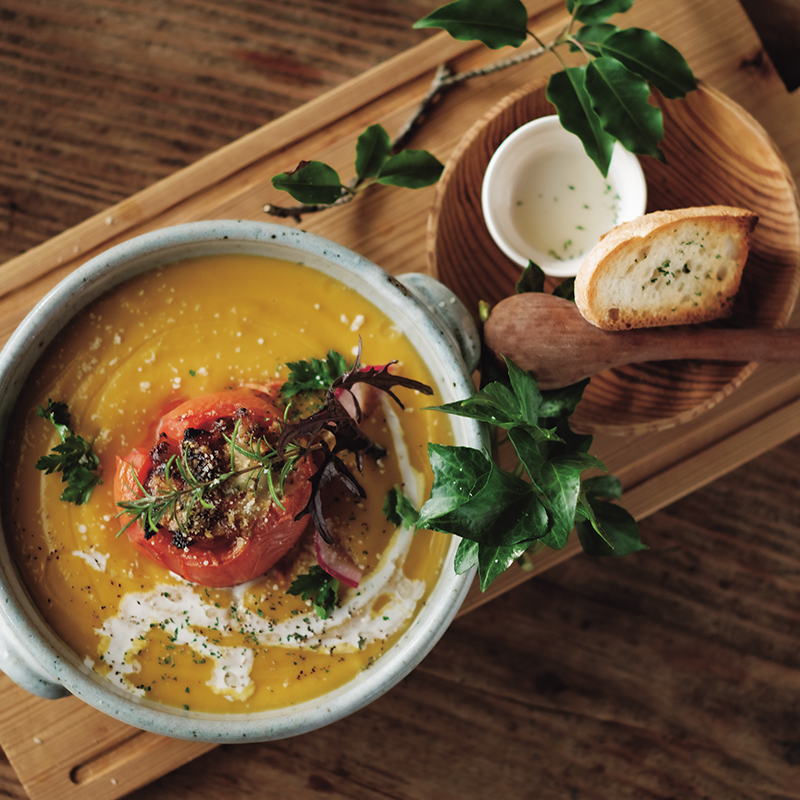
Pumpkin Potage with a Whole Floating Tomato 2,050 yen (tax included)
A sweet potage finished with pumpkin, onion, butter, and fresh cream.
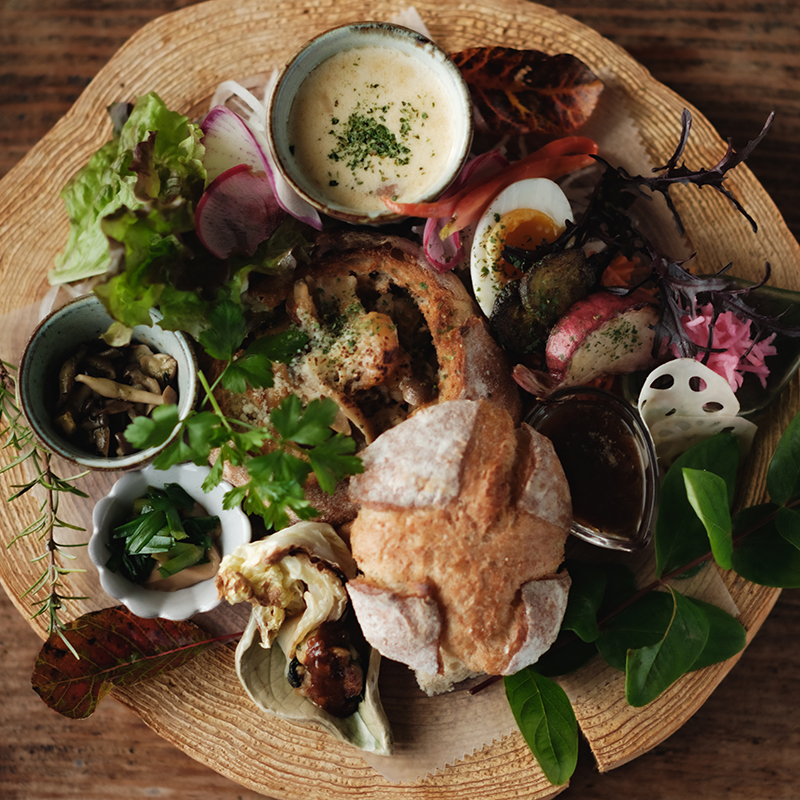
Sea, Forest, and Town Bakery Soup 2,300 yen (tax included) The seafood clam chowder goes perfectly with the bread and vegetables.
Abundant love infused into a single bowl of soup.
On the “Kochi Biyori” Instagram page, Ms. Yamabe shares her heartfelt thoughts. Many of her posts are addressed to family members and to women who are currently providing nursing care or raising children. “Please remember us when you are tired,” she writes, in messages overflowing with a desire to bring vitality to those in need of it. Her own life history is the reason she has come to share so many of these words.
Born in Aso, Ms. Yamabe moved to Yamaga upon her marriage. Driven by a desire to live her life through connections with others, Ms. Yamabe—who had originally studied design—opened a boutique in 2012, featuring clothing and accessories crafted by various artisans. In 2013, she expanded the business to include a cafe, running it alongside her brother and cousin. She would often stand in the shop with her child strapped to her back. There were many difficult days, including times when she had to close the shop suddenly because her child ran a fever, but she was encouraged by the joy of meeting and interacting with people. However, in 2020, amidst the COVID-19 pandemic, she felt it was time to reconsider her approach and brought the boutique and cafe to a close.
After closing the shop, as she wondered, “What can I do now?” the image and words of her late husband crossed her mind. Her husband, who had lost his sense of taste due to chemotherapy, reportedly cried, saying, “I want to eat that, I want to eat that,” whenever he saw gourmet programs or commercials for fried chicken. While these heart-wrenching memories resurfaced, she realized that even those suffering from illness could enjoy soup and find it “delicious,” perhaps providing them with a sense of strength.
Thus, the soup specialty shop in Yamaga began. On May 21, 2021, the day “Kochi Biyori” opened, she wrote the following on Instagram:
“We will no longer overextend ourselves. Because doing so will surely create a slow and gentle time for our customers. We will stand firm, in both heart and soul, to be a shop that can be of help to someone.”
Today, “Kochi Biyori” is still gently simmering its soup, bit by bit. Praying for the vitality and happiness of every person who drinks it.
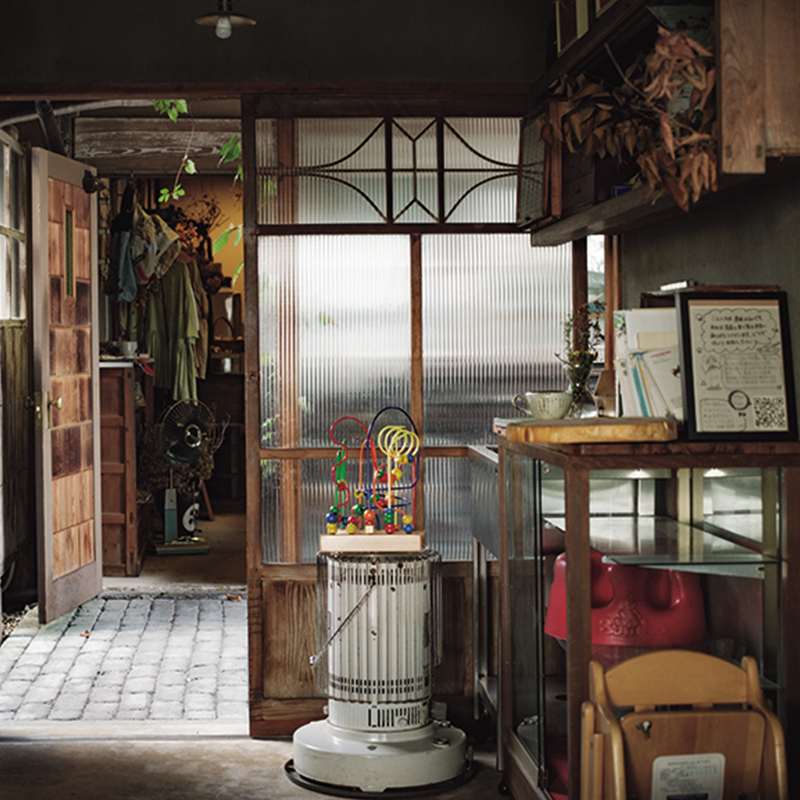
The shop’s interior was originally a medical clinic. When she visited the property, it is said that the breeze on the engawa veranda was pleasant and she felt a sense of warmth.
Time and effort are love.
That is infused directly into the soup, just as it is. With this conviction in mind, Ms. Yamabe travels back and forth between Aso and Yamaga.