


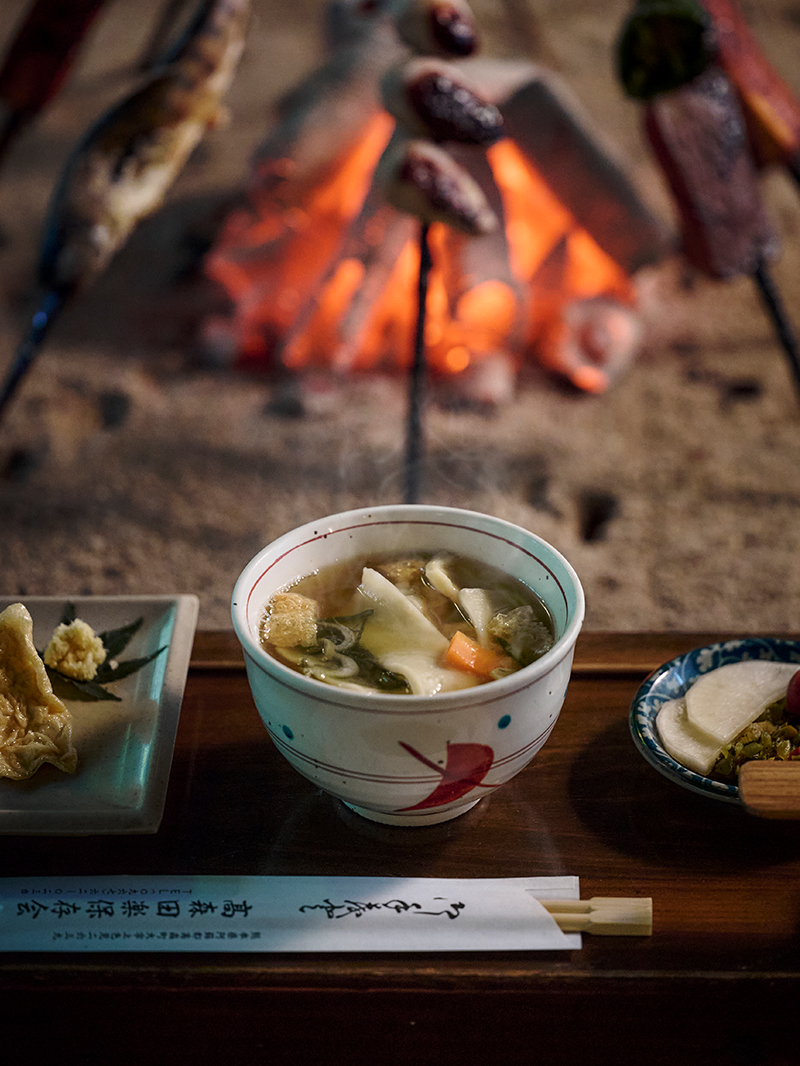
In the Kumamoto dialect, “Dago-jiru” refers to “Dango-jiru” (dumpling soup). As a local dish that is easy to prepare and keeps you feeling full, it has long been cherished and eaten during breaks in agricultural work and other occasions. Within the prefecture, various types of dago-jiru exist across different regions, each possessing its own unique charm. On this occasion, we will introduce two varieties: one from Aso and one from Kumamoto City. Wouldn’t you like to try some, too?
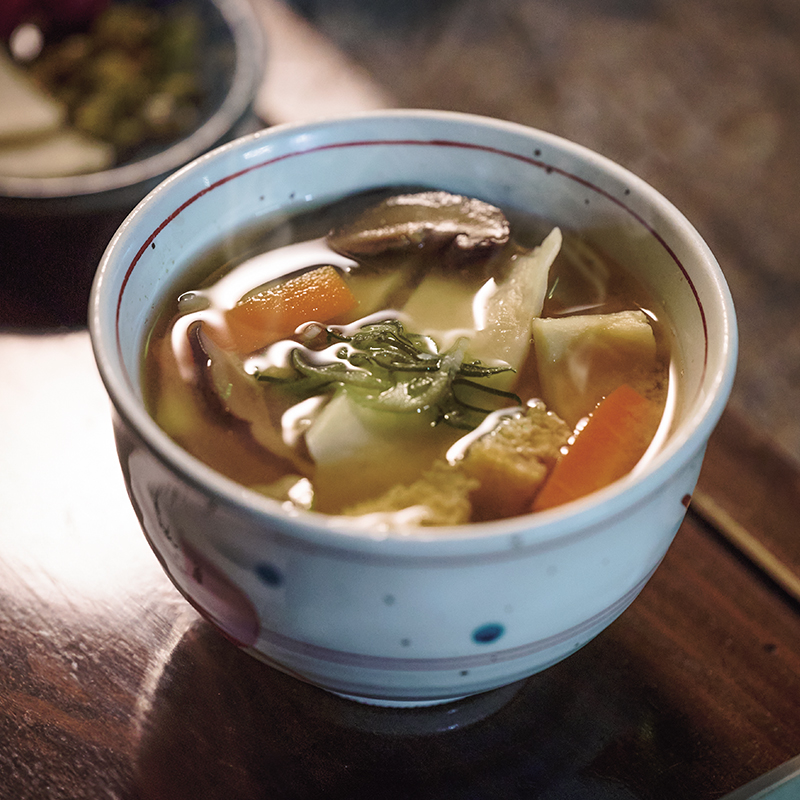
The Dago-jiru, filled with plenty of wild mountain vegetables harvested locally in Aso, has a gentle flavor. It warms you to your very core.
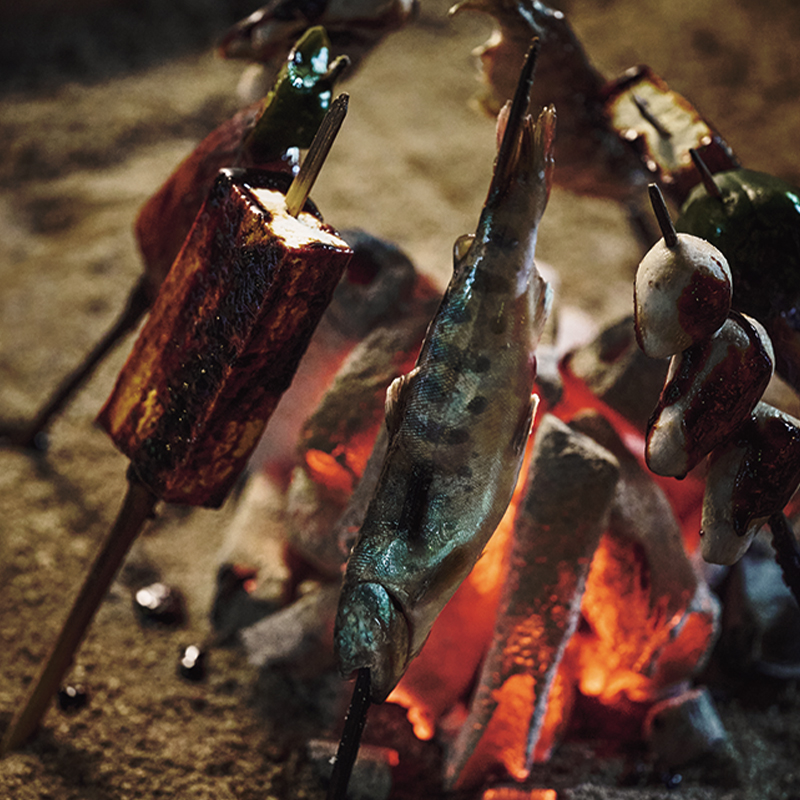
While warming yourself by the charcoal fire of the irori (sunken hearth), you can enjoy the savory aroma of the dengaku miso as it roasts fragrantly.
Aso’s food culture.Won’t you try the wild mountain vegetable dago-jiru and Takamori dengaku?
Takamori Dengaku, a tradition passed down in Takamori Town, located in the easternmost part of Kumamoto Prefecture. It is a local specialty that originated in the Kamishikimi district of the same town.
The “Takamori Dengaku Preservation Society,” established to preserve this tradition for future generations, also puts great effort into the heritage and promotion of Aso’s dago-jiru. In Aso, dago-jiru filled with plenty of local wild mountain vegetables has traditionally been enjoyed alongside dengaku. The society regards this as an integral part of Takamori’s food culture and reportedly serves the soup together with the dengaku.
We would like to share what we discovered through our interview about Aso’s dago-jiru and Takamori dengaku.
A local cuisine that even international tourists come to enjoy.
Takamori Town once flourished as a post town in Minami Aso. In the Kamishikimi district, located slightly away from the town center, lies the restaurant “Takamori Dengaku Preservation Society” (hereafter referred to as the “Preservation Society”). Inside, there are more than 40 irori (sunken hearths). The sense of comfort brought by the warm glow of the charcoal fire and the savory aroma of grilled miso whets the appetite.
On the fusuma (sliding doors) of the traditional tatami room, the words “Is it not pleasant to have friends coming from distant quarters?” (from the Analects of Confucius) are inscribed. True to those words, it is a popular establishment that attracts tourists even from far across the ocean. From Taiwan and China to various European nations, there is an endless stream of people visiting from all over the world to enjoy a meal here.
The dago-jiru (dumpling soup) I ordered has been served. It is a fragrant soup filled with an abundance of flavorful homemade miso and freshly picked local mountain vegetables. The dago (dumplings) have thoroughly absorbed the broth, to the point that the flavor overflows with every single bite.
“The miso for our dago-jiru reached its current flavor after continuous trial and error to create something our guests would enjoy. Because we serve such large quantities, we prepare it every single day,” says the proprietress, Ms. Waka Honda.
She also shared that they take four hours to prepare the dashi (stock) using ingredients such as iriko (dried sardines) and dried shiitake mushrooms. Furthermore, she told me that they only use vegetables sourced that very morning. Knowing these details before partaking, the creator’s love for the dish is truly conveyed, making the deliciousness feel all the more exceptional.
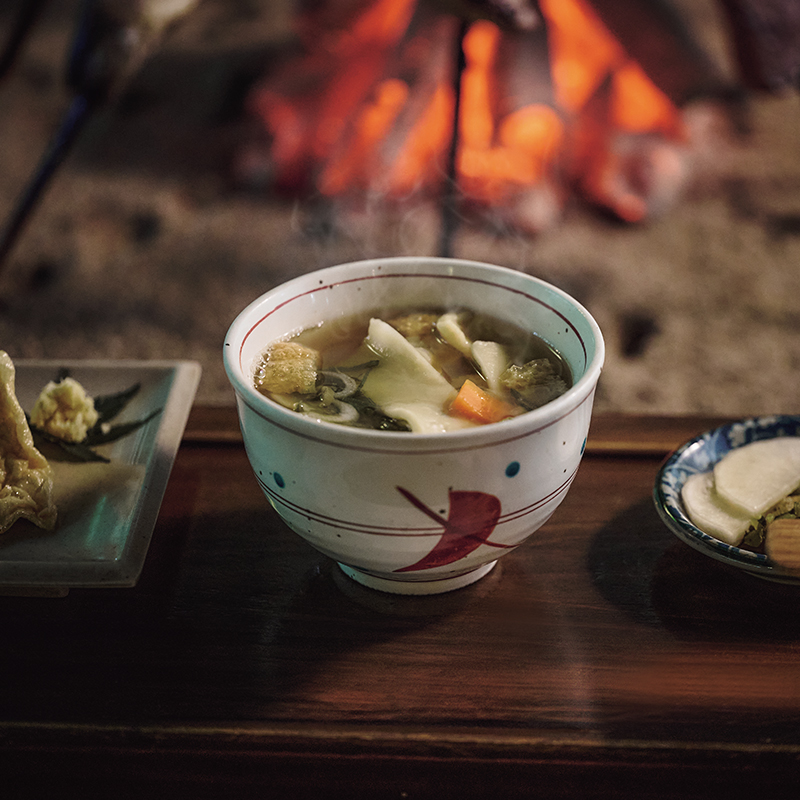
Takamori Dengaku Course 3,000 yen (tax included)
A course meal that allows you to fully enjoy the cuisine of Aso, featuring dengaku (miso-glazed skewers) of konjac and vegetables, tofu, Tsurunoko-imo (a local variety of taro), and yamame (mountain trout), accompanied by nama-age (deep-fried tofu), corn rice, pickles, and wild mountain vegetable dago-jiru (dumpling soup).
The History of Takamori Dengaku and the Wishes of its Custodians.
The dengaku served alongside the dago-jiru is also one of Aso’s most representative local dishes. The ingredients include the “Tsurunoko-imo” (a specialty taro of the Kamishikimi district), konjac, vegetables, tofu, and yamame (mountain trout). Each one is crispy on the outside and fluffy on the inside. The natural flavor of the ingredients, the savoriness of the miso, and a subtle sweetness harmonize beautifully. Served as a standalone dish was the nama-age (thick fried tofu). Its juicy flavor is highly popular, and it is said that some customers travel from afar specifically to eat it.
Takamori Dengaku is inseparable from Aso’s food culture, much like dago-jiru. Intrigued by its deliciousness and origins, I asked the second-generation owner of the Preservation Society, Mr. Kenichi Honda, and his son and third-generation successor, Yu, about its history.
The beginnings of Takamori Dengaku date back approximately 700 years to the construction of Ryorenji Temple in Kamishikimi. To celebrate the temple’s completion and express gratitude for a bountiful harvest, the occasion was marked with dengaku. As a dish for surviving the winter, ingredients such as Tsurunoko-imo, shiitake mushrooms, tofu, udo (mountain asparagus), tara-no-me (aralia sprouts), and sawagani (river crabs) were skewered on bamboo, coated with miso, and grilled over the charcoal fire of an irori (hearth).
The Tsurunoko-imo, which is firm and does not fall apart when cooked, grows only in volcanic ash soil, making it a precious crop for the people of Kamishikimi. However, in 1953, a major flood occurred along the Shirakawa River basin, centered around Aso. Tsurunoko-imo farmers were on the brink of extinction. It was then that thirteen residents of Takamori Town, including the first-generation owner of the Preservation Society, Mr. Koryu Honda, took a stand.
Driven by a desire to pass down the town’s culture to future generations, Mr. Koryu Honda began the “Dengaku Matsuri” (Dengaku Festival). Awareness gradually spread, and eventually, the Preservation Society established a permanent restaurant.
All the ingredients for the Preservation Society’s dengaku are produced by local growers. According to Mr. Tatsuzo Takeuchi, a Tsurunoko-imo farmer in Takamori Town, these taro are a rare specialty that does not enter the general market; they are consumed by the farmers at home or sold only to local dengaku restaurants.
Takamori Dengaku, with 700 years of history. Along with dago-jiru, it is a dish highly recommended for enjoying while conversing with others. Why not try it for yourself, gathering around the irori and chatting with your loved ones?
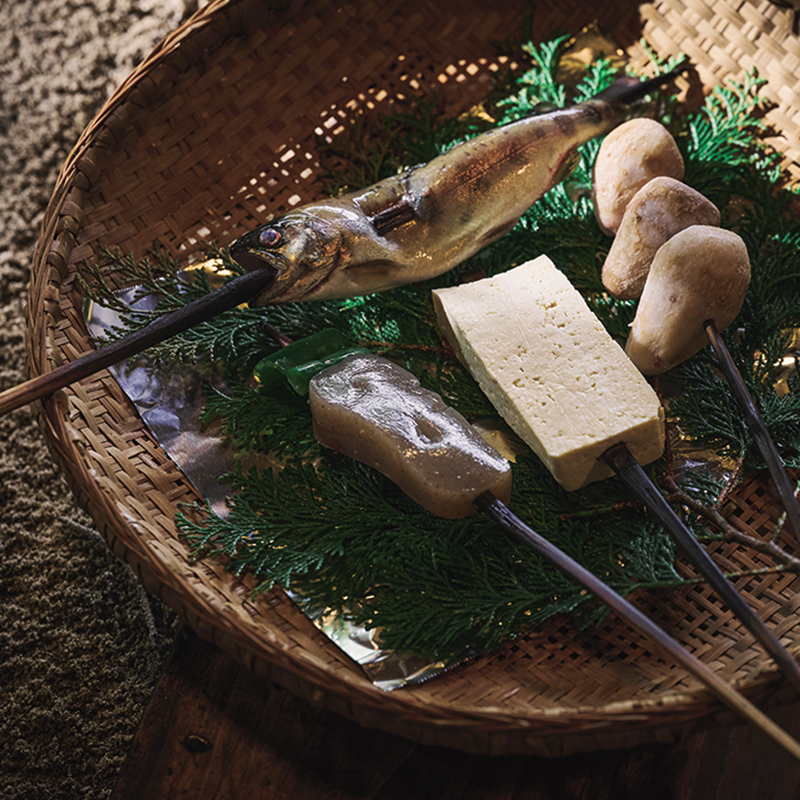
All of the ingredients for the dengaku are produced in Aso.
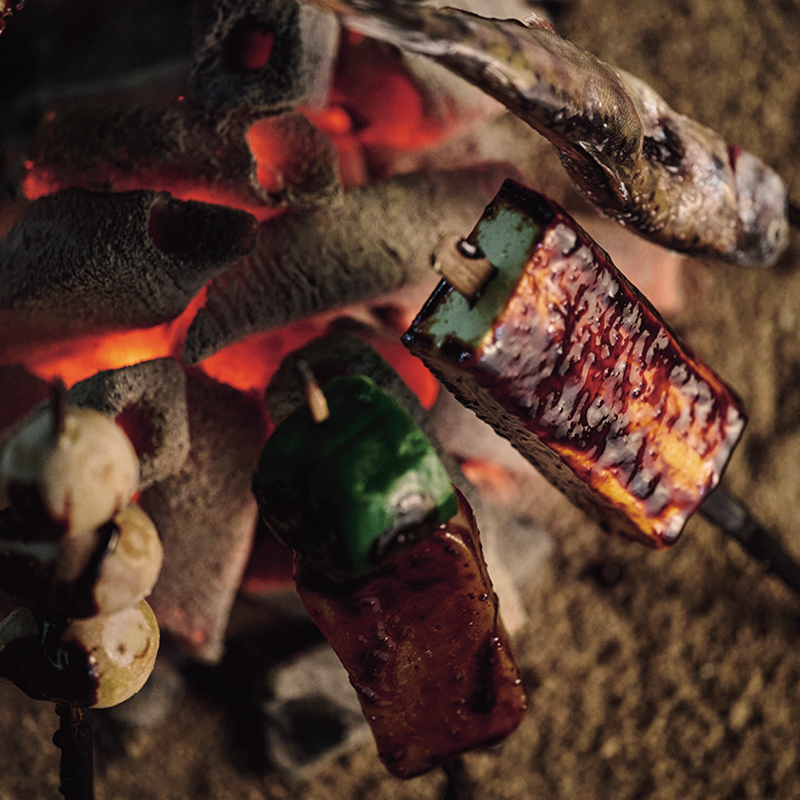
They are grilled until crispy using high-heat charcoal produced within the prefecture.
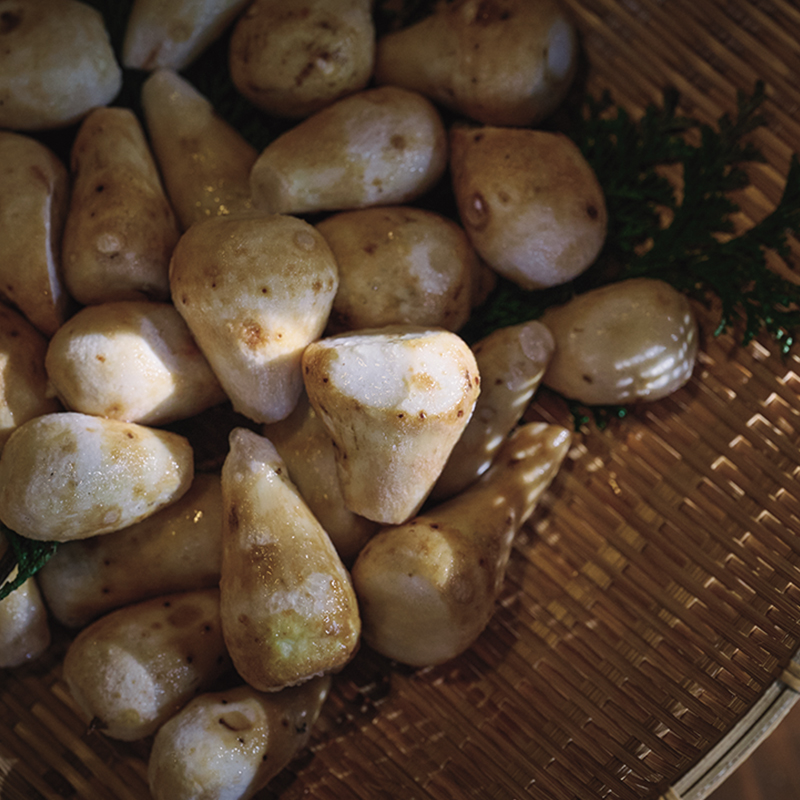
“Tsurunoko-imo,” a local specialty of the Kamishikimi district in Takamori Town.
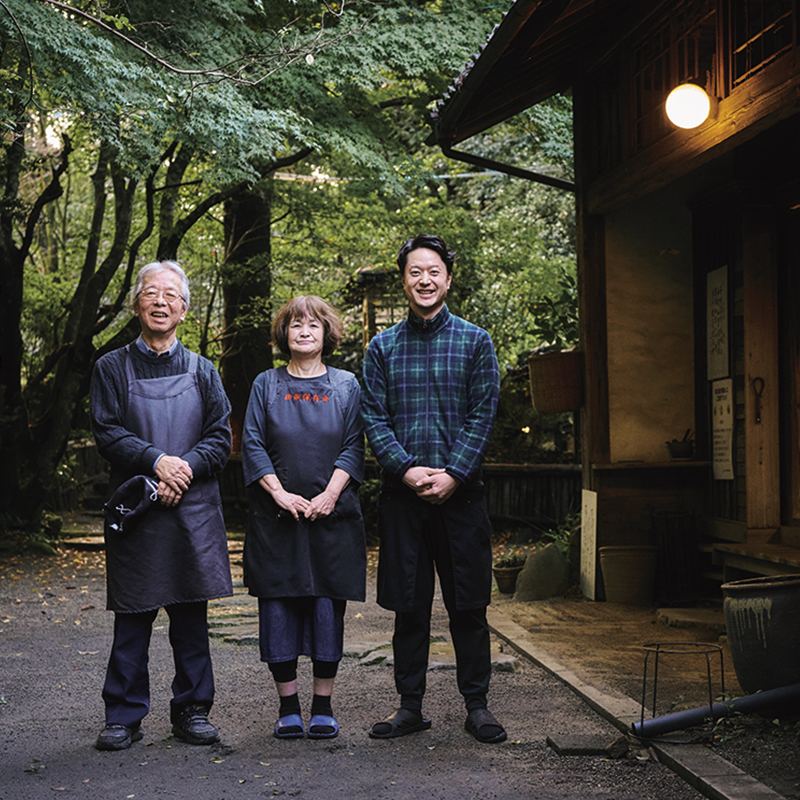
From left: Kenichi Honda, Waka Honda, and Yu Honda.
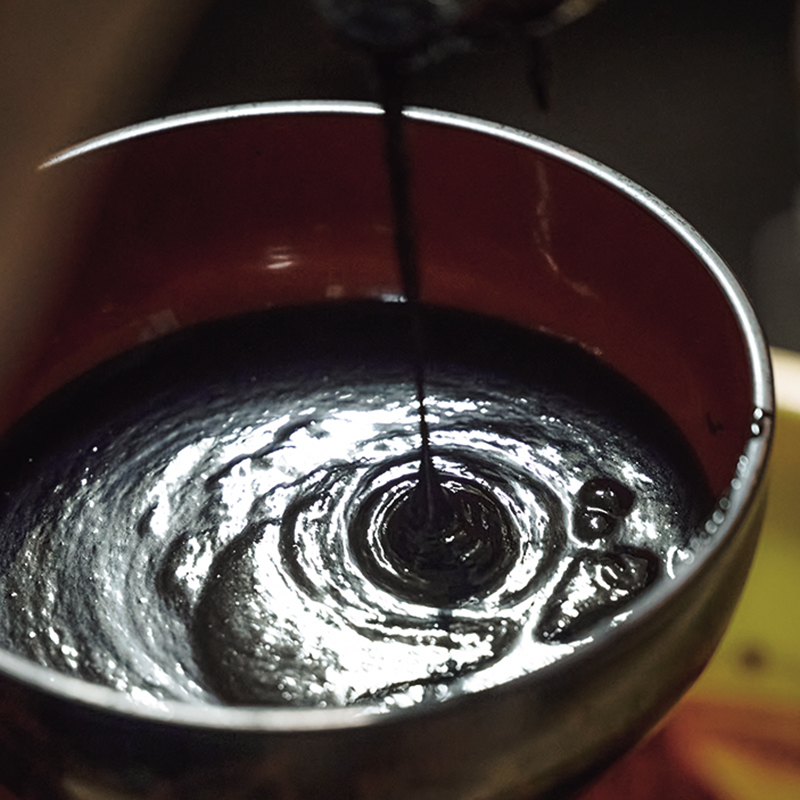
Homemade dengaku miso from the “Takamori Dengaku Preservation Society.”
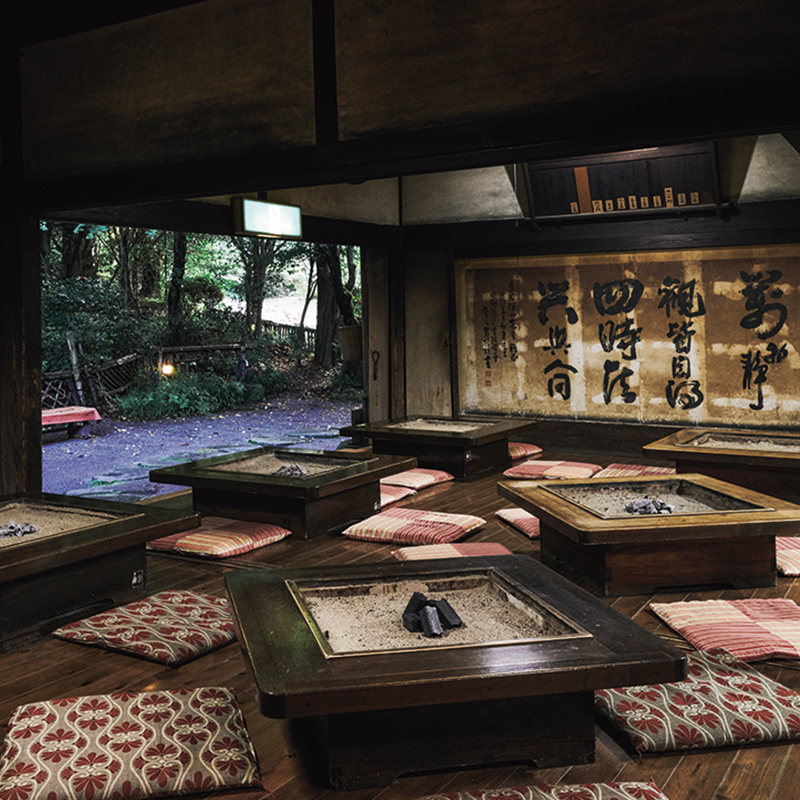
Built 150 years ago. The interior is atmospheric, with a sense of history that can truly be felt.