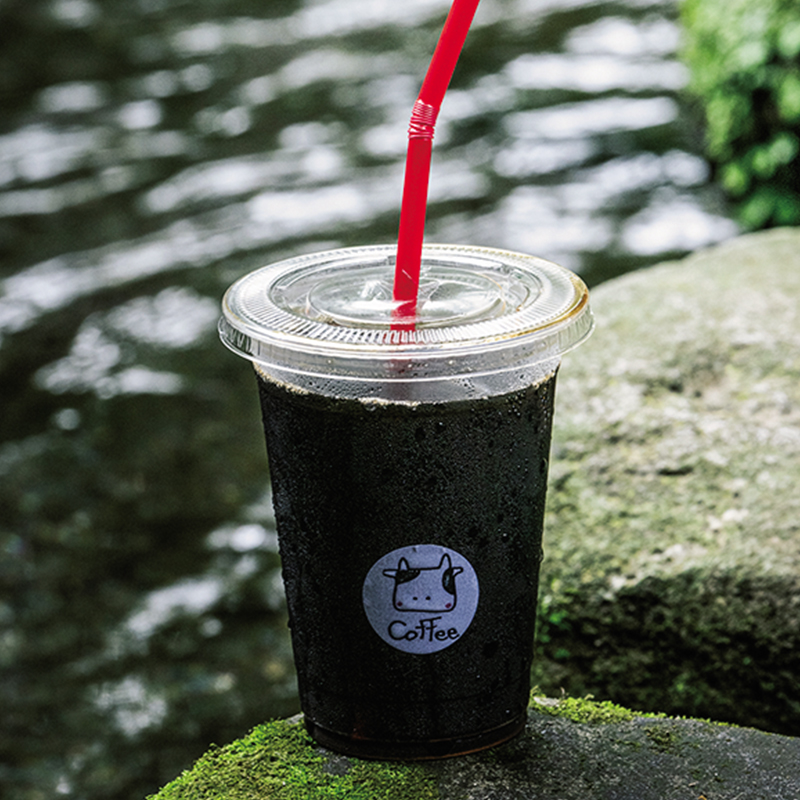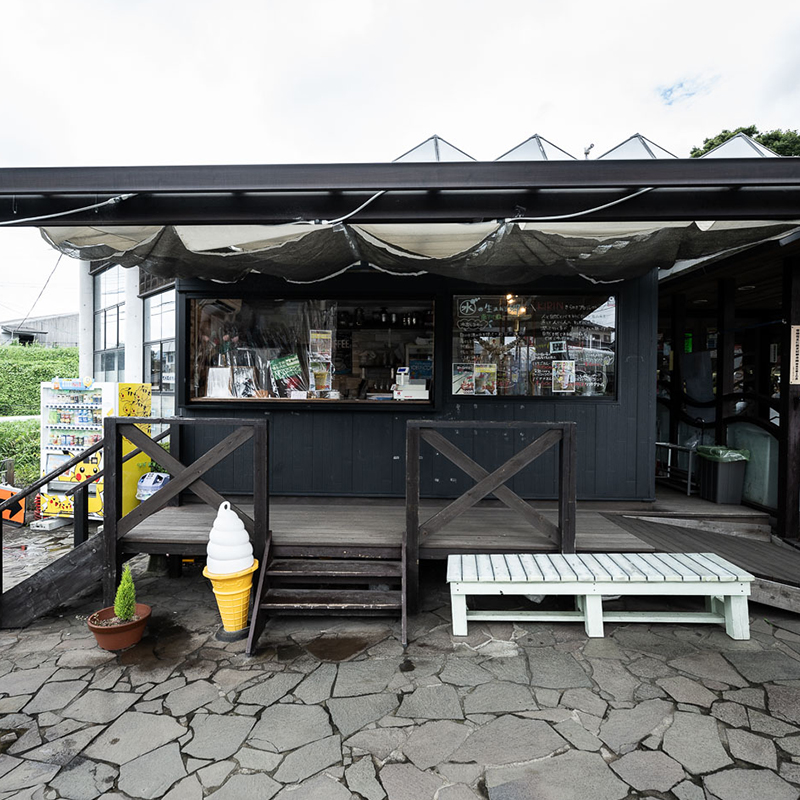



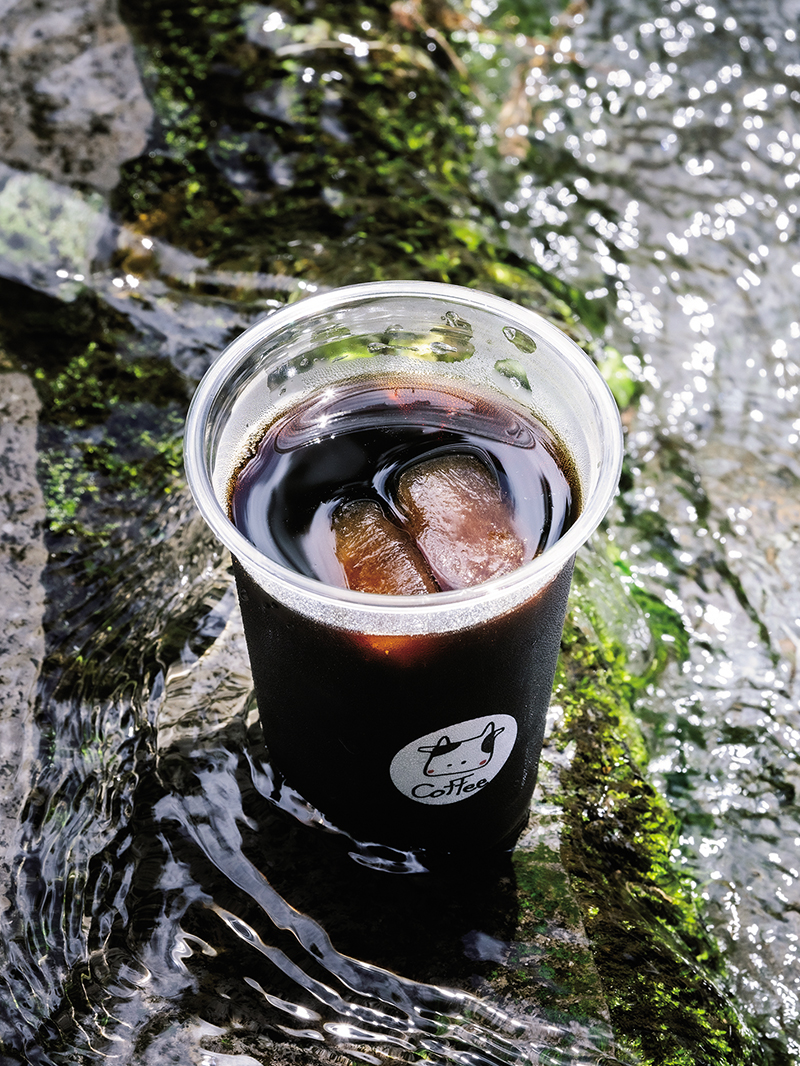
At the local products shop located at the entrance to Aso’s Shirakawa Source, there is a coffee brewed over six hours, dripping spring water at a rate of one drop per second. This coffee, which allows you to savor Kumamoto’s famous water, carries a certain sentiment entrusted by the local people.
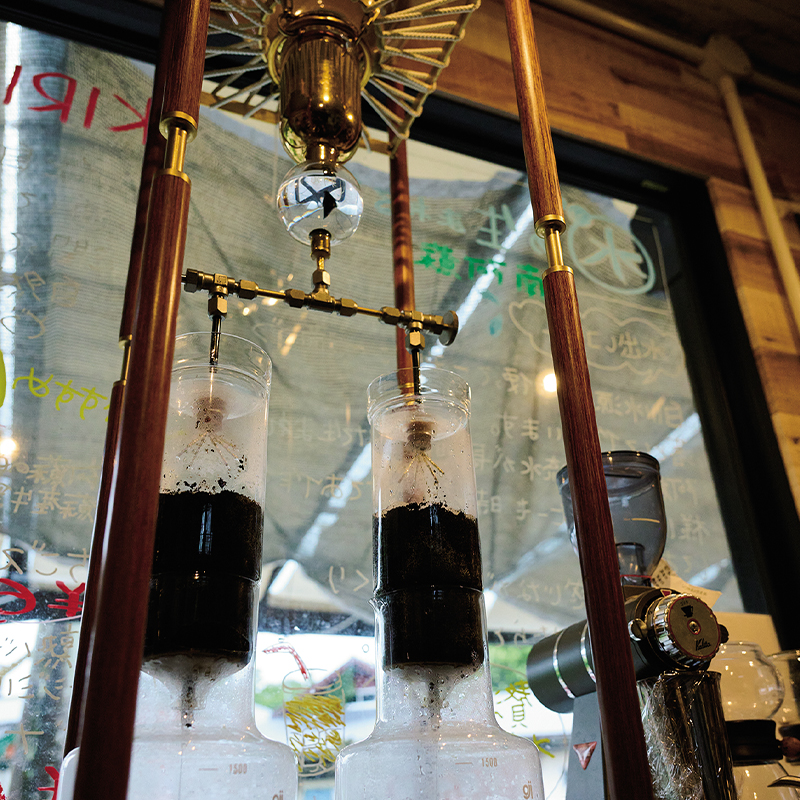
Because it is extracted over six hours using a specialized coffee dripper, it is limited in quantity to 20 cups a day.
What is Shirakawa Source—Kumamoto’s representative water source where as much as 60 tons of water gushes forth every minute?
Shirakawa Source, one of the headwaters of the Shirakawa River—a Class A river flowing through Kumamoto City—is a representative spring of Minamiaso Village in Kumamoto Prefecture, which is known as the “birthplace of water.” Bubbling up endlessly from the precincts of Shirakawa Yoshimi Shrine, where the deity of water is enshrined, it boasts an abundant water volume of as much as 60 tons per minute. This water volume reaches approximately 86,000 cubic meters in six days, and the source has been cherished by locals since ancient times as one that never runs dry. Additionally, the spring is characterized by such exceptional clarity that where the water wells up, you can see the sand on the bottom swaying gently. As if to reflect this, in 1985, it was selected by the Ministry of the Environment as one of the “100 Exquisite Waters of Japan” chosen from across the nation.
The “delicious” chemical reaction between Shirakawa Source’s spring water and coffee beans.
In early August, we had Kyoko Saeki, the person in charge of coffee at “Shizenan,” a local products shop in Minamiaso at Shirakawa Source, tell us the secret behind the deliciousness of the cold brew coffee served at Shizenan. When we asked about her commitment to excellence, she shared, “In order to make a coffee that suppresses bitterness, is rich in flavor, and has a mild mouthfeel, we drop water at a rate of one drop per second and extract it over six hours. Additionally, by aging it (letting it rest) for four days even after extraction, we enhance the flavor of the coffee and bring out its natural sweetness.”
When thinking of coffee, we tend to picture drip brewing, but why cold brew extraction? “With espresso extraction or drip extraction, the brewing takes place at a high temperature, which inevitably brings out a strong bitterness in the coffee’s taste. Therefore, to match the water of Shirakawa Source, Shizenan adopts cold brew extraction, brewing at around 20 degrees Celsius, which suppresses bitterness.”
And as for the blended coffee beans, “with a powerful taste in mind, we dark-roast and blend beans from three countries: Brazil, Colombia, and Guatemala.” By dark-roasting these beans, the flavor becomes rich, and it is said that a clean acidity emerges in the aftertaste. Through the combination of this meticulously selected extraction method and beans that match the water quality, Shizenan’s cold brew coffee achieves a characteristic aftertaste, merging a mild mouthfeel with a subsequent deep richness and acidity.
Even so, at a busy shop in a tourist spot visited by 500,000 people annually, why do they spend so much time and effort just to serve a single cup of coffee?
“The catalyst for offering this product was the Kumamoto Earthquake that occurred in 2016. When tourist numbers in Minamiaso also dropped due to the effects of the disaster, voices arose calling for a product that could promote the excellence of Minamiaso’s water using ‘spring water’ as a keyword. Therefore, ‘Marumiya Coffee Ten,’ which imports and sells coffee beans from all over the world, and the employees of ‘Shizenan’ who live locally exchanged ideas. Then, we chose and blended coffee beans that matched the image of the water source, and decided to offer it with the name of the water source included in the product name.”
“We want to convey the charm of Minamiaso.” This is a product realized from such sentiments of the local people. When you visit Shirakawa Source in Minamiaso, please take a moment to unwind with this cold brew coffee.
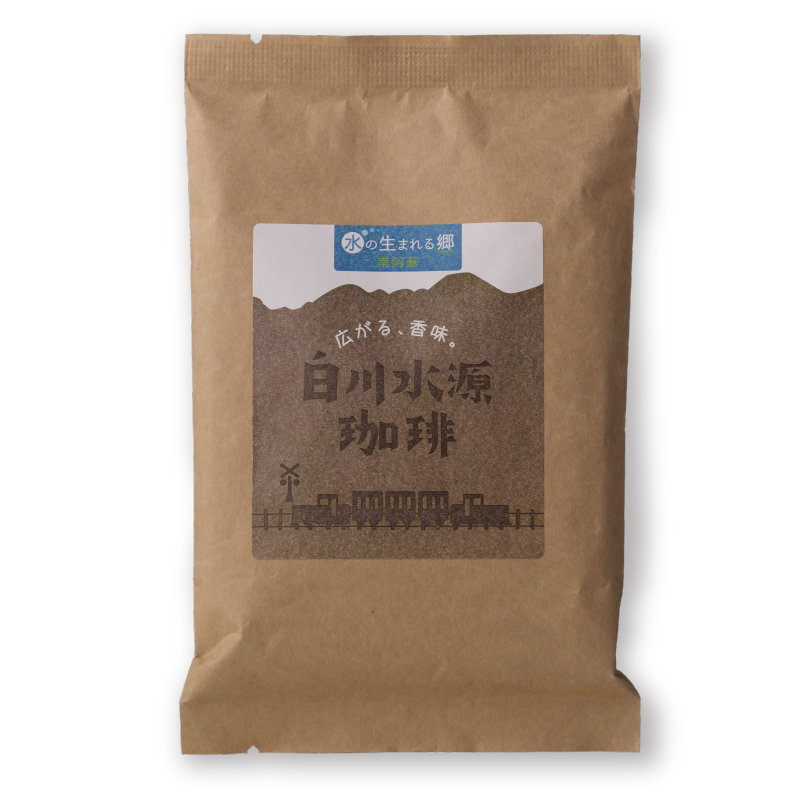
“Shirakawa Source” 780 yen (tax included).
It is also sold as beans and ground coffee so that it can be enjoyed at home as well.