


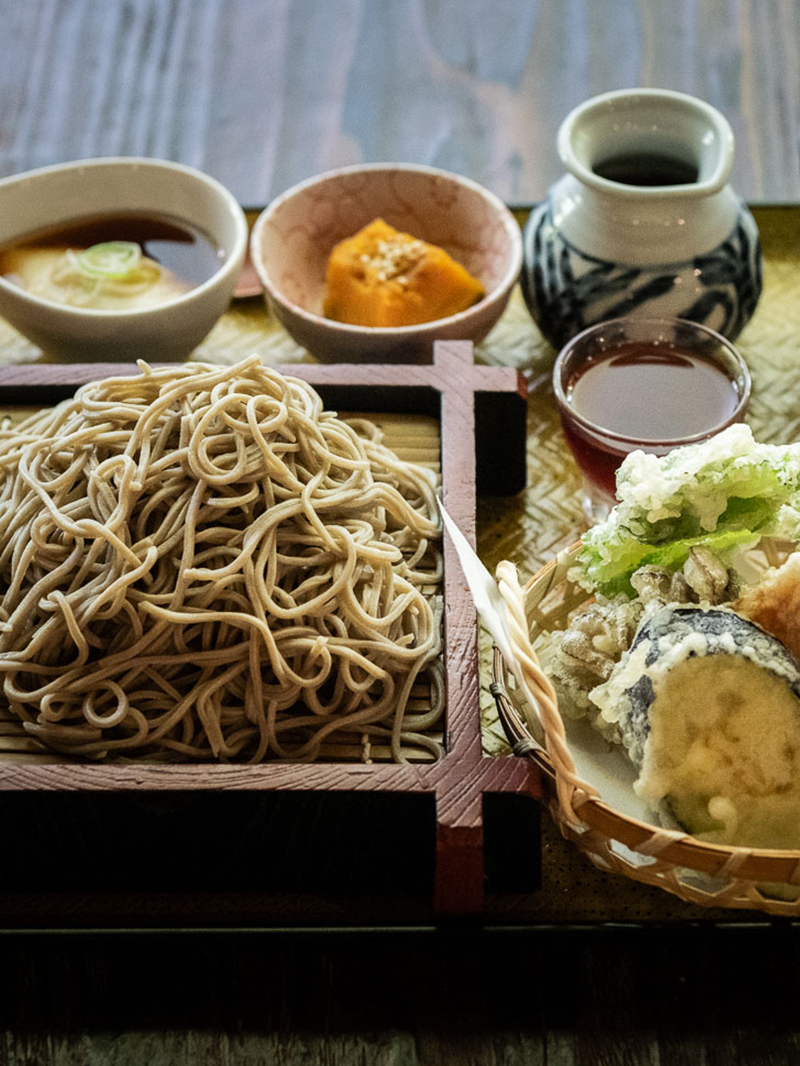
An editorial staff member who loves Japanese soba heard that there is something called “Soba Road” in Minamioguni Town, Aso, and immediately went to cover it.
We will introduce the history of Kumamoto’s Soba Road along with recommended restaurants.
Soba Road: The Secret Story of Its Origins
“Soba Road” is located in the central part of Minamioguni Town. When and how was it created, and what kind of history has it traced? We spoke with Mr. Hideharu Sato, one of the founders and the owner of “Waremokou.”
“About 30 years ago, Minamioguni Town was experiencing an outflow of people to urban areas, and depopulation was progressing. Feeling an unbearable sense of loneliness about this, I, a farmer, cooperated with three volunteers who were born and raised in Minamioguni Town to open the wild flower garden ‘Hana no Sato,’ thinking we could promote the rich nature of Minamioguni and revitalize the town.”
However, reality was harsh, and there were not many tourists who came for the wild flowers. “Therefore, thinking that if there were a rest stop in ‘Hana no Sato,’ it would be easier for tourists to visit, we opened a shop called ‘Kagouan.’ At first, we sold handmade dumplings instead of soba, but our expectations fell short and the number of tourists did not increase. The four of us were at a loss as to what to do.”
It was at that time that Mr. Sato felt as if his eyes had been opened by words from an acquaintance from the same hometown: “Isn’t Minamioguni’s spring water and nature-rich environment optimal for making delicious soba?” “Because Kumamoto was originally a place where udon was popular, the concept of soba hadn’t even crossed our minds. Taking that acquaintance’s advice as an opportunity, we researched and learned about making soba, and serving it at ‘Kagouan’ was the beginning of ‘Soba Road.’”
Continuing, Mr. Sato shared his thoughts from back then. “Thinking that if we opened multiple soba shops and marketed them as ‘Soba Road,’ the number of tourists would increase, we touted it as Soba Road right from the start (laughs). One year later, I opened the second shop, ‘Waremokou.’ Other shops also opened, bringing the total to five, and the number of tourists grew as well.”
However, it is said that even for Soba Road, which was born from the passion of Mr. Sato and his companions, there were initially voices of opposition.
“From the local residents, we received both exasperated comments saying, ‘No tourists would come all the way to such a rural area just for soba,’ as well as encouraging words like, ‘It would be wonderful if tourists came because of this.’ Even so, all we could do was to serve delicious soba to the customers who came. Initially, there was a member who could roll soba noodles, so we learned from them, but after learning the basics, it was a process of trial and error. While researching in books on soba-making and traveling to other prefectures to eat soba, we tried new things every day and have pursued soba-making for 30 years. Now, each shop has established its own distinct taste, and many tourists come specifically for the soba, so it was well worth the effort. We will continue to enliven Soba Road in the future,” said Mr. Sato with a smile on his face.
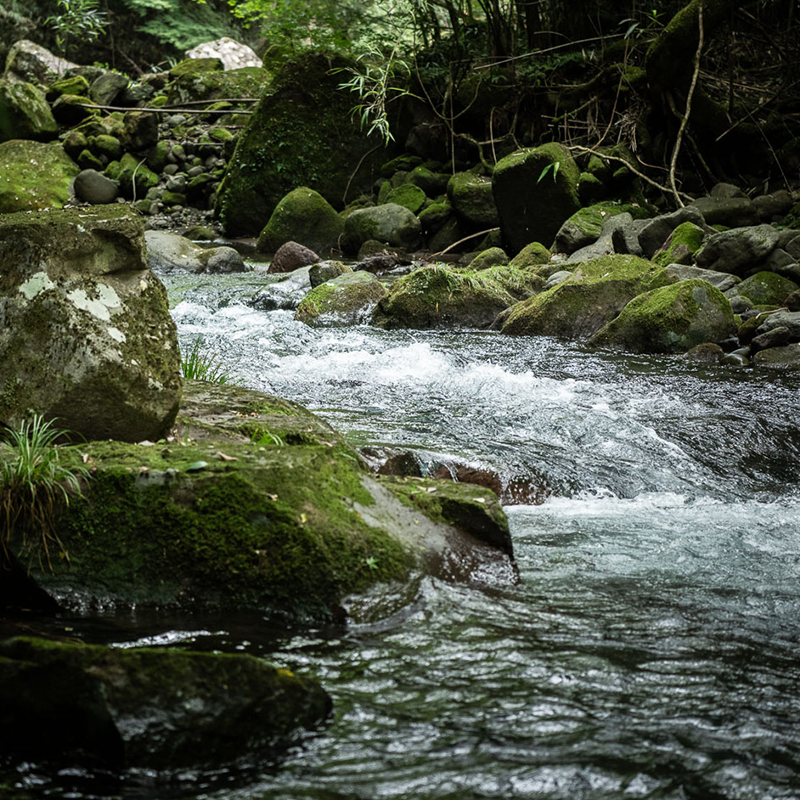
The Baba River, a Class A river flowing through Minamioguni Town.
With its abundant water supply, it supports fertile farmland and the lives of the people.
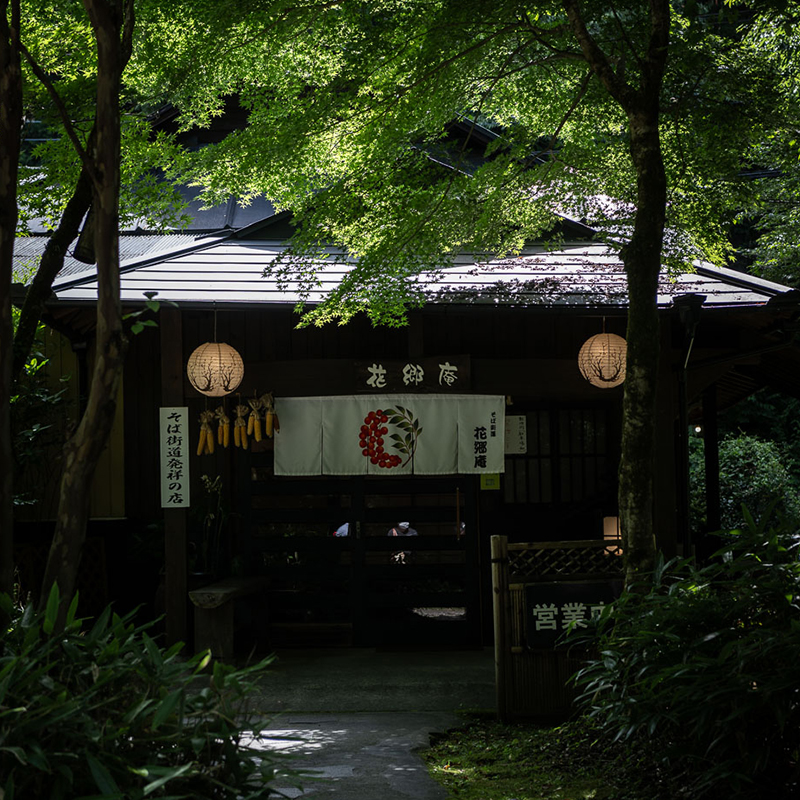
The birthplace shop of “Soba Road.”
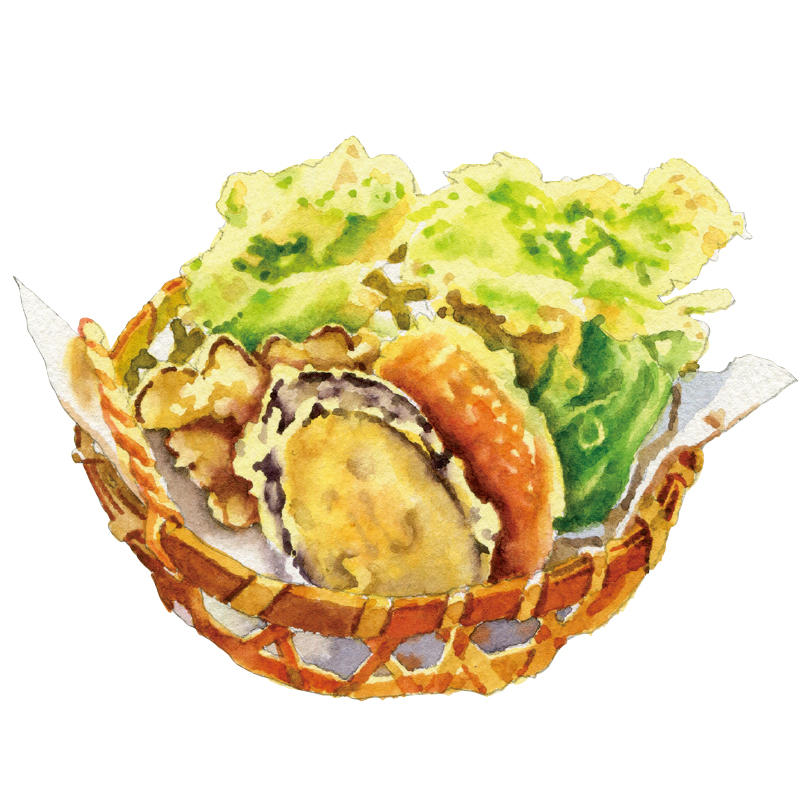
Soba that goes down smoothly and vegetable tempura made with carefully selected ingredients.
“Kagouan”
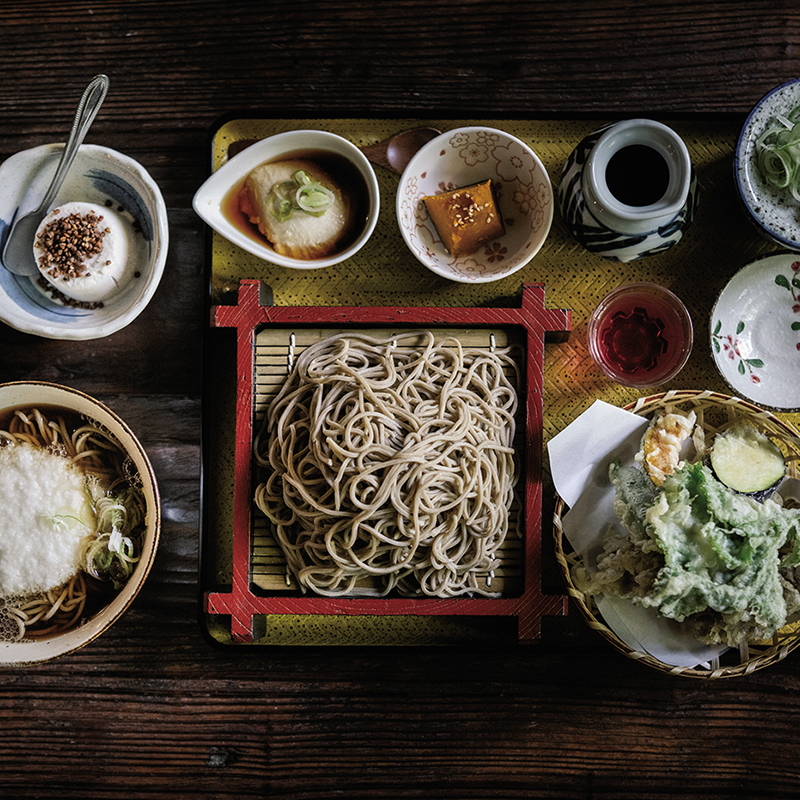
“Kagouan” Soba Feast
2,300 yen (tax included)
A menu where you can not only taste two types of soba, but also enjoy an assortment of maitake mushroom and vegetable tempura, and even buckwheat flour ice cream.
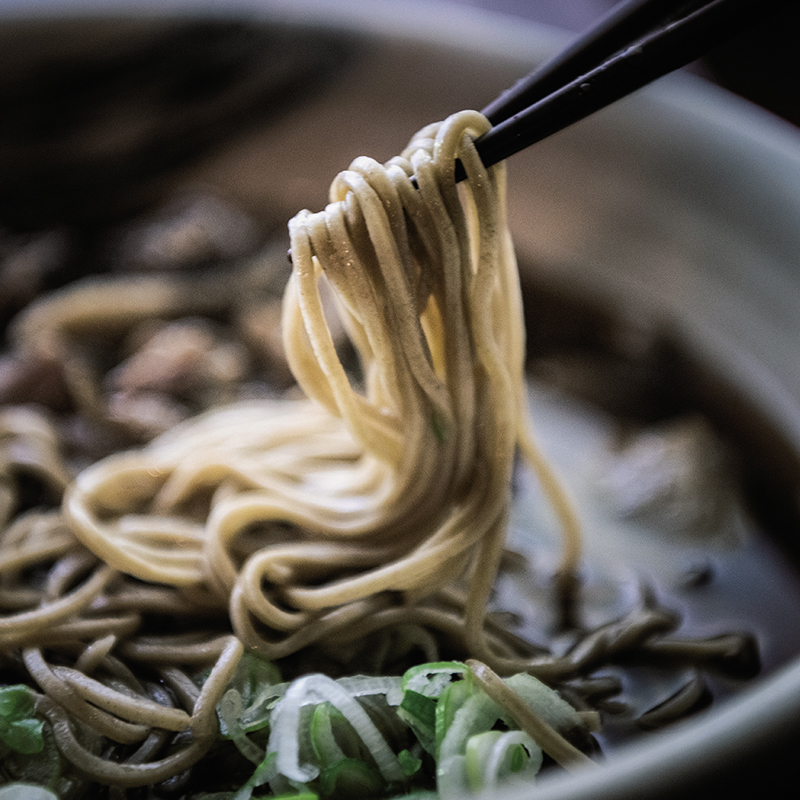
Local Chicken Soba
1,700 yen (tax included)
A dish featuring thick, flavorful local chicken simmered in a sweet and savory sauce. The juicy meat juices and savory aroma of the local chicken pair wonderfully with the soba.
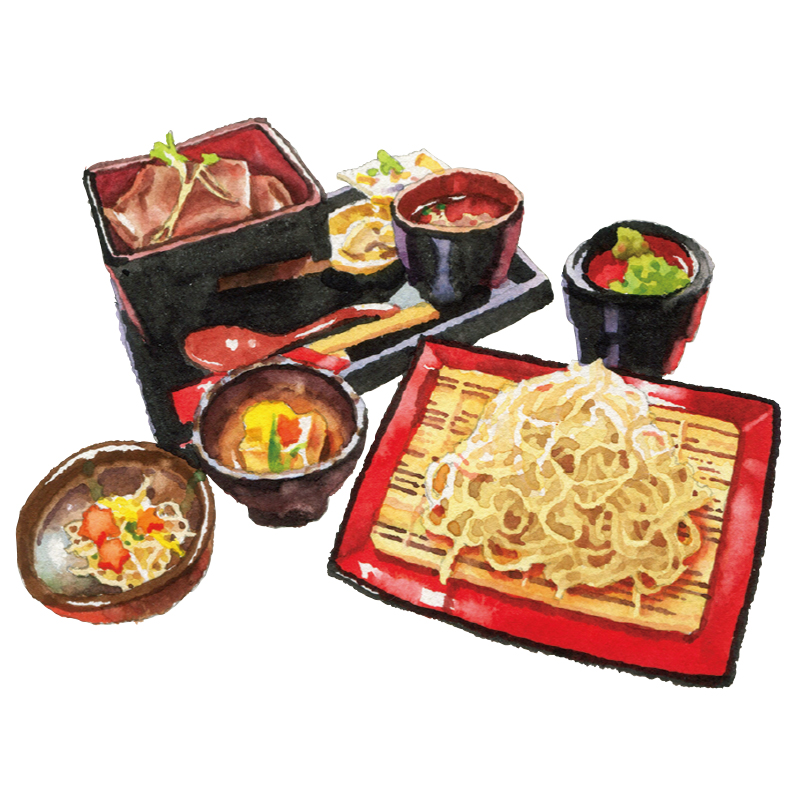
What I ordered was “Umakamon Soba,” a set containing local chicken soba, vegetable tempura, and takana meshi (pickled mustard green rice).
Lifting a bundle of soba noodles shining in the sunlight filtering through the trees, a subtle aroma of freshly made buckwheat and the scent of sweet and savory broth waft through the air, whetting the appetite. I dipped the noodles into the sauce and took my first bite. With every bite, the aroma of the buckwheat and the sweet broth play a symphony in your mouth, and you are amazed by the springy, firm texture and the rich flavor of the broth, which deeply reflects the sweetness of the local chicken. I was told that mature chicken is used for the local chicken. Its delightfully chewy texture is simply irresistible.
Next, I reached my chopsticks toward the vegetable “tempura tower.” Placing a piece in my mouth, the aroma of thick, juicy maitake mushroom tempura spreads throughout the palate. Trying it with matcha salt, the subtle saltiness and matcha scent complement the elegant aroma of the maitake exceptionally well. With every bite, the essence of the maitake fills your mouth, while its deep richness and soft yet firm texture give a sense of profound satisfaction. And that very aroma of the maitake brings out the umami of the soba broth even further.
By the time I finished the meal, I was filled with a deep sense of satisfaction and admiration for the owner. Please come and savor this captivating full course, where the charm of every ingredient has been brought out to its absolute maximum.
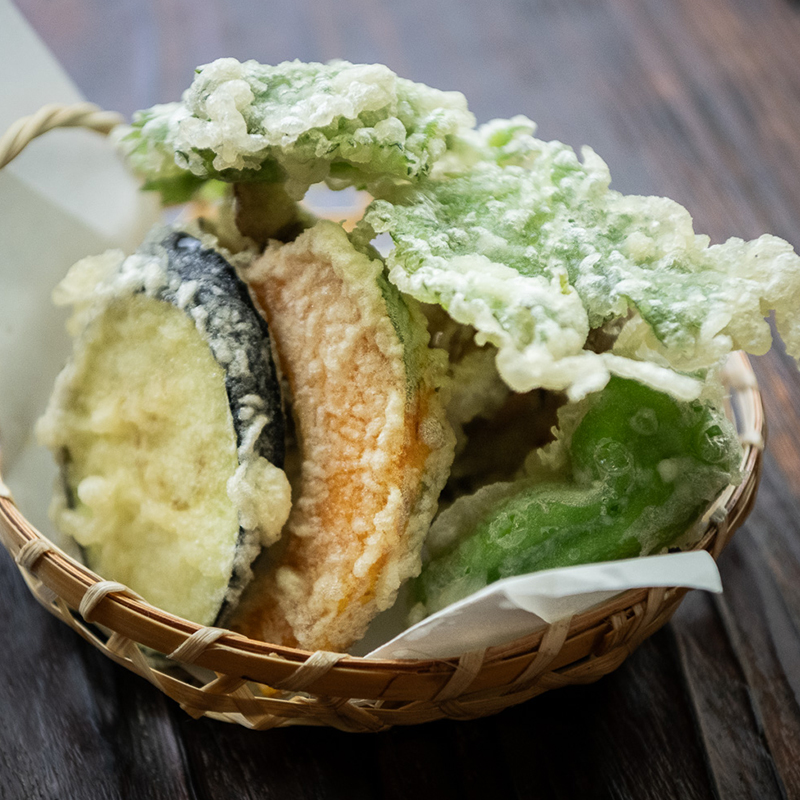
Vibrantly colored vegetable tempura, a specialty of “Kagouan.”
With its generous portion, you are sure to be satisfied!
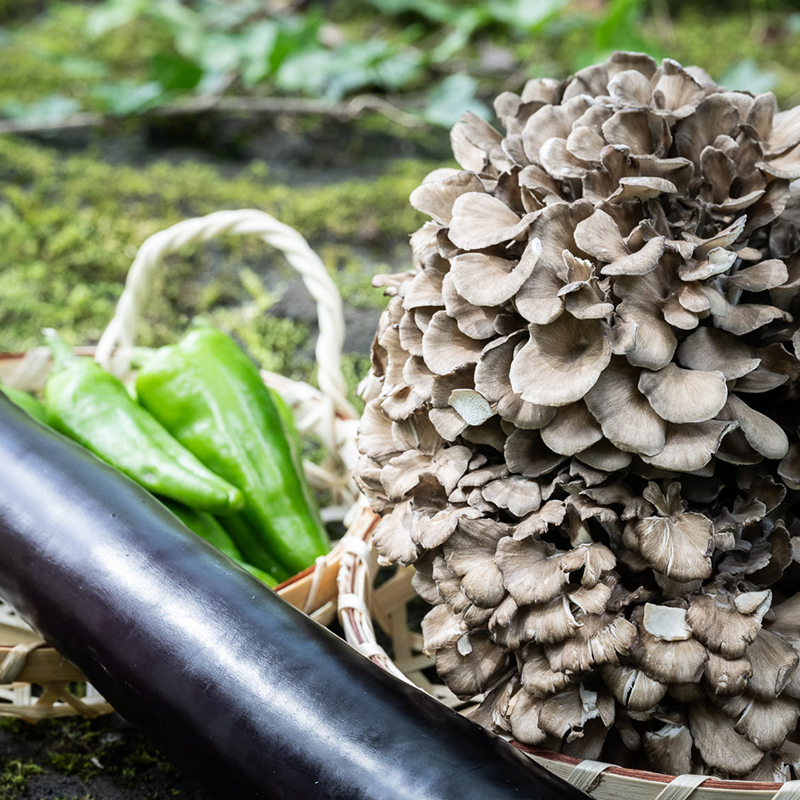
Vegetables carefully selected by the owner, who is particular about ingredients and sources them from all across the country.
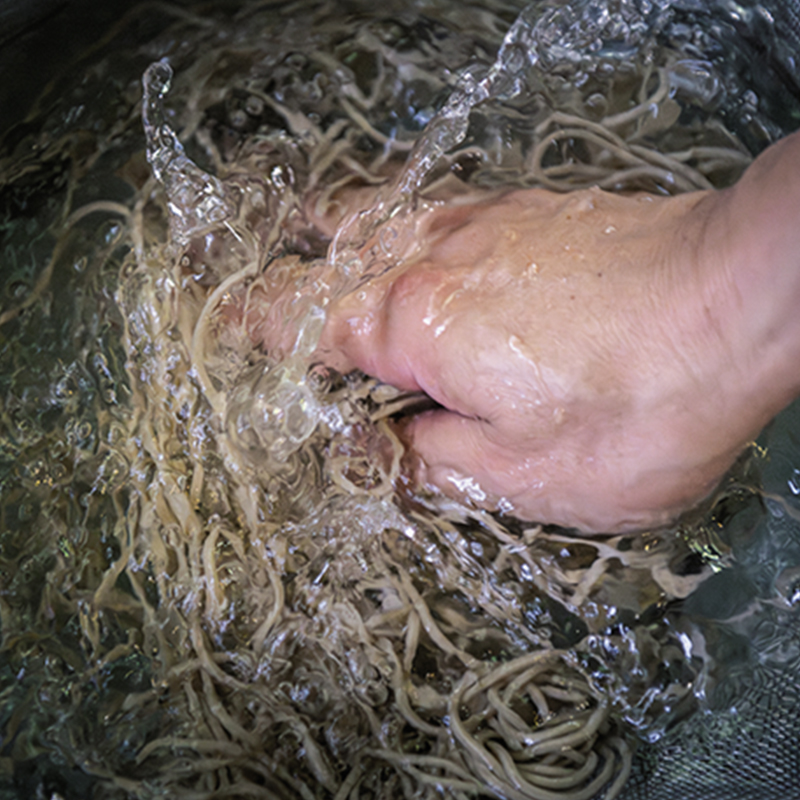
Soba thoroughly chilled in cold spring water allows you to enjoy a pleasantly firm, chewy texture and a silky smooth feel going down your throat.
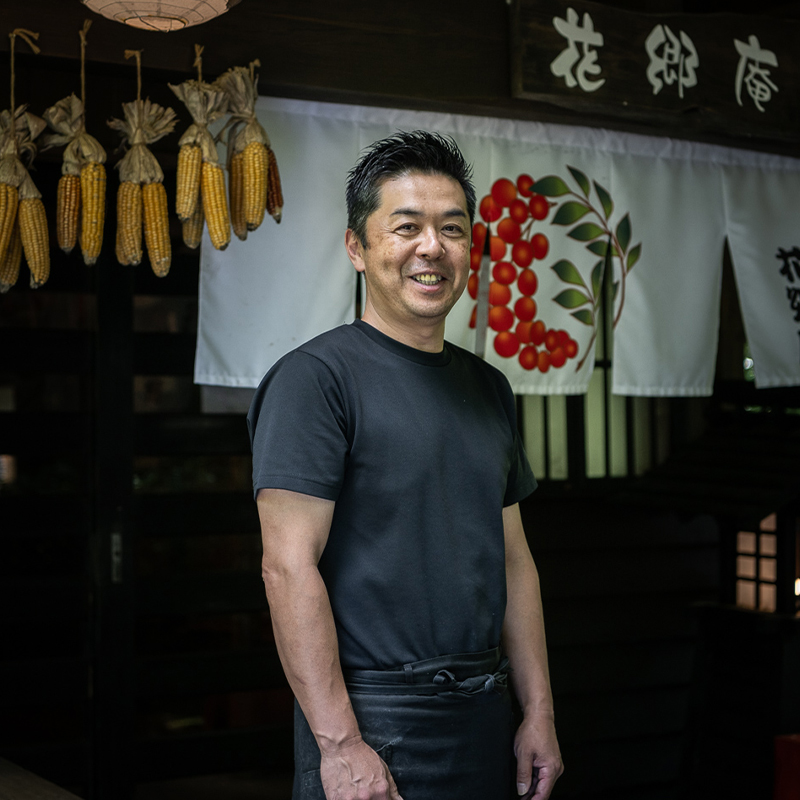
“I have been studying how to make delicious soba every day for 23 years,” says Mr. Takeshi Sato, the second-generation owner of “Kagouan,” with a smile.
Savor the dance of flavors.
Rich Akaushi Beef Nanban Soba and refreshing kuzukiri.
“Soba Road Waremokou”
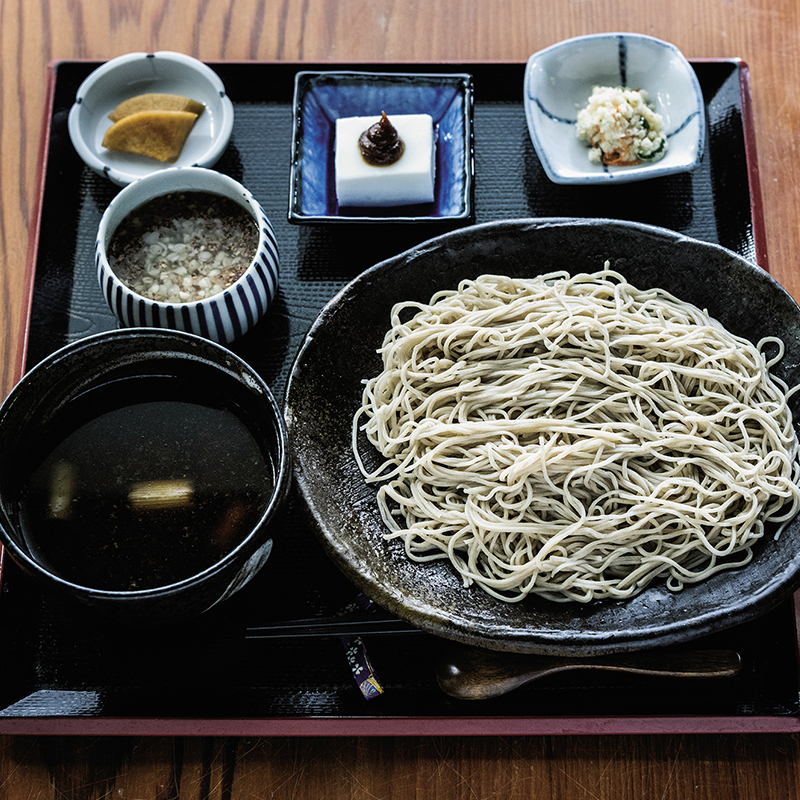
“Waremokou” Akaushi Beef Nanban Soba
2,150 yen (tax included)
Rump meat (a cut from the hip) of Kumamoto’s famous Akaushi beef is quickly seared and simmered in sauce. It is a delightful set that also comes with kuzukiri, kudzu tofu, and soba porridge.
Upon entering the shop, Mr. Hideharu Sato, the owner who had shared the history of “Soba Road” with us, welcomed me with “Akaushi Beef Nanban Soba.”
Dropping the soba into the broth, lifting a mouthful, and placing it into my mouth, the noodles—firm yet silky smooth—intertwine with the broth infused with the rich umami of Akaushi beef. The enjoyable texture, the smooth feeling going down the throat, and the mellow flavor of the broth are splendidly fused together.
Next, I reach my chopsticks toward the “kudzu tofu.” Because it uses Jersey milk from Aso, a creamy flavor fills the entire mouth. The yuzu miso also lets you feel a distinct spiciness afterward, adding a delightful accent to the texture of the tofu.
While enjoying the heavenly sensation and dance of flavors of the Akaushi beef Nanban soba and kudzu tofu in my mouth, I move on to the soba porridge. Taking a bite, a warm, savory flavor spread across my tongue. As the soba porridge coats the tongue, you are enveloped in a feeling like being warmly embraced on a chilly day.
Capping off the Akaushi beef Nanban soba set is the beautifully and elegantly presented kuzukiri. The noodles mix gently with the black sugar syrup, and upon taking a bite, the delicate sweetness of the jelly dances in your mouth, harmonizing firmly with the black sugar syrup. It was a dish perfect for summer that left even someone with a sweet tooth like me thoroughly satisfied.
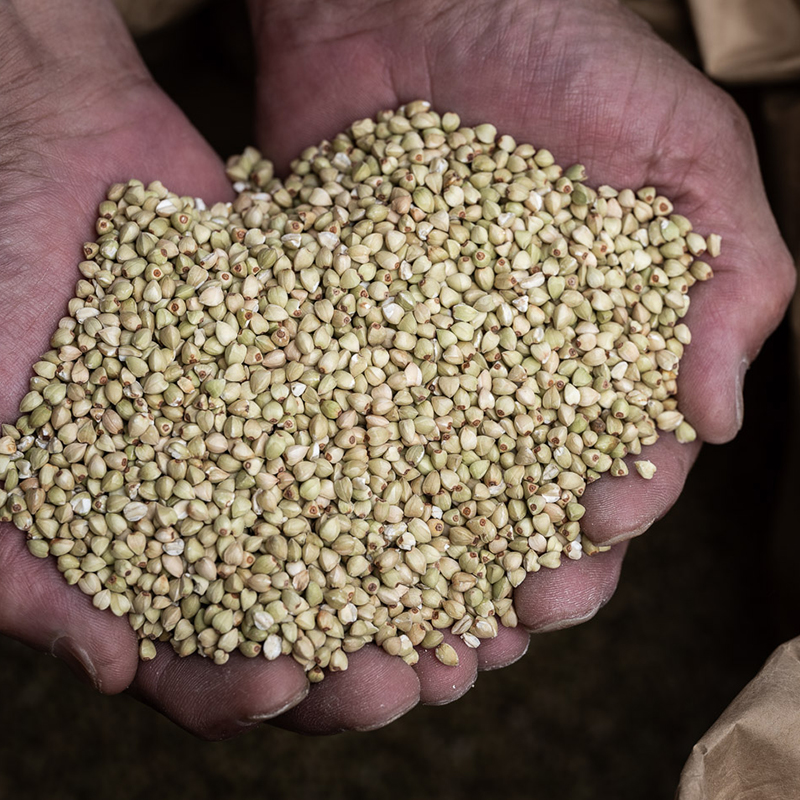
From spring through autumn, a blend of buckwheat seeds from Nagano and Hokkaido is used, and from autumn through spring, buckwheat seeds from Aso are used.
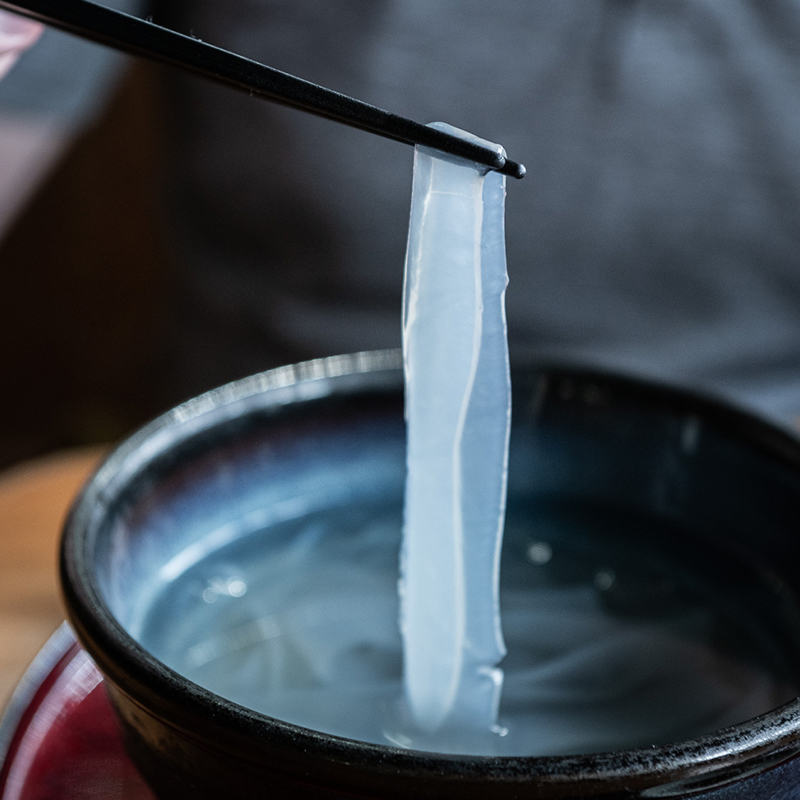
It is such a popular menu item that some customers visit the restaurant from other prefectures solely to eat this “kuzukiri.”
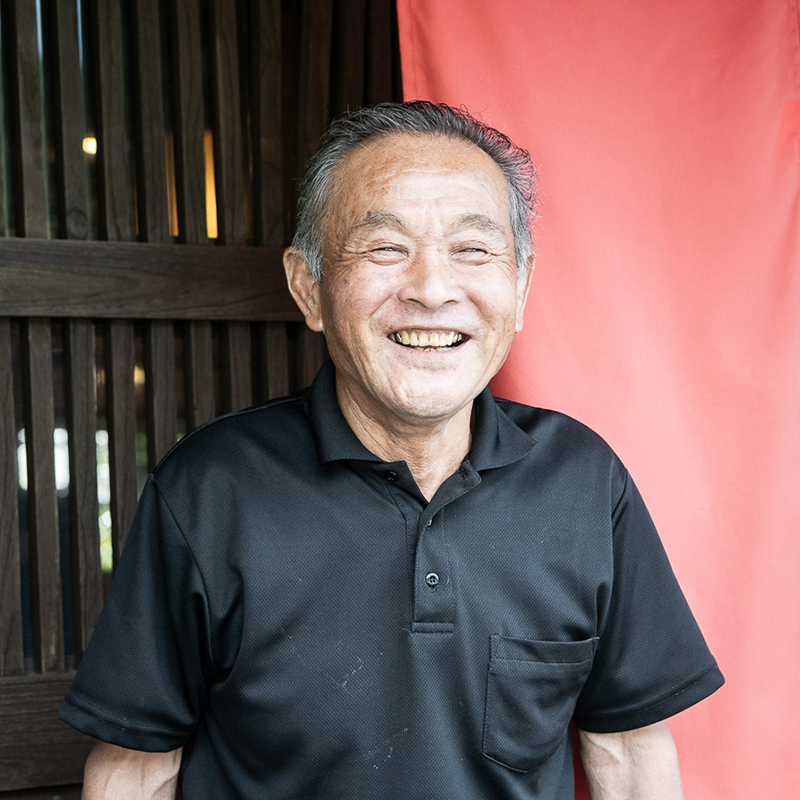
Mr. Hideharu Sato, one of the founders of “Soba Road.” It is said that he still stands in the kitchen even today.
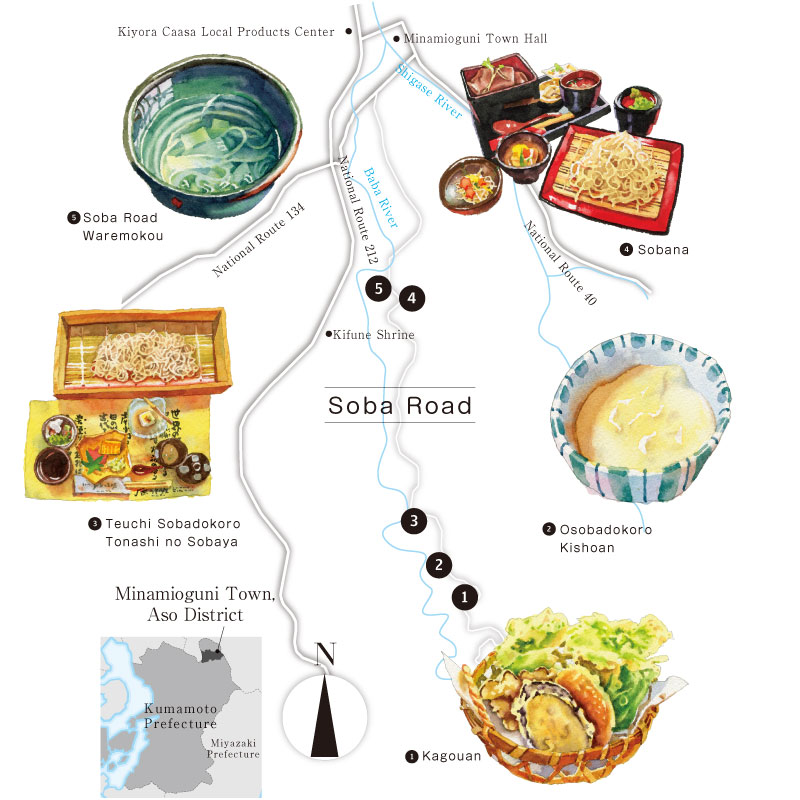
Soba Road
❶
Kagouan
●Location/ 2862 Akababa, Minamioguni Town, Aso District, Kumamoto Prefecture 869-2401
●Business Hours/ 10:00 a.m. – 3:00 p.m. (10:00 – 15:00)
●Closed/ Wednesdays (Open on national holidays)
●Phone Number/ 0967-42-0193
❷
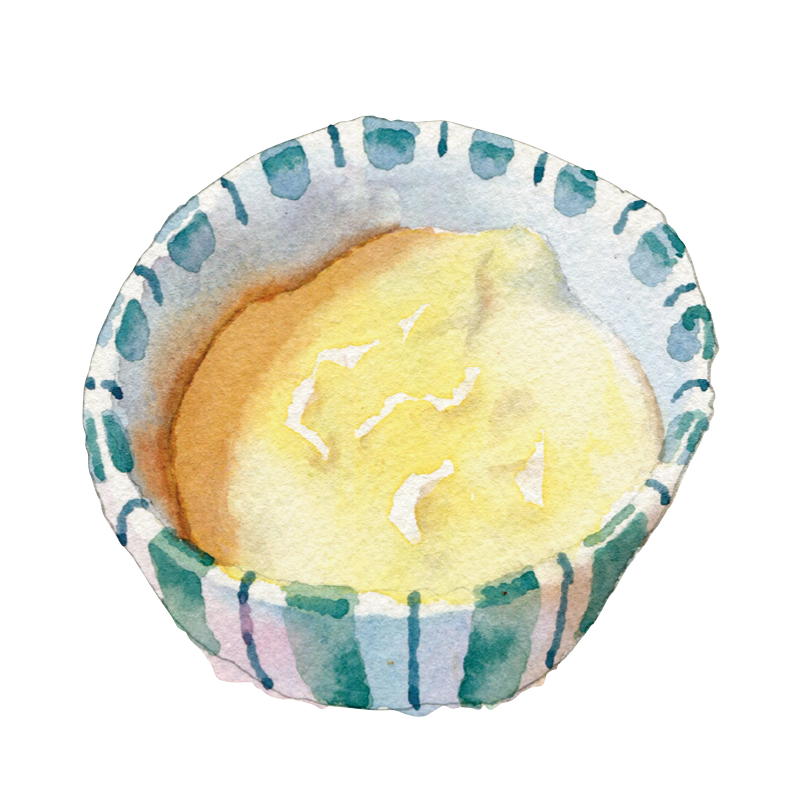
Osobadokoro Kishoan
●Location/ 2908-1 Akababa, Minamioguni Town, Aso District, Kumamoto Prefecture 869-2401
●Business Hours/ 10:00 a.m. – 4:00 p.m. (10:00 – 16:00)
●Closed/ Tuesdays
●Phone Number/ 0967-42-0408
❸
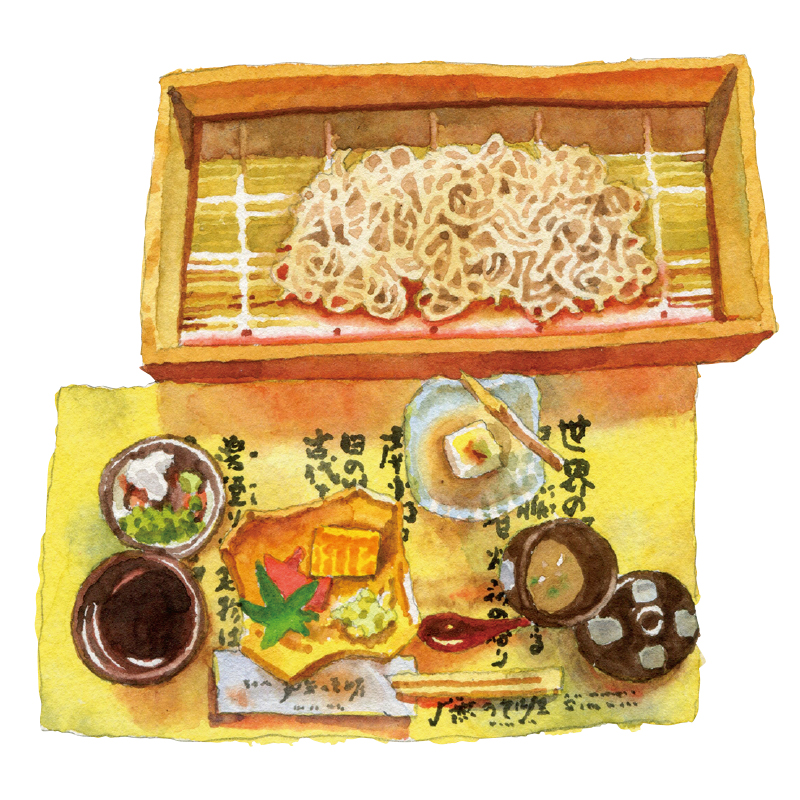
Teuchi Sobadokoro
Tonashi no Sobaya
●Location/ 2920-1 Akababa, Minamioguni Town, Aso District, Kumamoto Prefecture 869-2401
●Business Hours/ 11:00 a.m. – 3:00 p.m. (11:00 – 15:00)
●Closed/ Thursdays (Depending on weather)
●Phone Number/ 0967-42-1510
❹
Sobana
●Location/ 3220-3 Akababa, Minamioguni Town, Aso District, Kumamoto Prefecture 869-2401
●Business Hours/ 11:00 a.m. – 3:30 p.m. (11:00 – 15:30)
●Closed/ Irregular holidays
●Phone Number/ 0967-42-1755
❺
Soba Road Waremokou
Location/ 3220 Akababa, Minamioguni Town, Aso District, Kumamoto Prefecture 869-2401
●Business Hours/ 10:30 a.m. – 3:00 p.m. (10:30 – 15:00)
●Closed/ Irregular holidays
●Phone Number/ 0967-42-1820