


From Taiwan to Kumamoto. From Kumamoto to the world.
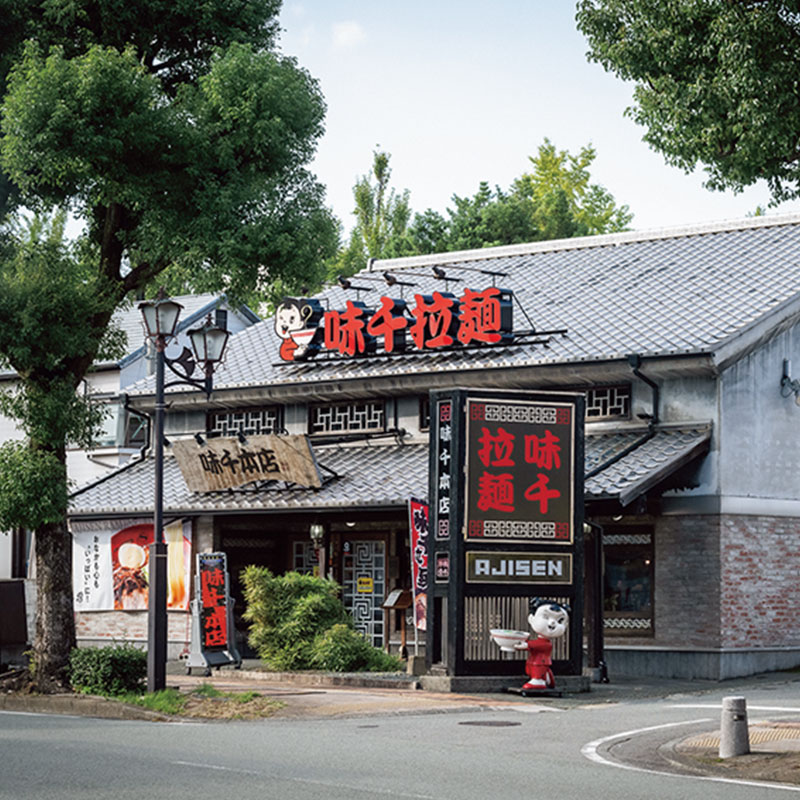
Born and beloved in Kumamoto, Ajisen Ramen now operates 67 stores domestically and 645 stores overseas (as of December 2024). It conveys to the world the taste of Kumamoto Ramen that we love so dearly. The founder, Takaharu Shigemitsu, was born in Taiwan. At the age of 15, he crossed the sea to Kyushu. What kind of person was Mr. Shigemitsu, who is acclaimed as one of the founding fathers of Kumamoto Ramen? We spoke with his eldest daughter, Yoshie, who serves as the Vice President of Shigemitsu Industry.
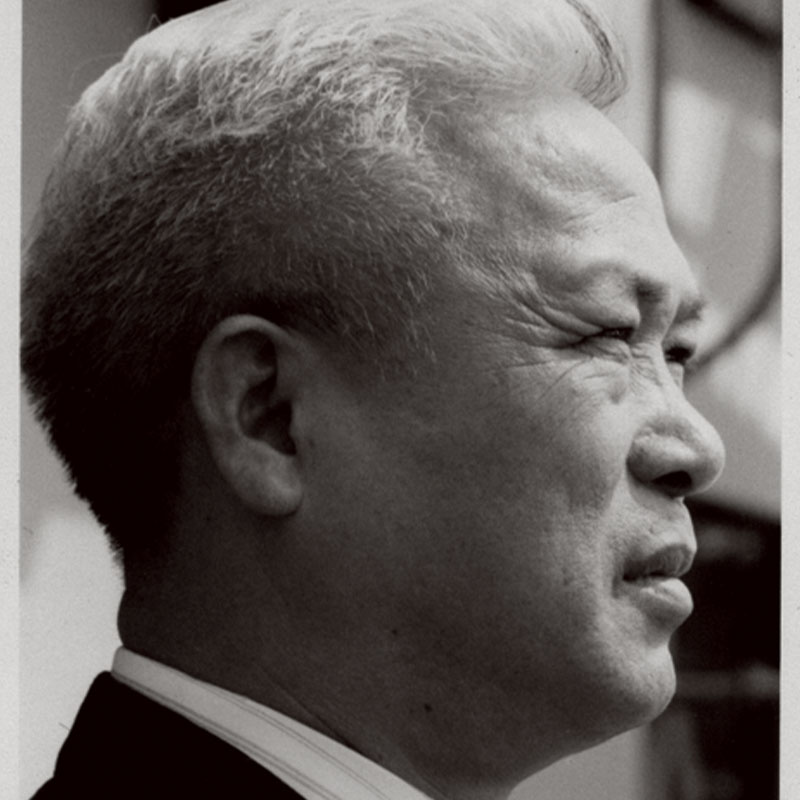
Shigemitsu Takaharu
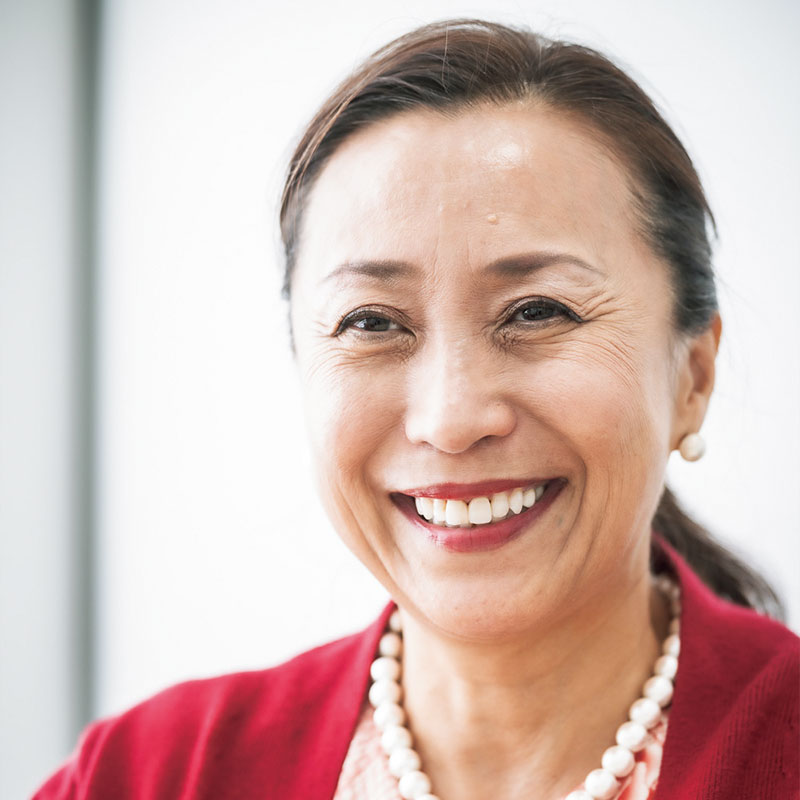
Shigemitsu Yoshie
“My father was nearly 180 centimeters tall and had a sturdy build. He had a powerful presence,” says Yoshie.
Liu Tan-Hsiang, age 15. From Taiwan to Japan.
It has already been 27 years since my father, Takaharu, passed away. I would like to tell you about my father, the man who founded Ajisen Ramen—which has expanded both domestically and internationally—and who is said to have laid the foundation for Kumamoto Ramen.
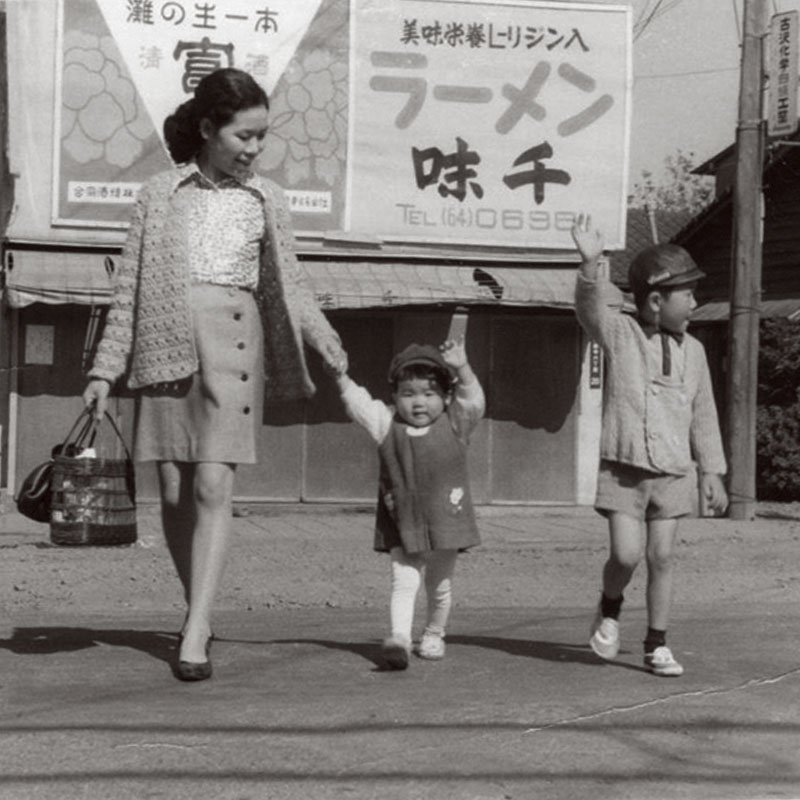
My father’s birthplace was Taiwan. He was born and raised in a village near Kaohsiung, a port city in the south. His name was Liu yun-shao. Eventually, at the age of 15, he moved to Japan along with the son of the village head. I have heard that since Taiwan was under Japanese rule at the time, people could travel back and forth without complicated immigration procedures.
After arriving in Miyazaki Prefecture by boat, my father moved to Kumamoto Prefecture and studied at what is now the Kumamoto University Faculty of Engineering. He was full of entrepreneurial spirit from a young age and started a business while still a student. After graduation, he managed companies such as one that manufactured dried bag noodles (instant noodles). However, because the business focused primarily on subcontracting for large companies, management was unstable, and it eventually went bankrupt.
With his employees and business partners gone, and burdened with debt after acting as a joint guarantor for a trusted associate, my father was in the depths of despair. I have heard that my mother, unable to stand seeing him in such a state, suggested, “Why don’t we open a ramen shop?” My mother was a strong-willed person, born and raised in the “Land of Fire” (Kumamoto). She felt that her husband was still capable of more and resolved that they would work together through thick and thin. My mother is still in good health today. Looking back with a bright laugh, she says, “When we got married, we were quite well-off; I never dreamed we would face such hardships.”
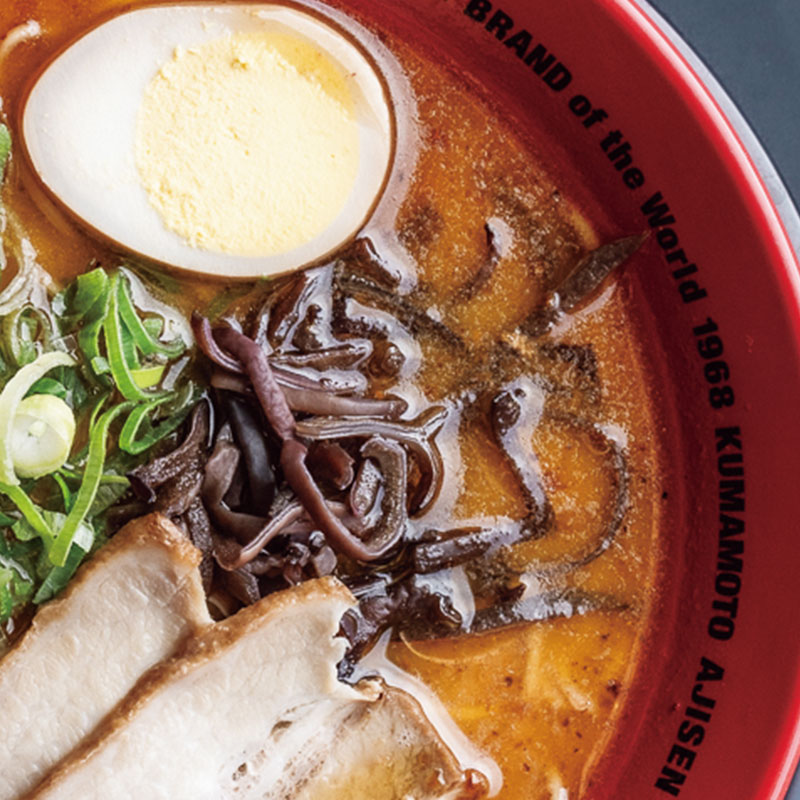
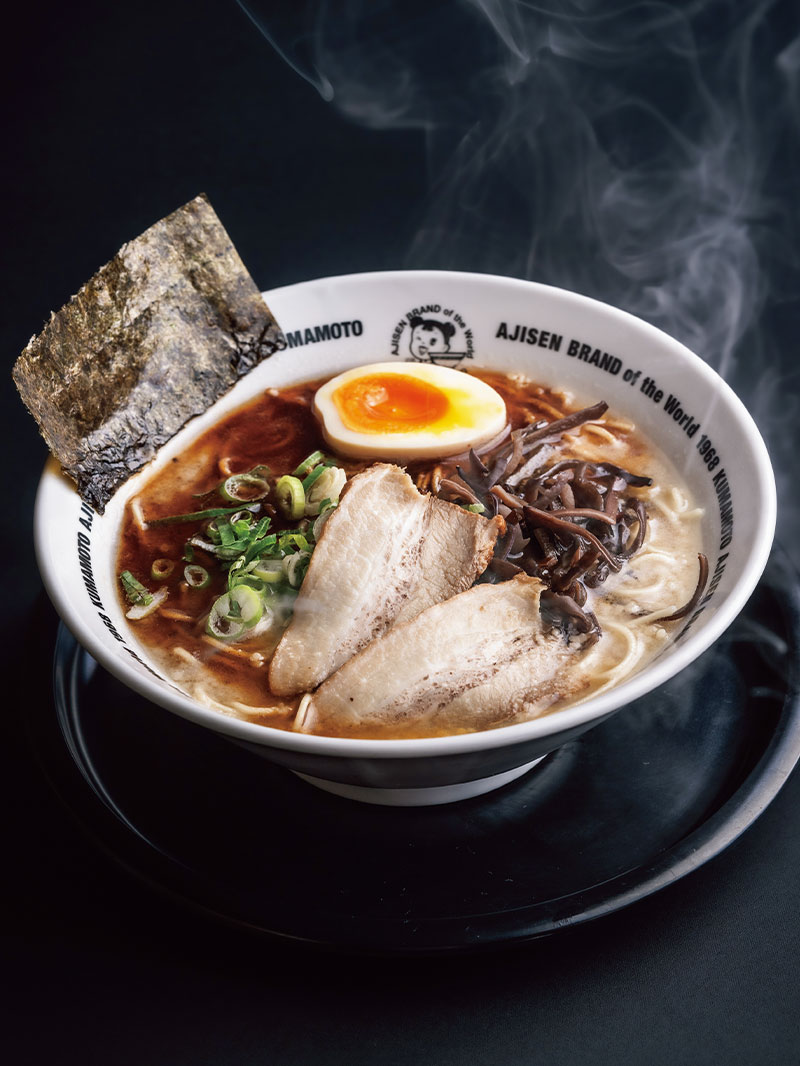
My father incorporated garlic, which was frequently used in Taiwanese cuisine, into his ramen. That eventually became one of the defining characteristics of Kumamoto Ramen. Furthermore, it is said that my father devised the toppings of wood ear mushrooms and marinated eggs, which are now indispensable to Kumamoto Ramen.
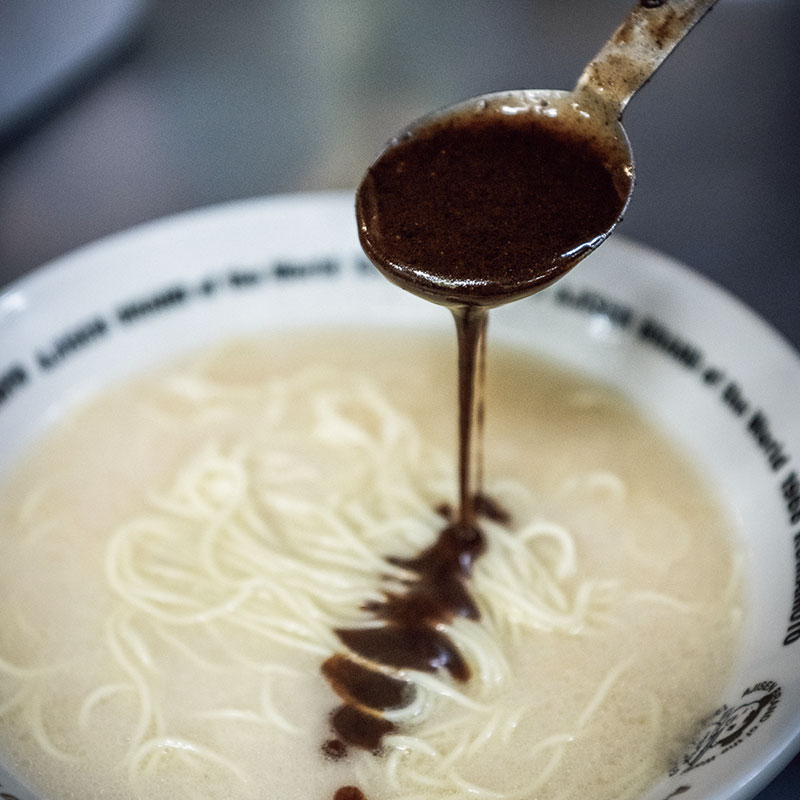
The sauce known as “Ma-yu.” The source of Ajisen Ramen’s deliciousness.
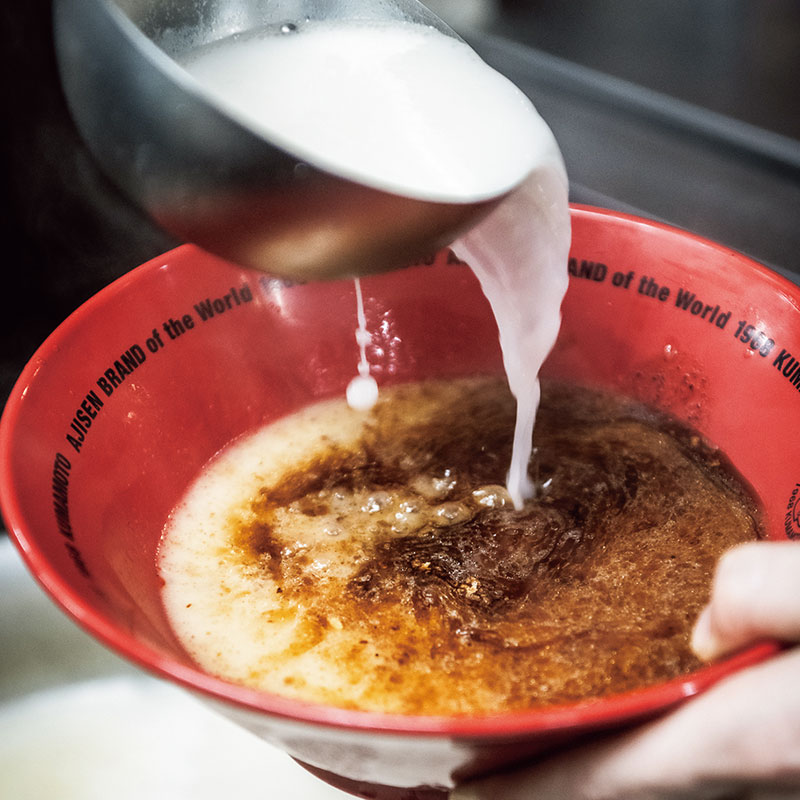
Delicious and gentle on the body. Such ramen is Ajisen’s goal.
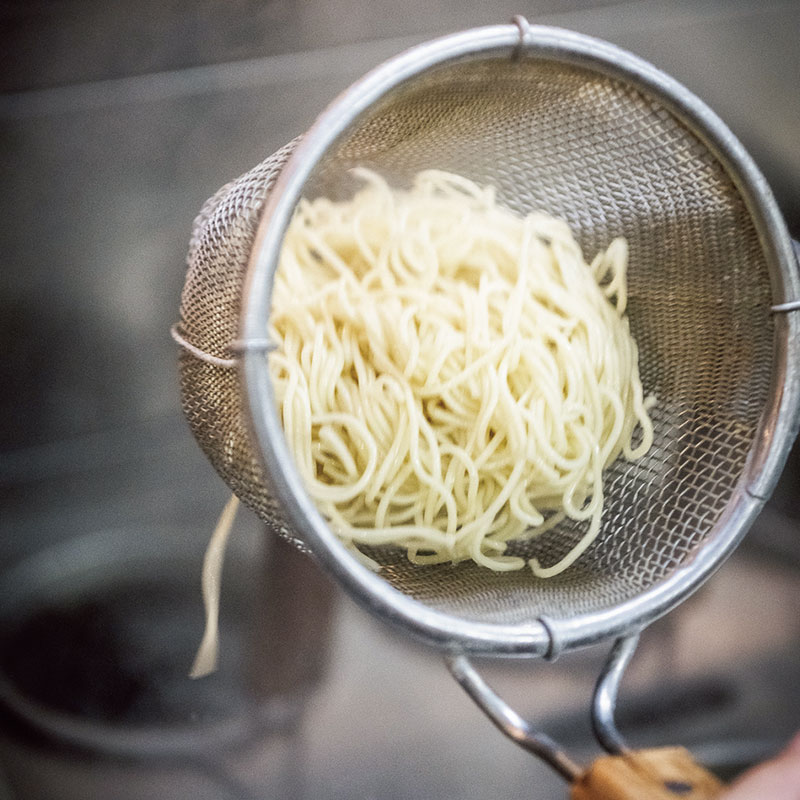
Even among the same tonkotsu ramen, a characteristic of Kumamoto is that the noodles are thicker than those in Hakata.
Gratitude and Service. Righteousness first, profit second.
My father was a typical Showa-era workaholic. I often saw him not only having debates at the workplace but also talking with employees at home, where he would get heated and give instructions in a loud voice. He was also strict with the family, and especially regarding the children’s academic studies, he would not tolerate anything half-hearted.
I was so afraid of such a father that there was a period when I tried to avoid him as much as possible, and I left for overseas in search of freedom. However, in 1996, while in Hong Kong for business negotiations regarding a store opening, my father vomited blood. Based on a doctor’s diagnosis, it was discovered that he had terminal cancer.
It was the year before the handover of Hong Kong, a time when a store opening was planned amid expectations of China’s rapid economic development. The strength of my father’s feelings regarding that endeavor was clearly conveyed to both the employees and the family.
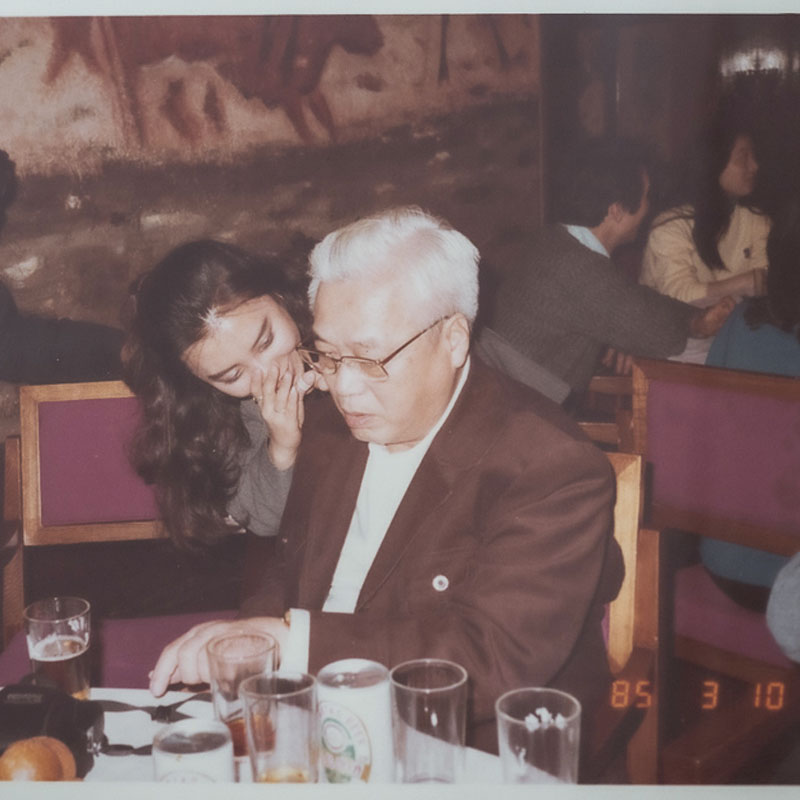
The only trip we ever took together as father and daughter. 1985, China.
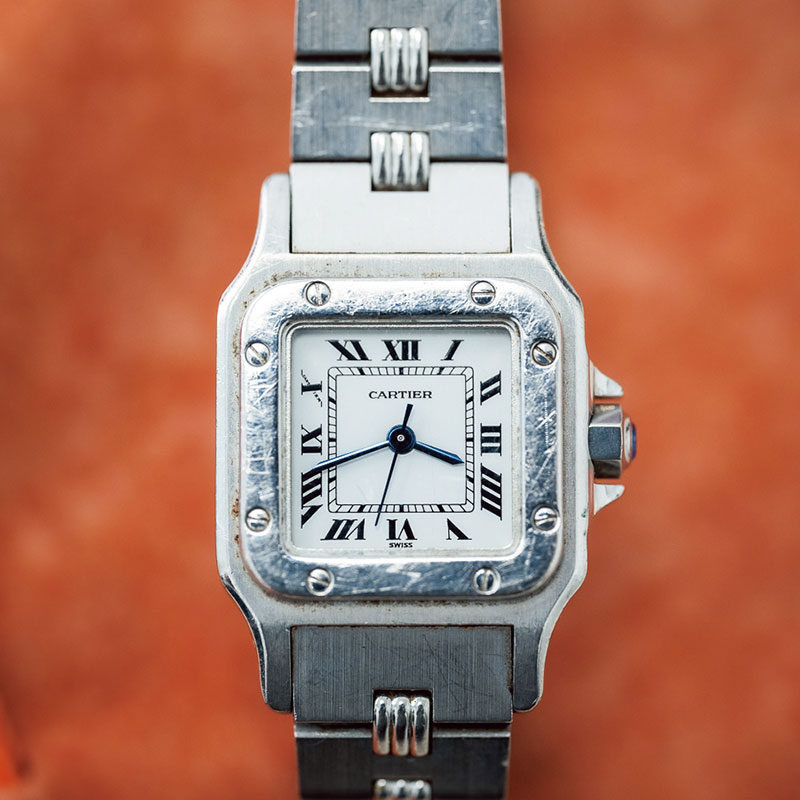
The watch given to me on my 20th birthday, which I still keep with me today.
Seeing everyone pull together to speed up the preparations for the Hong Kong store opening while my father was still alive, I decided to return to Japan and support him. At that time, while worrying about the employees and me, my father wrote a letter regarding my joining the company. Reading it back now, I am touched by his inner thoughts as a founder and feel a deep well of love that moves me to tears.
In February 1997, my father passed away, and my younger brother Katsuaki succeeded the company. Even with the change in leadership, what Ajisen Ramen values remains the same. One is our corporate motto: Gratitude and Service. “Ajisen Day,” when we offer ramen at a discounted price on the 22nd of every month, is one example of practicing this. The choice of the 22nd carries my father’s wish: for couples (fufu) to blow on their noodles (fu-fu) as they eat together in harmony, sharing mutual gratitude to foster family peace.
The second is “Righteousness first, profit second” (Sengi Kouri). These are the words of the Chinese philosopher Mencius, which my father often quoted. It is important to first understand and fulfill one’s moral duty; profit will follow later. The reason Ajisen Ramen continues to provide meals to welfare facilities and offer disaster relief cooking is precisely the practice of my father’s teachings. Setting the royalties we receive from our franchisees as low as possible—prioritizing their profit first—could also be seen as an expression of “Righteousness first, profit second.”
The goals my father left behind include exceeding 1,000 stores, expanding across all five continents, and opening a shop on the Champs-Élysées in Paris. We do not know if we can achieve these in our generation, but we hope to become a part of the arc of the grand circle he drew and move forward steadily, step by step.