


“Shabu-shabu” — Sakura-an
In the central district of Kumamoto City, there is a renowned restaurant called “Sakura-an” that serves horse meat as “shabu-shabu.” While enjoying the specialty “Uma-shabu Course” to the fullest, we spoke with the owner, Mr. Shoichi Fukushima, about the secrets behind its deliciousness and popularity.
The secret to its deliciousness is “green chili peppers (jalapeños).”
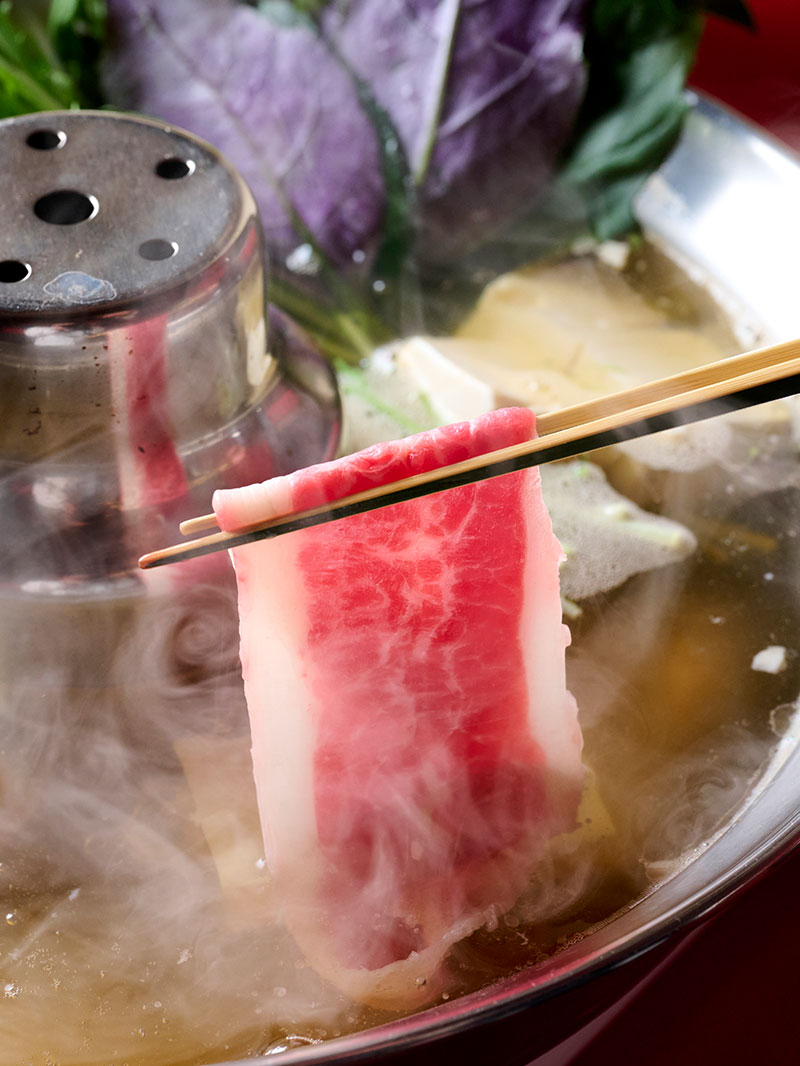
“Basically, it is a shiro-dashi (white broth). To that, I add green chili peppers called jalapeños.” The owner, Mr. Shoichi Fukushima, thus shared with us the secret of the “deliciousness” hidden within the broth. He explained that the cut of meat served is from around the ribs. “This part has the best balance of fat distribution; the sweetness of the fat and the umami of the lean meat pair perfectly with the spicy broth.”
Mr. Fukushima is also uncompromising when it comes to sourcing. To serve the finest cuisine every day, he goes to source ingredients at 9:00 AM, handles the preparations, and opens the shop at 6:00 PM. He goes to bed at 3:00 in the morning. It is said that he has maintained this lifestyle for 30 years. “The more I practice Japanese cuisine, the more I realize how vital the ingredients are. Since I cannot compromise, I inspect and verify everything myself when sourcing. Because I never carry over leftovers to the next day, I have currently narrowed the menu down to only the horse shabu-shabu course and operate on a reservation basis requiring notice by the previous day.”
Furthermore, the vegetables and rice served at Sakura-an are reportedly home-grown. “Since I value seasonality, using produce from my own fields and rice paddies allows me to serve them at their absolute peak,” he shared.
Why does he go to such great lengths and put in so much time and effort? “I have loved cooking since I was in elementary school. It is because the smiles of people saying ‘delicious’ after eating my food made me happy.” Both now and in the future, Sakura-an spares no effort for the sake of the smiles of those who visit. A horse meat shabu-shabu filled with love and nutrition. It is highly recommended.
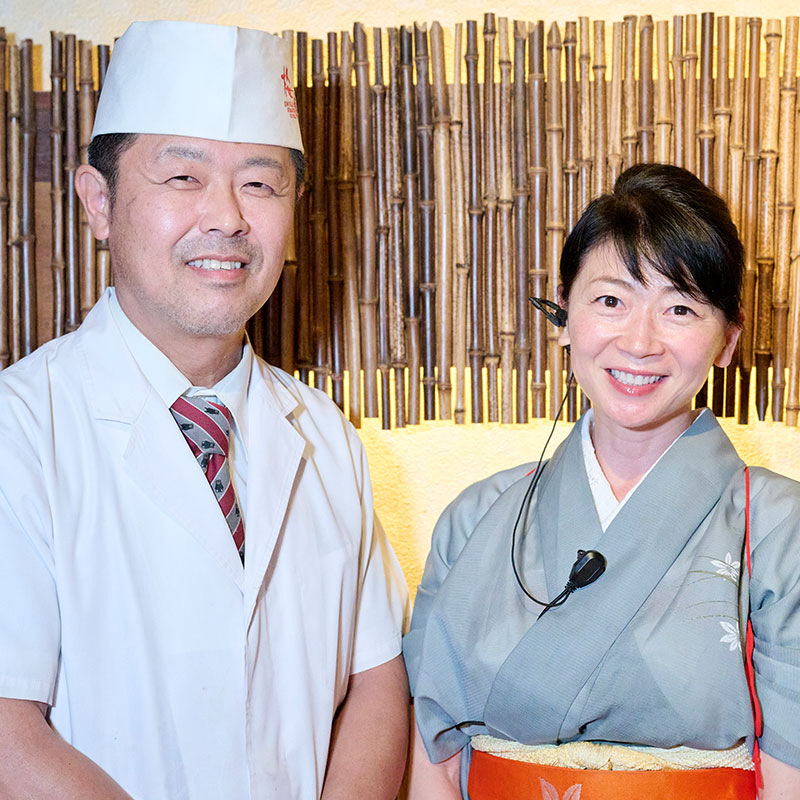
(Left) Mr. Shoichi Fukushima; (Right) his wife, Masami. The business was established in 1990, when Shoichi was 23 years old.
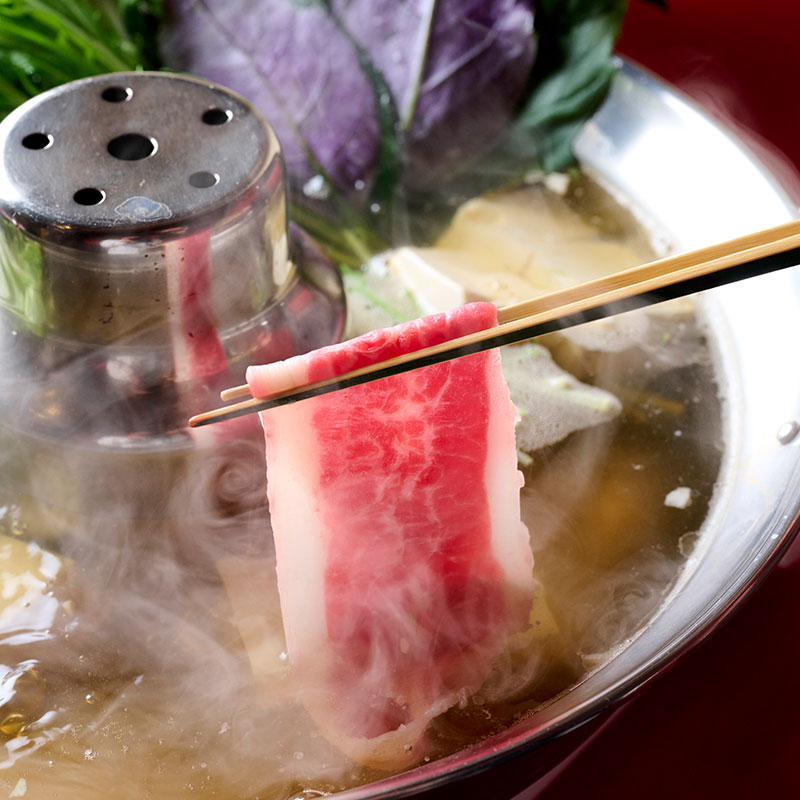
The rich fat melts in your mouth, while the savory aroma of the broth, a hint of spiciness, and the sweetness released from the vegetables all work together to enhance the umami of the horse meat.
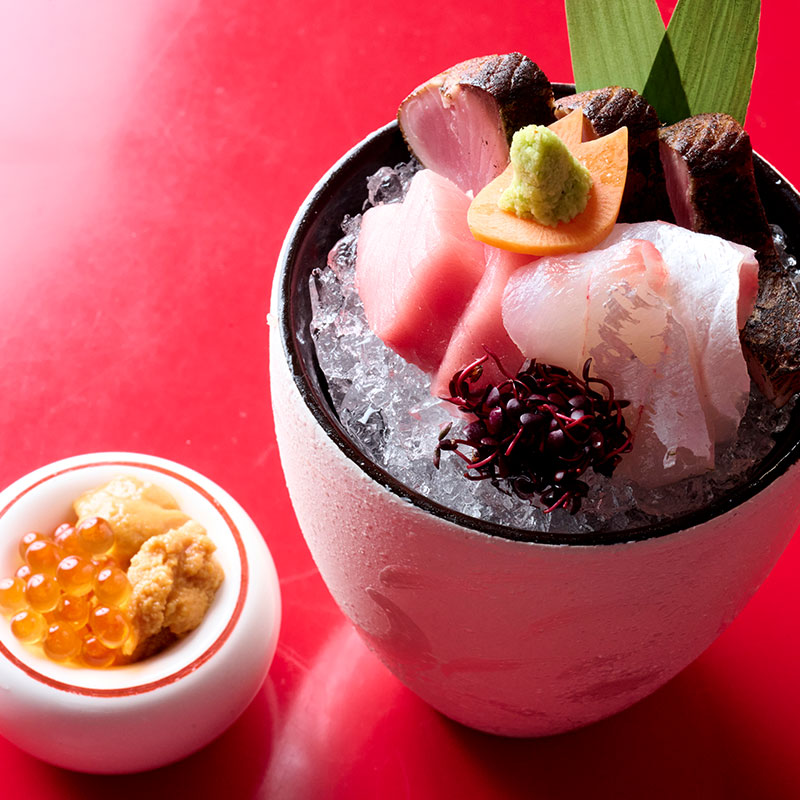
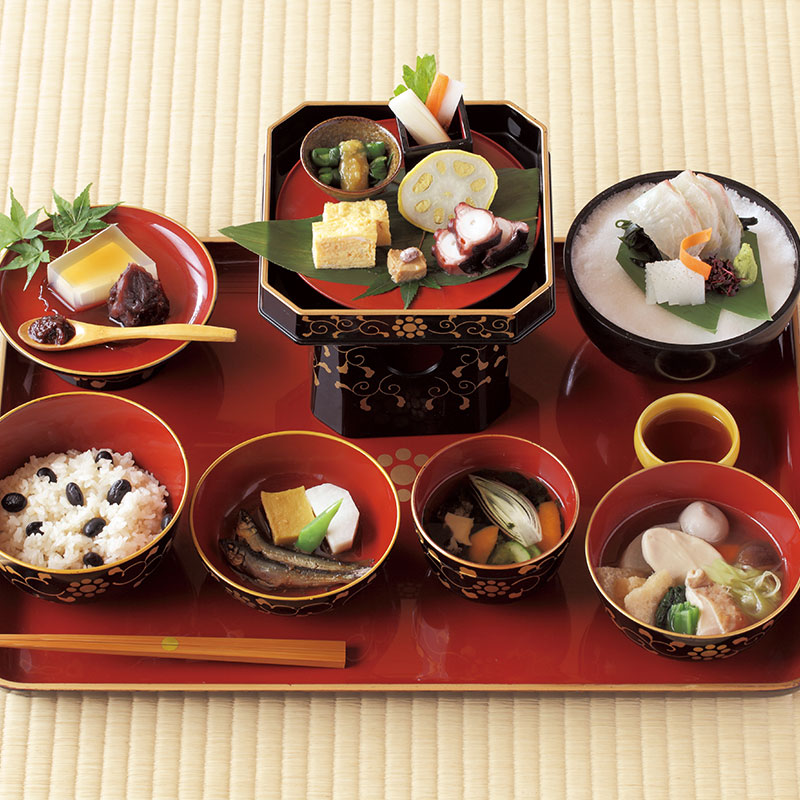
Sashimi of seasonal fish delivered directly from Amakusa. Their freshness is constantly maintained in the restaurant’s on-site live tanks.
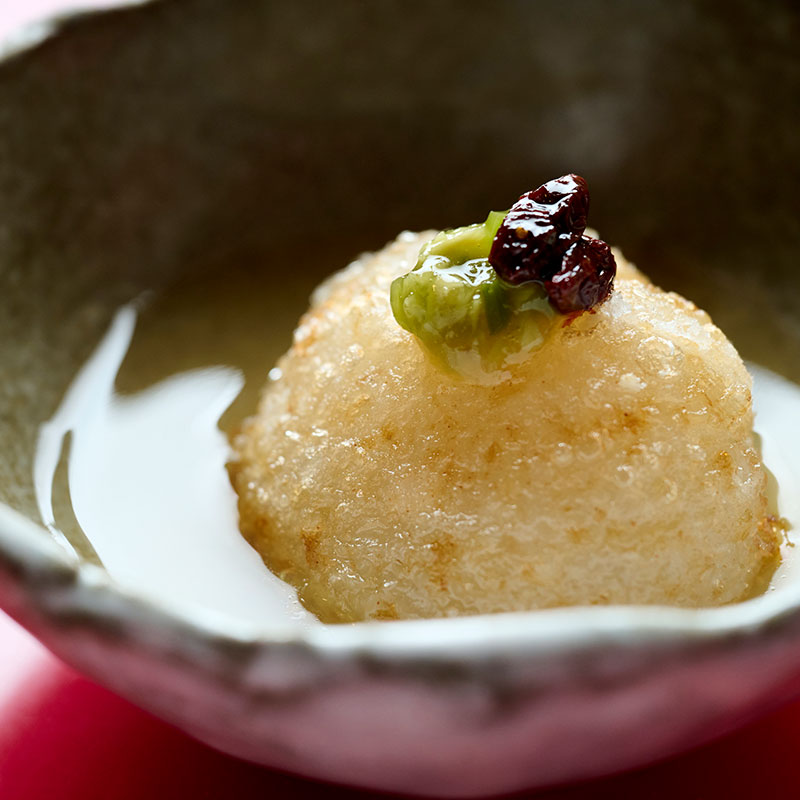
Sakura-an’s specialty “Renkon Manju,” featuring the flavor of lotus root and a chewy, mochi-like texture with a subtle hint of mustard.
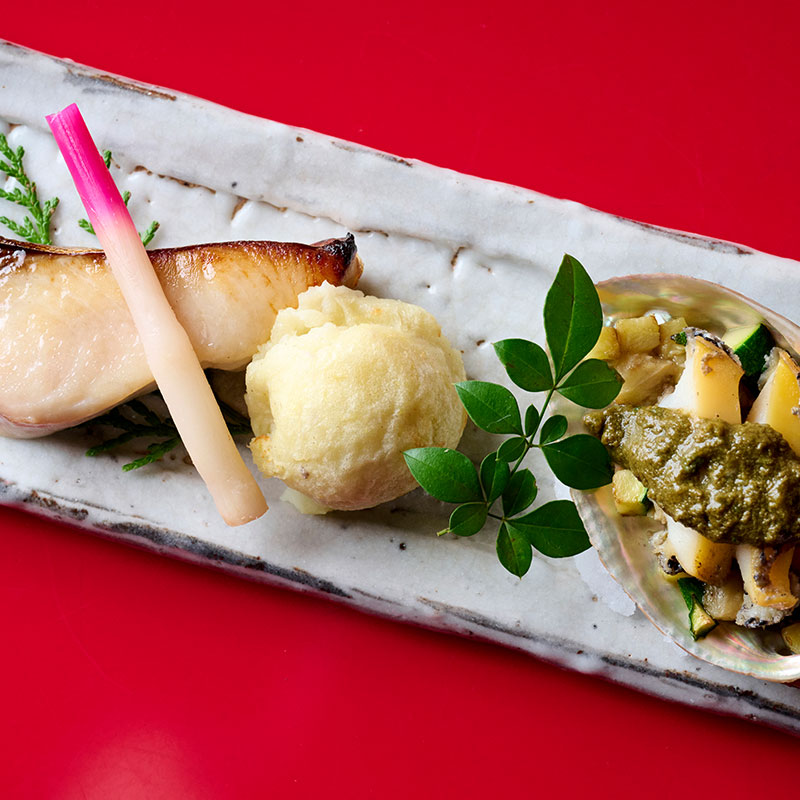
Rich, fatty autumn Spanish mackerel (aki-sawara). The juicy fat and tender flesh create a wonderful contrast.
Since being featured in the “Michelin Guide Kumamoto/Oita 2018 Special Edition,” the restaurant has seen many repeat customers from outside the prefecture. Early reservations are highly recommended!