


Found in Kumamoto City! Fluffy “dago” dumplings and a popular restaurant for seafood broth.
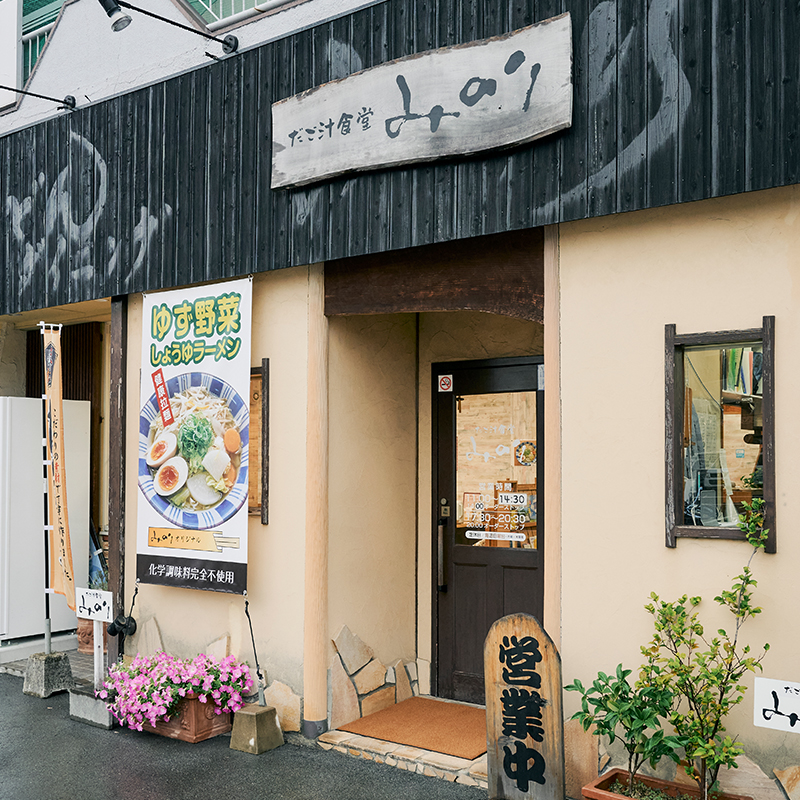
Kita Ward, Kumamoto City, where a quiet residential neighborhood unfolds. Located in one corner of this area is “Dagojiru Shokudo Minori.” The establishment was originally an udon restaurant that operated for 34 years. The “broth” and “dago” dumplings are prepared by drawing upon the wealth of experience gained during that era. We spoke with the owner, Mr. Masatsugu Ishibashi, about the dedication behind his craft.
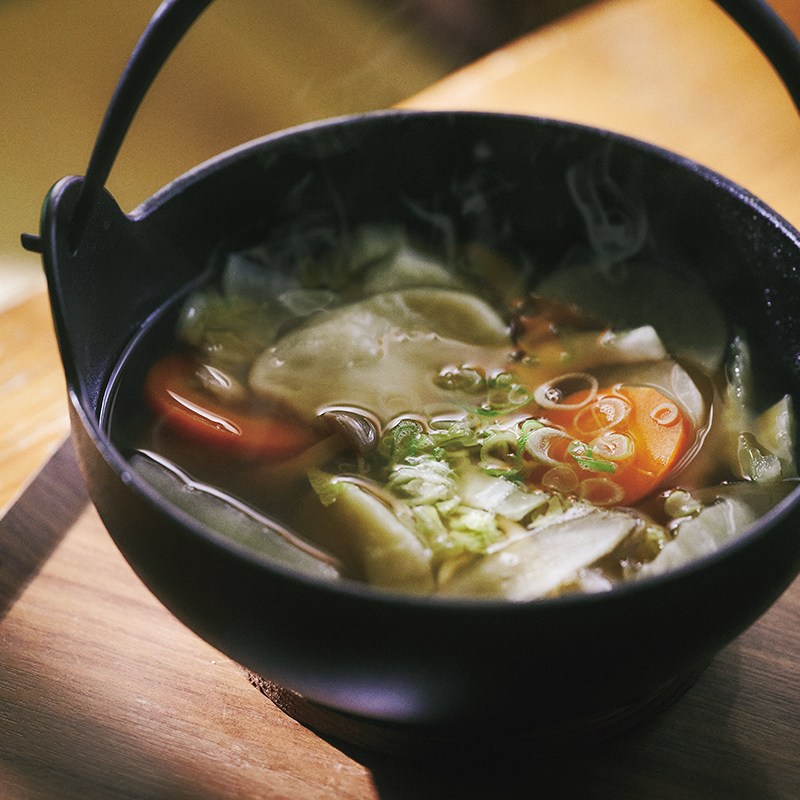
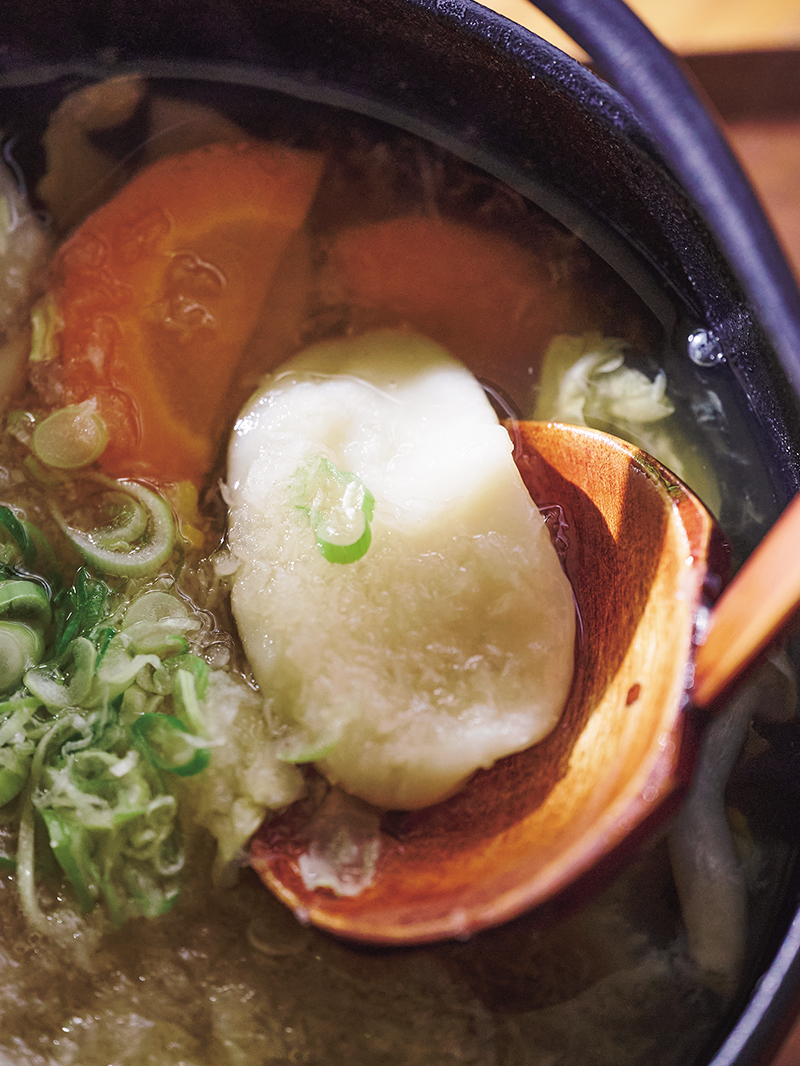
The soy sauce-based dagojiru of “Dagojiru Shokudo Minori,” fragrant with the aroma of dashi. The rich stock and Kumamoto’s sweet soy sauce are an excellent match.
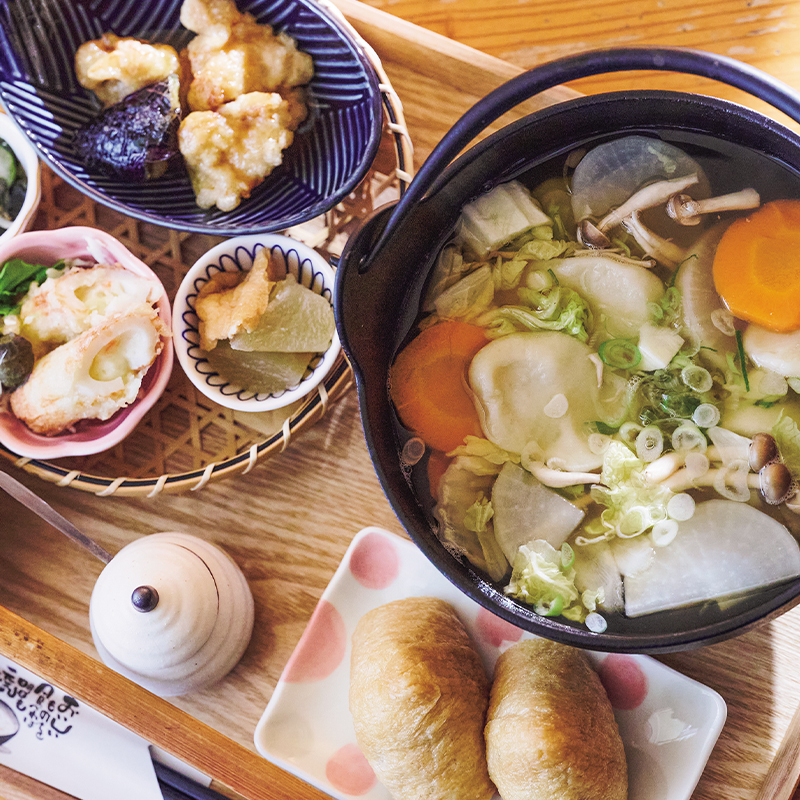
Dagojiru Gozen (Set Meal)
1,500 yen (tax included)
A highly satisfying set featuring dagojiru served in an iron pot, accompanied by handmade inari sushi, chicken tempura with black vinegar glaze, chikuwa salad, and two seasonal small side dishes.
The secret to the dashi lies in the heat control and the timing.
The most popular dish at “Dagojiru Shokudo Minori” is the soy sauce-flavored dagojiru. With just one sip, the sweetness of the soy sauce and the rich aroma and umami of seafood spread throughout your mouth. Regarding the dashi (broth) that is the secret to this deliciousness, the owner, Mr. Masatsugu Ishibashi, kindly shared the details with us.
“Previously, we operated an udon restaurant for 34 years. The important things I learned in broth-making are the heat control and the timing of when to remove the ingredients. If it is not simmered enough, the taste and aroma will not come out, but if it is simmered too long, the astringency becomes too strong.”
The time spent preparing the broth is approximately one and a half hours. The secret to producing such a rich flavor in a short amount of time lies in the combination and proportions of the ingredients.
“For the broth, I use Rausu kelp from Hokkaido, iriko (dried sardines) from the Goto Islands in Nagasaki, and dried bonito flakes and mackerel flakes from Kagoshima—all of which I personally tasted and found delicious. Each ingredient plays a different role: the kelp provides sweetness and depth, the iriko and mackerel bring out the flavor, and the bonito flakes balance the taste. In particular, since the kelp and mackerel form the base of the flavor, I adjust the amount of kelp based on its condition and use mackerel flakes to ensure the flavor is easily released. I adjust the quantities based on the intuition I honed while running the udon restaurant.”
The main ingredient of the dagojiru—the dago dumplings—has a mysterious texture. At the moment you bite into them, they have a firm consistency like udon. However, once your teeth pass through, the inside is fluffy.
“During my udon restaurant days, I made udon using bread flour and rice flour, but for the dago, I blend all-purpose flour, cake flour, and rice flour, and then add tofu. By doing so, they take on a fluffy texture without the typical chewiness. Since many of our customers are accompanied by children, we prioritized making them easy for little ones to eat, which resulted in the dago we have today.”
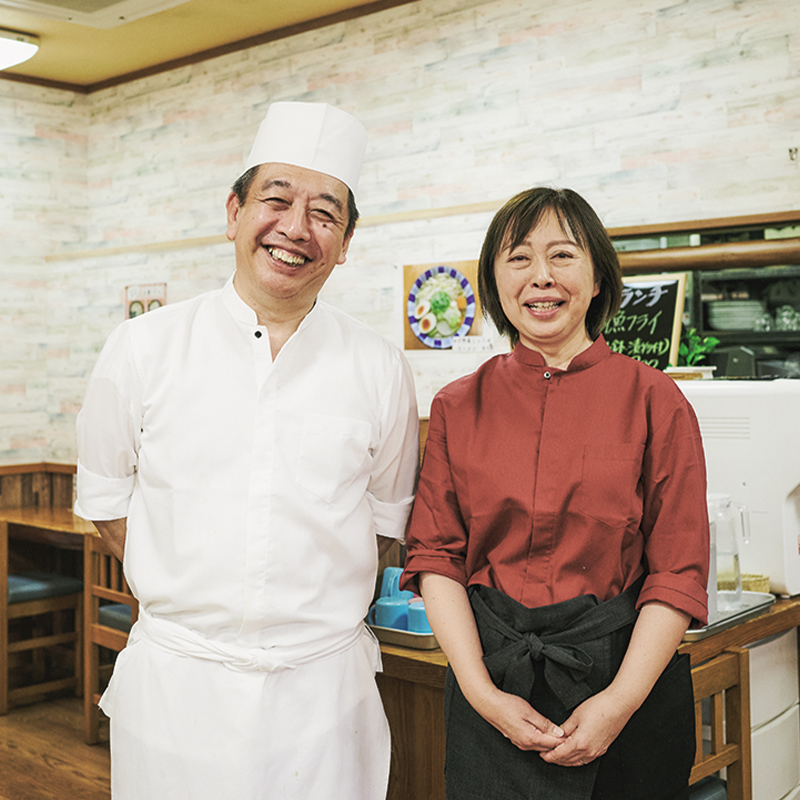
Mr. Masatsugu Ishibashi and Ms. Naoko Ishibashi.
Opened “Dagojiru Shokudo Minori” in November 2022.
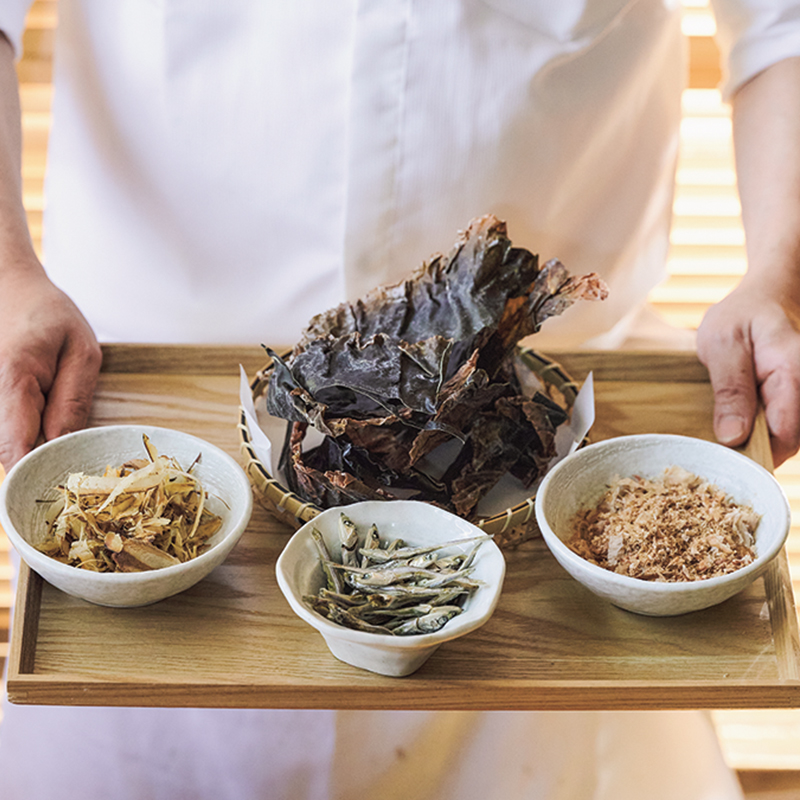
The four types of ingredients carefully selected by Mr. Ishibashi for the dashi broth.
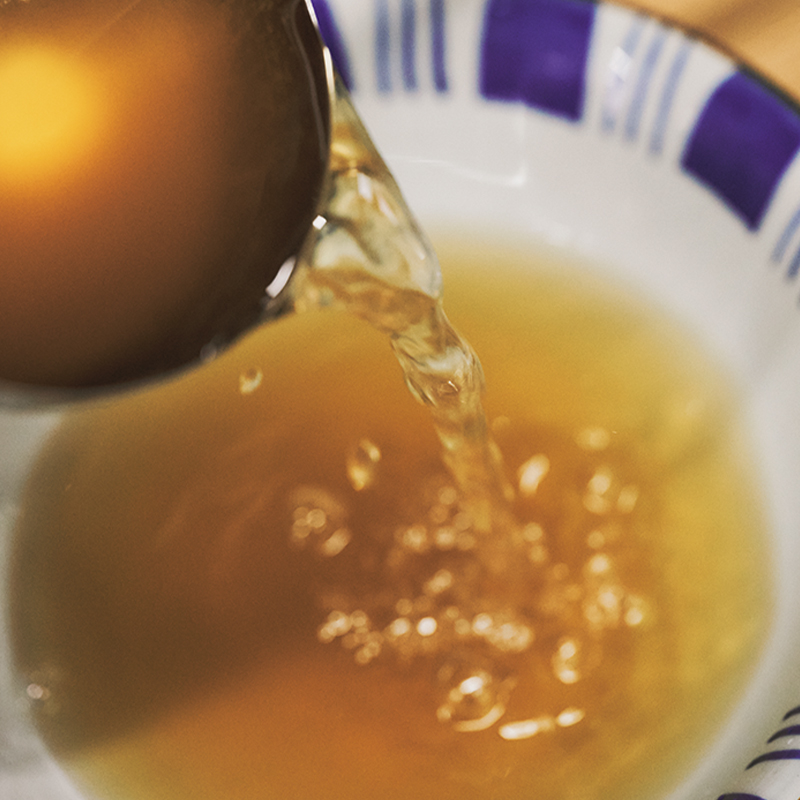
The dashi broth is prepared using techniques that have been passed down since their days as an udon restaurant.
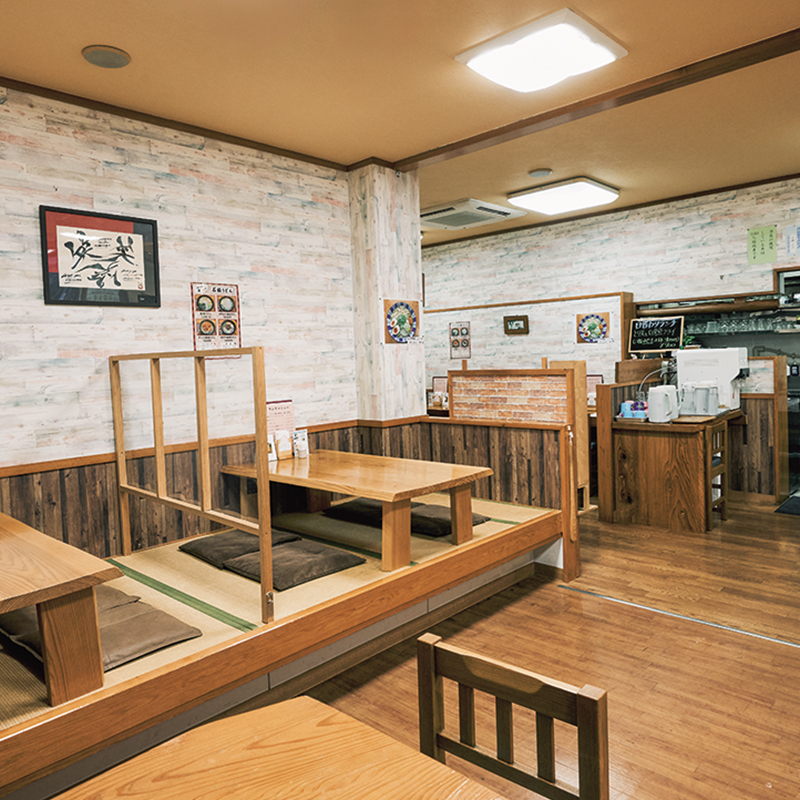
Inside the restaurant, high chairs for babies and picture books are provided.
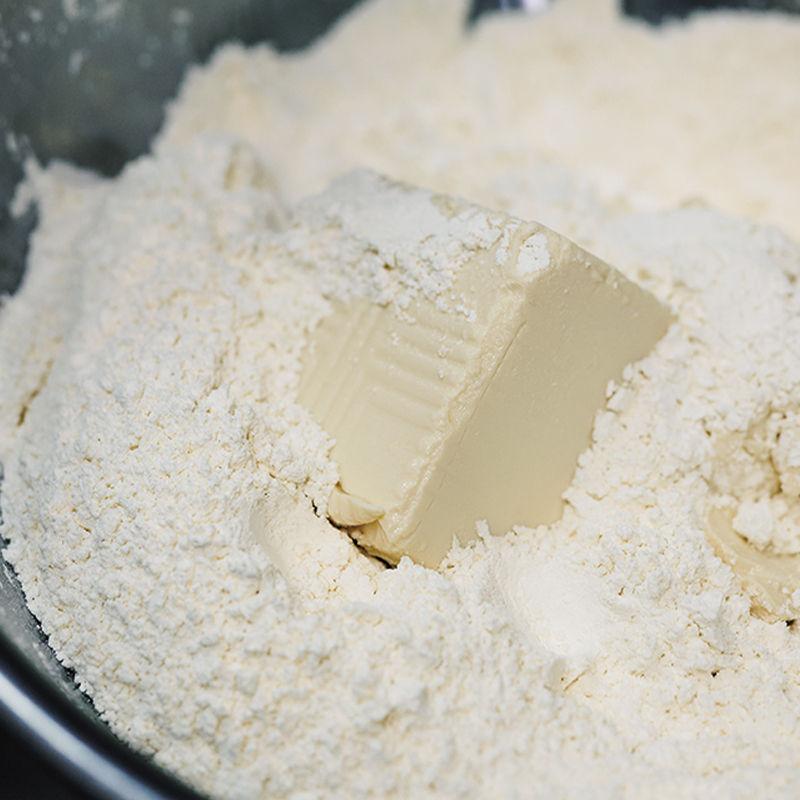
Tofu is mixed in to ensure the dago dumplings achieve a fluffy texture.
From an udon restaurant to a dagojiru eatery. A challenge beginning at the age of 60.
Why did you switch from a popular udon restaurant that spanned 34 years to a shop specializing in dagojiru?
“I love starting new things. It was the same with the previous udon restaurant. I was studying Western cuisine in Tokyo until I was 24, but then my father’s debts came to light. To repay them, I thought about starting a restaurant in Kumamoto. Since the location where I intended to open the shop was in front of a pachinko parlor, I thought food that could be eaten quickly and easily would be best, so I decided on an udon shop.”
Mr. Ishibashi then taught himself the art of making udon and opened his business. He says he was blessed with wonderful customers and was able to continue the udon restaurant for 34 years. “Eventually, when I reached the age of 60, I felt the urge to do something new again, so I started the dagojiru shop that my wife was also interested in.”
Mr. Ishibashi’s passion for taking on new challenges also extends to menu development. While five types of dagojiru are typically offered, the selection apparently increases depending on the season. Mr. Ishibashi, who never shies away from trial and error. Recently, he devised the “Dagojiru Gozen,” a set meal where guests can enjoy Kumamoto’s ingredients and local cuisine.
“Because the customers are smiling, I smile too. And because I am smiling, a sense of joy enters the cooking and makes it delicious. By eating that kind of food, the customers smile in turn. I want to create such a circle of smiles. Furthermore, since there is no such thing as ‘perfection’ in cooking, I hope to spend my life exploring how to create delicious dishes that bring joy to my guests.”
As they spoke, Mr. and Mrs. Ishibashi wore beaming smiles. Run by the couple, “Dagojiru Shokudo Minori” is a community gathering place that connects each and every person’s smile.
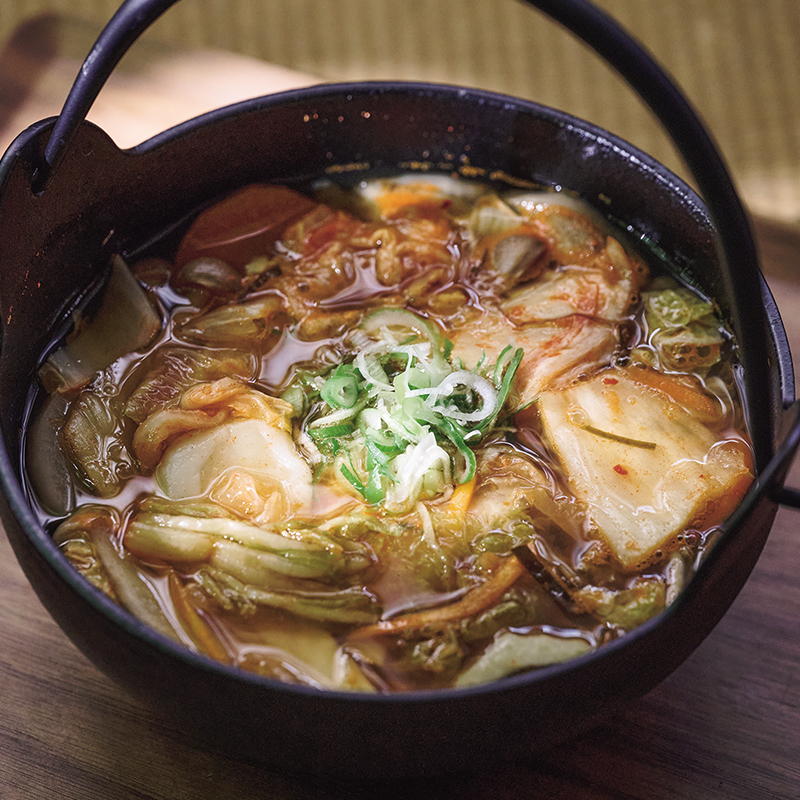
Kimchi Dagojiru
950 yen (tax included)
Dagojiru containing homemade kimchi. The flavor of the dashi and the spiciness of the kimchi stimulate the appetite.
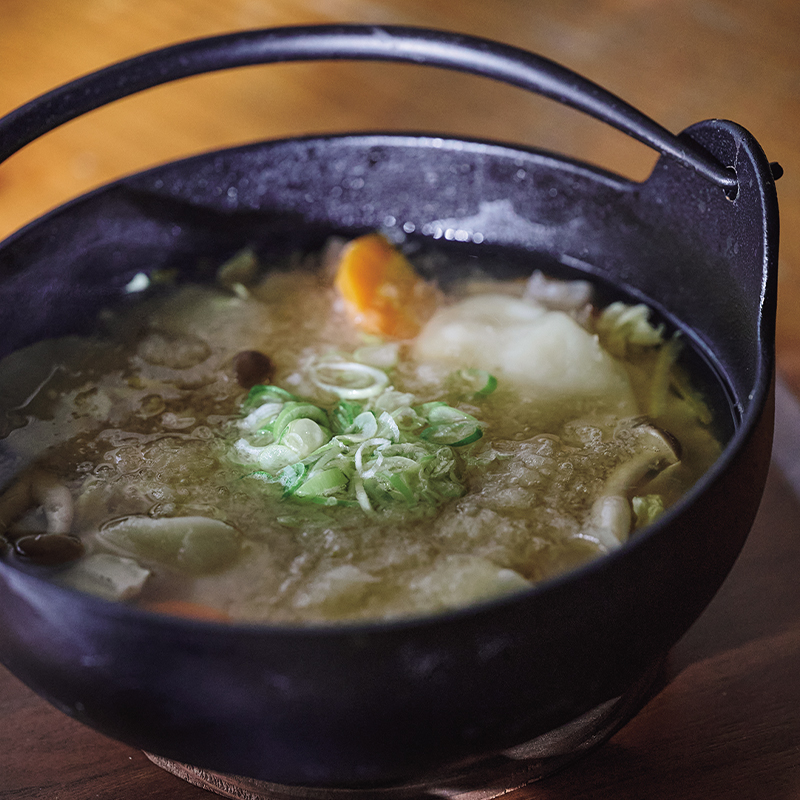
Dagojiru with Yuzu and Grated Daikon
950 yen (tax included)
A dagojiru soup containing yuzu and grated daikon radish. The refreshing yuzu pairs beautifully with the wheat aroma of the dago dumplings.