


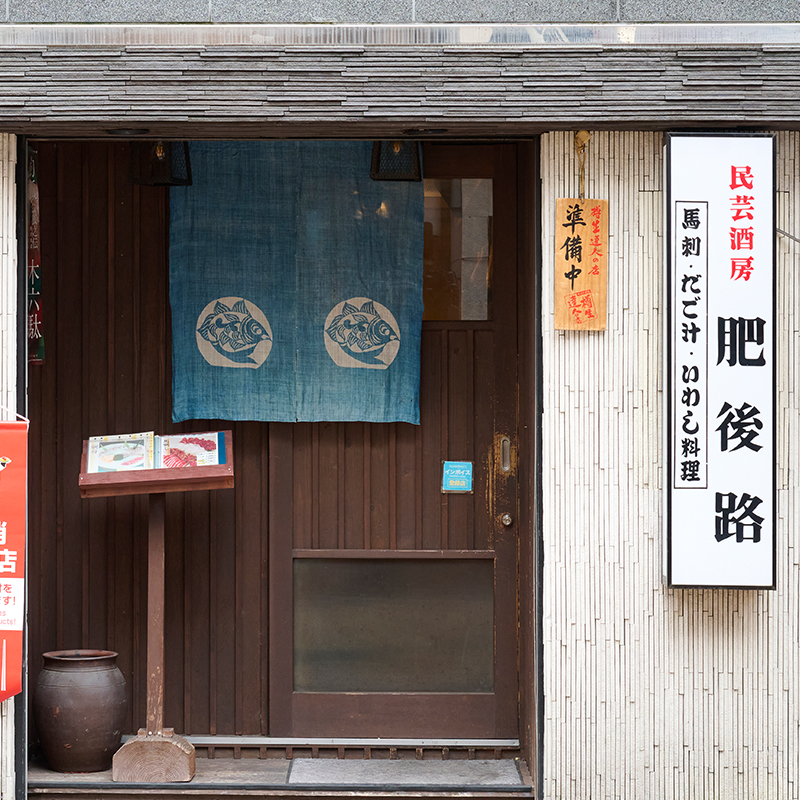
Soybeans soaked in water are ground into a paste and added to miso soup. This is Gojiru. While this rustic dish has been passed down through various regions of Japan, there is a restaurant where you can enjoy it in an exceptionally delicious way. That place is “Mingei Shubo Higoji,” located near Kumamoto Castle. We asked about their dedication to the Gojiru that has remained a popular favorite since the day they first opened.
A renowned establishment synonymous with Kumamoto’s regional cuisine.
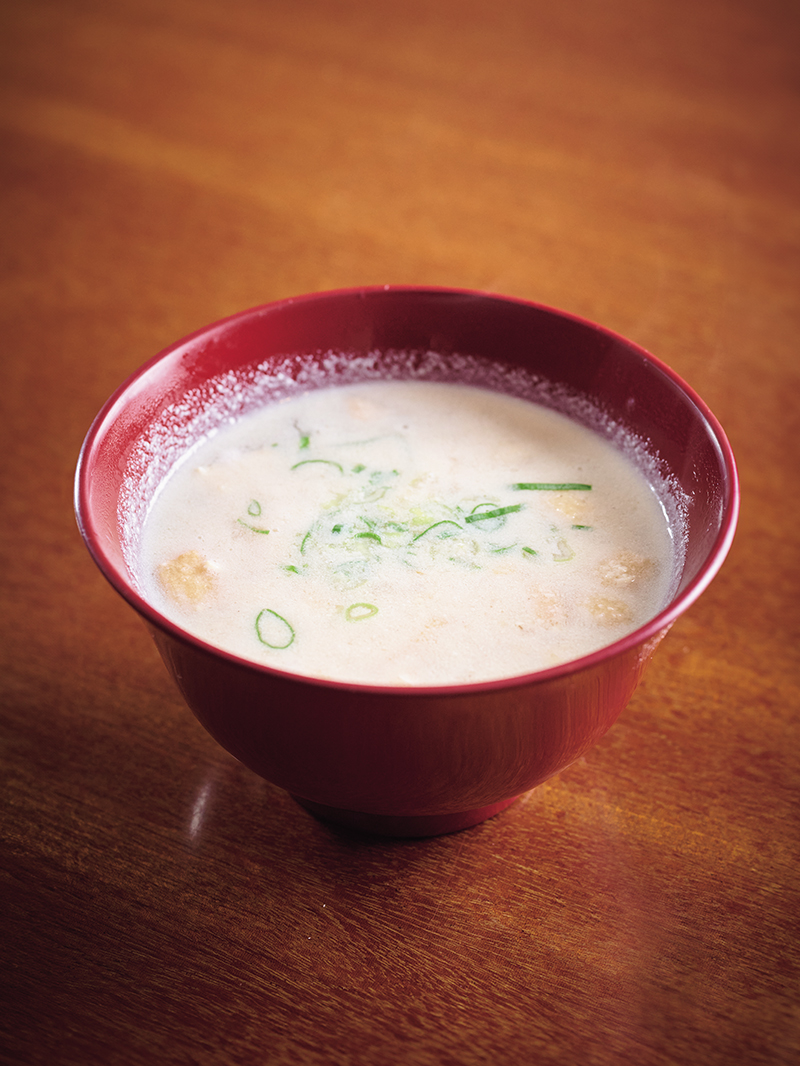
It is November. Served before a chilled body is a bowl of piping hot Gojiru. With just one sip, the gentle flavor of the miso seeps into and soothes the body. As you sip further, hearty, whole soybeans flow into your mouth, allowing you to enjoy their distinct texture. It is a simple bowl containing only three ingredients: soybeans, deep-fried tofu, and green onions. However, as you continue to drink, you find yourself filled with a sense of satisfaction from its deep, rich flavor.
“We don’t add other ingredients so that it can be enjoyed as a ‘finisher’ even after drinking alcohol,” says Mr. Hitoshi Maruno, the owner of “Mingei Shubo Higoji.” The restaurant is famous for its regional cuisine, where you can enjoy authentic Kumamoto dishes—starting with horse sashimi (basashi), as well as hitomoji no guruguru (scallion rolls) and Suizenji-nori—alongside excellent sake. The ingredients and sake used here are exclusively sourced from Kumamoto Prefecture.
“The shop was opened in 1963 by my aunt and grandmother. My aunt, who worked as a nakai (traditional waitress) at an inn in Amakusa, had always hoped to one day have her own shop in Kumamoto City. A regular customer who knew of her aspirations suggested that a location near Kumamoto Castle would be ideal; so, one day she made up her mind and opened the shop with my grandmother. They reportedly named it ‘Higoji’ with the hope that it would become a representative establishment of Kumamoto.”
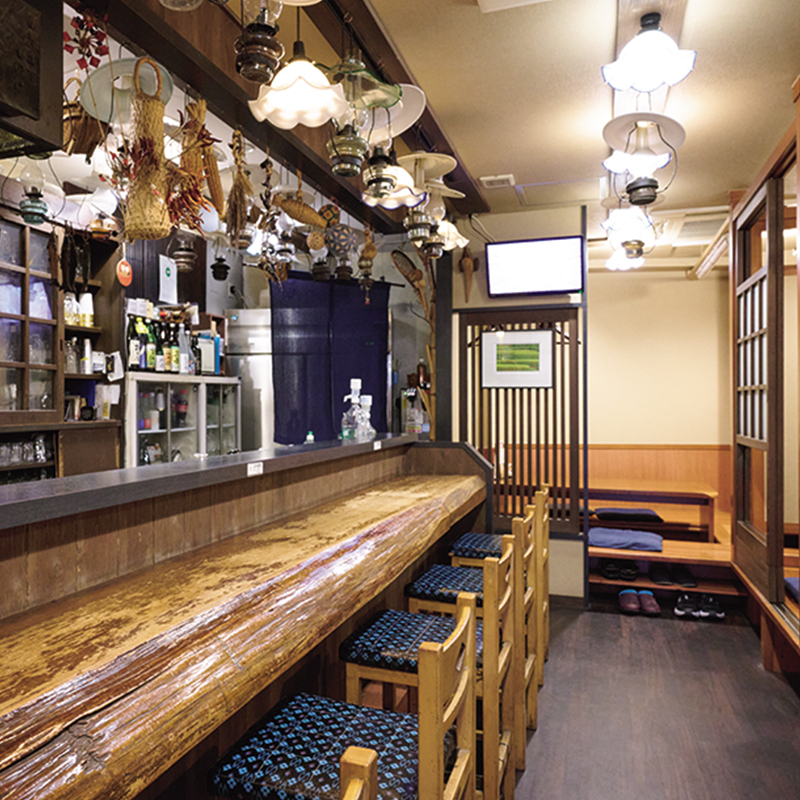
A counter and cupboard that create a nostalgic atmosphere.
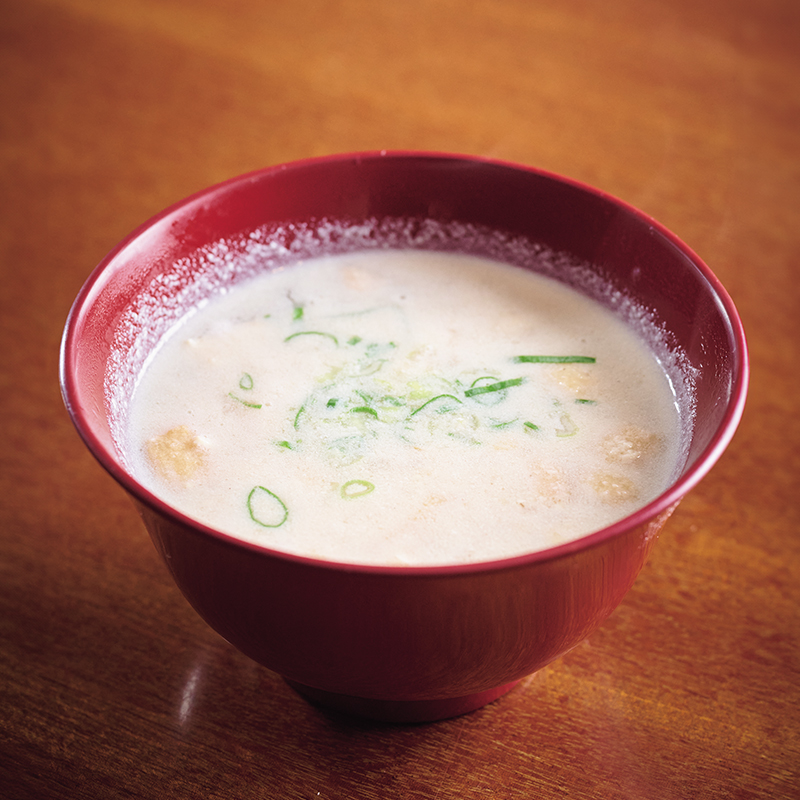
Gojiru.
The ingredients are only soybeans, deep-fried tofu, and green onions. 506 yen (tax included).
*Note: On the menu at “Higoji,” it is listed as “Gojiru” (written in hiragana as ご汁).
Fish are sourced daily from a fishmonger operated by relatives in Amakusa and served at the restaurant. The shop thrived as customers were delighted to be able to taste Amakusa ingredients right within Kumamoto City. Because fresh sardines could be enjoyed there, the sardine and gojiru set meal was a popular favorite.
The number of customers was large, and eventually, the two of them could no longer manage everything alone. That was when a call went out to Mr. Maruno’s father, Yukitaka, who was then employed in Tokyo. When asking Yukitaka—who still stands in the kitchen today—about those days, he replied, “In addition to being interested in cooking, it was a request from my older sister, so I accepted, hoping I could be of help. I quit the company I was working for and attended culinary school while staying at my older brother’s house, who was also in Tokyo. I trained at restaurants after school and after graduation.”
Yukitaka joined the business four years after its opening. Initially, the focus was not centered on regional cuisine, but there were many requests for Kumamoto dishes when entertaining guests from outside the prefecture, so these offerings gradually increased in number.
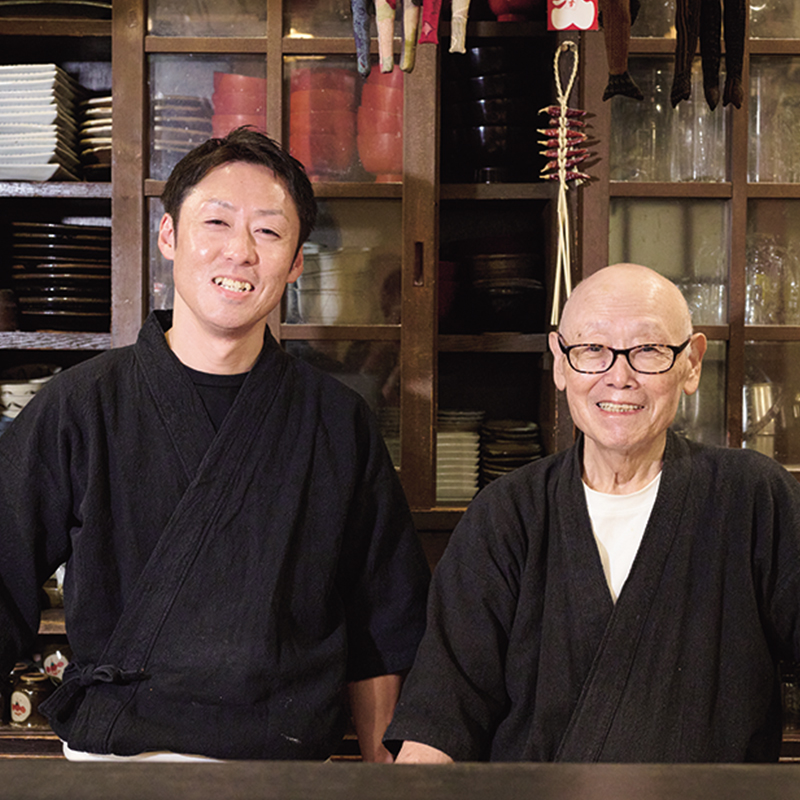
The shop owner, Mr. Hitoshi Maruno (left), and Mr. Yukitaka (right).
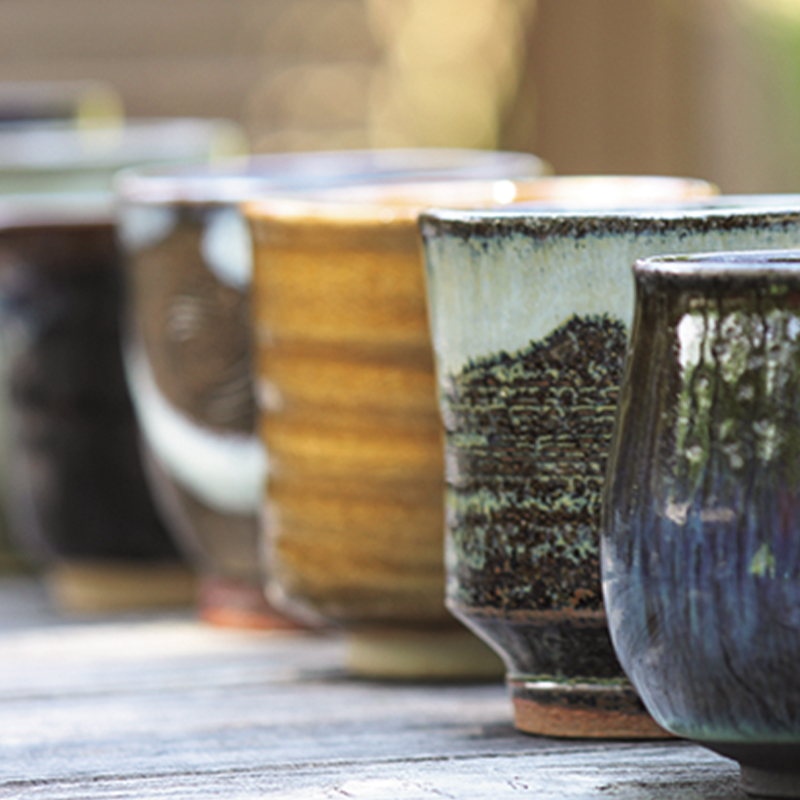
The tableware, too, is a reason why people gather at “Higoji.”
Not only the cuisine, but the tableware as well is a key part of the charm of “Higoji.” The term “Mingei,” which is included in the shop’s name, is an abbreviation for Minshūteki Kōgei (Folk Crafts). Yukitaka resonates deeply with the philosophy that there is inherent beauty in the tools of everyday life crafted by anonymous artisans.
“Since my older brother paints, I was interested in art through his influence. As I looked at various works, I became strongly drawn to Mingei tableware.” The tableware he owns was collected by visiting kilns across the country, starting with Kumamoto’s own Shodai-yaki pottery.

This is Mr. Yukitaka’s favorite plate. It is used generously as a vessel for the cuisine.
“I want to serve food on this. Once that thought crosses my mind, I can’t help but buy it—though my family does scold me for it,” says Mr. Yukitaka. Believing that suitability for everyday use is vital, the plates Mr. Yukitaka selects are all free of excessive ornamentation; they are simple, yet each one makes the food look truly beautiful. Drinking sake from vessels specifically created for “Higoji” by Kumamoto kilns makes the experience all the more exceptional.
There was a time when even “Higoji” considered closing its doors due to the advancing age of Mr. Yukitaka and his wife. “However, I felt it would be such a waste to close when we have so many loyal customers.” His son, Hitoshi, who shared these words, took over the business 17 years ago out of a desire to preserve the shop that has been so dearly loved.
At that time, Gojiru had been removed from the menu because of the labor-intensive process required to make it. However, in response to strong requests from regular customers, it was brought back. For the Gojiru, soybeans are soaked in water overnight, and the following day, those beans are ground using a mortar and pestle. “You can do it with a mixer, but if you do, the texture of the soybeans disappears,” Hitoshi explains. Because it is done by hand, they cannot produce large quantities, but this process gives birth to the unique Gojiru of “Higoji,” where the texture of the soybeans can be enjoyed to the fullest.
Enjoy regional cuisine and beautiful tableware while conversing with the two men, whose personalities exude a warm friendliness. Popular menu items such as sardine isobe-age (deep-fried in seaweed batter) and ganmodoki (tofu fritters) are also highly recommended. How about visiting on the evening of a day spent sightseeing in Kumamoto City? It is also a wonderful establishment to visit as a “second stop” for the night.
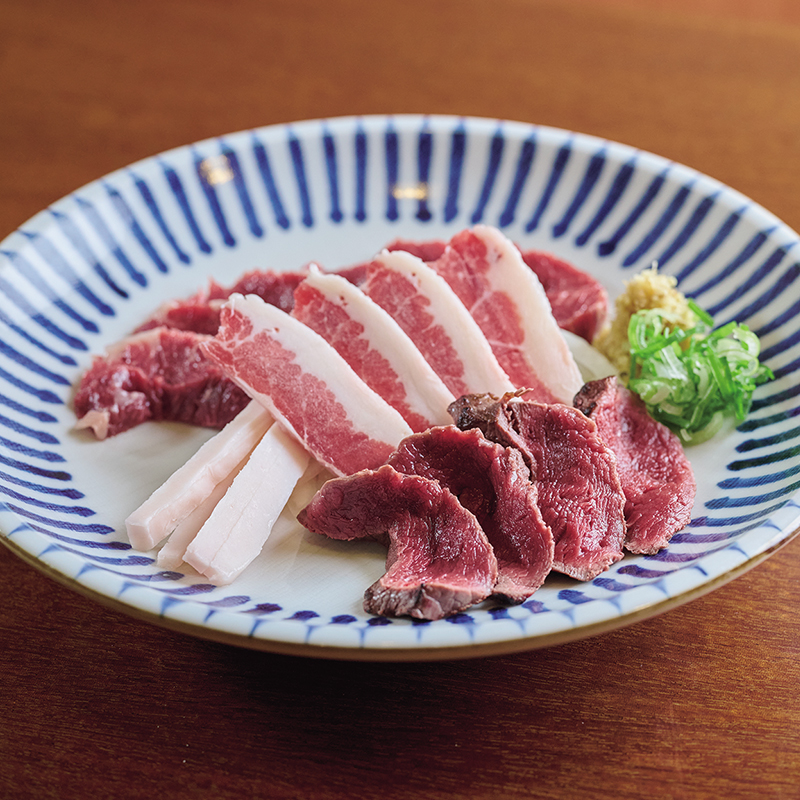
4-Kind Horse Sashimi Platter
You can enjoy four different cuts: Kurashita (shoulder loin), Hire (fillet), Futaego (flank), and Tategami (mane fat).
3,520 yen per serving (tax included).
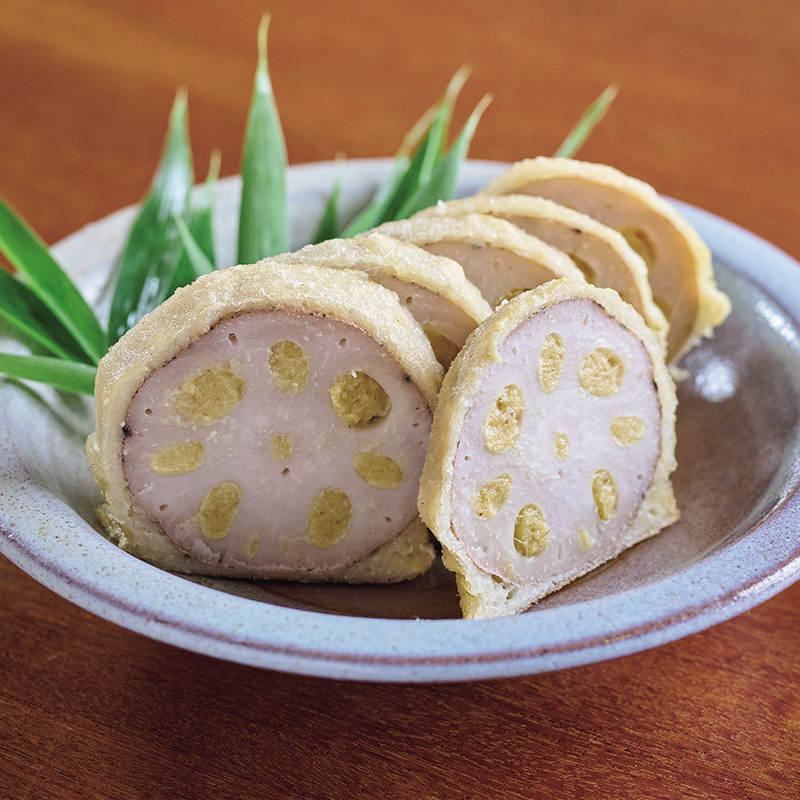
Karashi Renkon (Mustard-filled Lotus Root)
A slightly sweet Japanese mustard is used. You can enjoy it served fresh from the fryer.
836 yen (tax included).
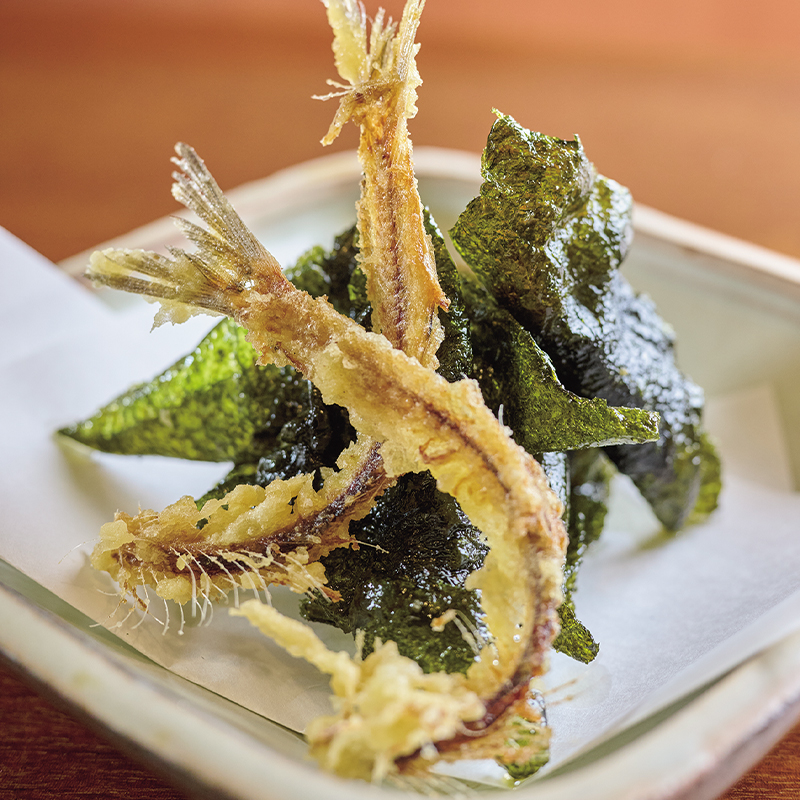
Sardine Isobe-age (Deep-Fried Sardine Wrapped in Seaweed)
Sardines are minced with garlic chives and onions into a fish paste, then wrapped in nori seaweed and deep-fried.
The deep-fried bones are savory and offer a delightful crunch.
935 yen (tax included).
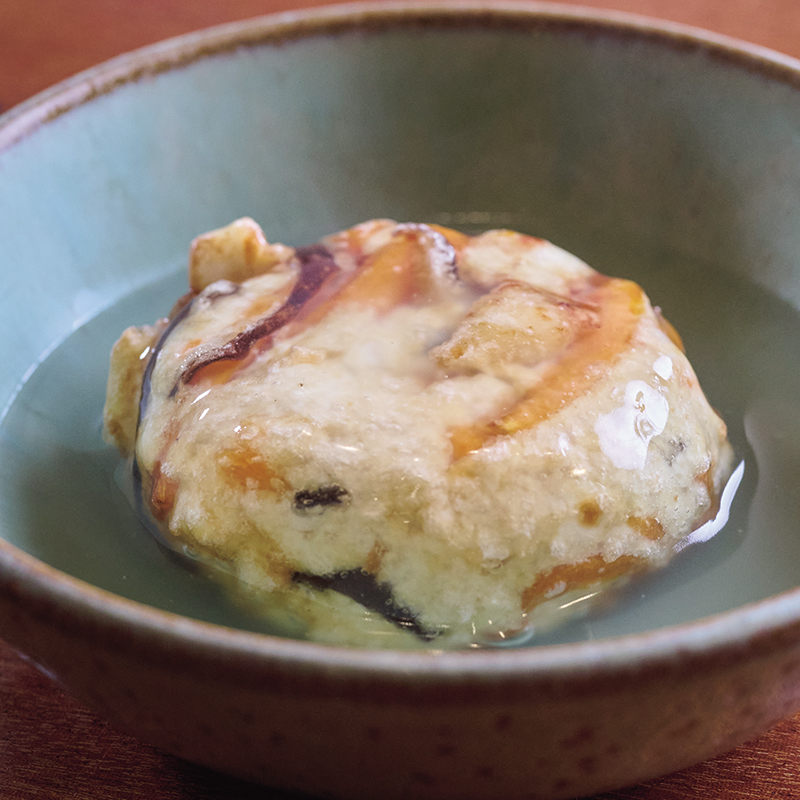
Ganmodoki (Fried Tofu Fritter)
This specialty dish contains carrots, shiitake mushrooms, ginkgo nuts, shrimp, and tofu.
605 yen (tax included).