


The World of Chef Takashi Hishie
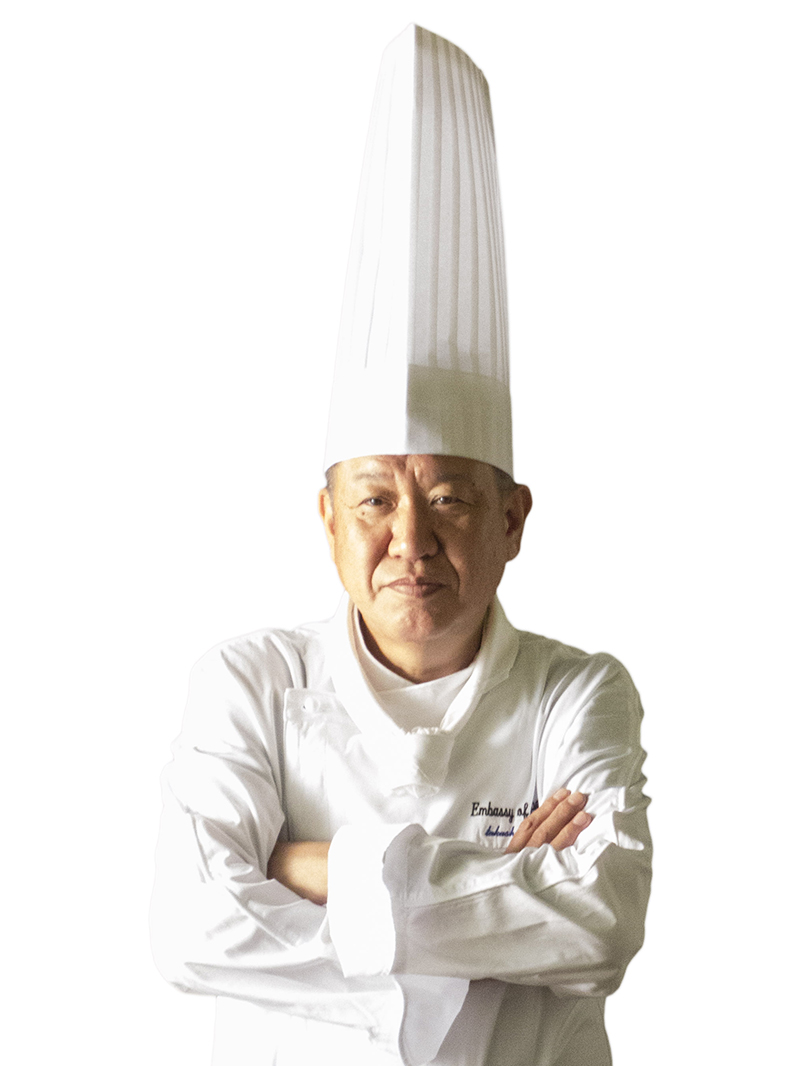
There is a chef who has made his home in Minamioguni, Kumamoto.
The name of that chef is Takashi Hishie. To date, he has been active in 19 countries around the world.
As a mentor, he has dedicated himself to the training of chefs in conjunction with the opening of new hotels.
What is the reason that Mr. Hishie returned to Japan?
We spoke with him about his life story and the sentiments behind his guiding philosophy: “Cooking is Love.”
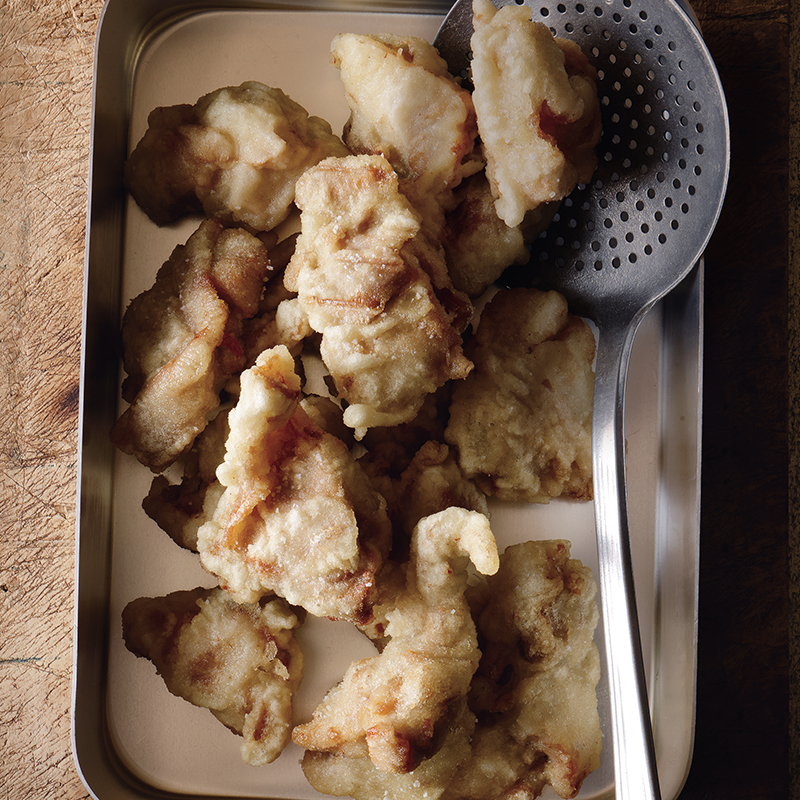
What Mr. Hishie ultimately arrived at was something safe, affordable, and delicious.
The roots of an extraordinary chef
—I understand that you have been active as a “Food Master.”
Yes, that is a qualification that was issued by an international cultural exchange program recommended by the U.S. Department of State. To obtain it, one must be recognized as being proficient in the cuisines of three or more countries. Being “proficient” in this context means being a “professional,” so it requires knowledge and skill beyond that of a hotel’s executive chef.
The examination to obtain the qualification is conducted by a panel of four existing Food Master certificate holders. It is a rigorous test where a single “No” results in disqualification. I hold four licenses: Japanese, French, Italian, and Chinese cuisine.
—Are your roots in Japanese cuisine?
My start was in Kyoto cuisine. When I was 15 and attending a technical college in Kobe, I dove into a part-time job at a restaurant, lured by the promise of “two staff meals included.” It turned out to be a Kyoto cuisine restaurant. I didn’t know it at the time, but it was a shop owned by a very famous figure in the world of Kyoto cuisine. I worked there for five years. It was a harsh world—an environment where even when new people joined, they couldn’t endure the strictness and would quit immediately. For the first two years, I was only allowed to wash vegetables and dishes outside the shop.
—Why was it that you didn’t quit?
I think it was simply because I loved “cooking.” Looking back, I was the kind of child who often watched my mother cook. I suppose I was interested in it. There was also the fact that I respected the owner. I thought he was the greatest person in the world. In reality, I didn’t receive direct instruction from him; I learned through the senior apprentices. After about two and a half years at the shop, I was finally allowed to hold a knife and peel vegetables. In the third year, I moved on to seasoning. However, it was a world of “learning by watching,” so they didn’t teach you everything. I was desperately watching and learning while doing my own work.
—Did you choose the path of cooking after graduating from school?
Since it was a technical college specializing in industry, I took a job at Kobe Steel through a recommendation. However, it didn’t feel right, so while working there, I started a part-time job at an izakaya at night. Since I had experience, anyone would hire me. With five years of experience in Kyoto cuisine, I was in a position where I could take charge of an izakaya immediately. After continuing that lifestyle for a year and a half, I decided to make my living in the culinary world after all; I quit the company at age 21 and opened my own shop in Kobe.
—Was that a Japanese restaurant?
No, it was what we would call a club today. At the time, we called them “supper clubs.” It was a late-night establishment where a band would come in and perform. I thought it met the needs of the times because we could also serve food. I felt that with my skills at the time, if I opened a lunch or dinner restaurant, I would lose to other establishments. Therefore, I figured there would be no competitors during the late-night hours when other restaurants had closed. My plan worked, and I expanded to six locations within four years.

From these hands, numerous dishes that captivate people are created.
A turning point at 26: Heading to Australia
This success gave me confidence, and I began to wonder if I could take on the challenge of a daytime business as well. However, the level of restaurants in the Kansai region where I lived was so high that I knew it wasn’t a place where I could truly hold my own, so I turned my gaze abroad. Australia caught my attention. In that vast land, there were only six establishments serving Japanese cuisine. I decided that if I were to make my stand, this was the place. Without being able to speak a word of English, I flew there first and visited all six restaurants to taste their food. Among them was a restaurant called “Fuji” in the metropolis of Sydney; believing it to be the best, I asked them if they would hire me. I completed my training there and struck out on my own four and a half years later. To avoid competing with them, I moved far away from Sydney and opened my own restaurant in the resort destination of Perth.
Purveyor to the Embassy: Becoming an Embassy Chef
“Fuji,” where I trained, was a purveyor to the Japanese Embassy in Australia. While the embassy does have chefs who cook for the staff, external chefs are needed when guests visit or for parties, so I was given opportunities to assist as well.
Eventually, when the Ambassador reached the end of his term and was being transferred to the Philippines, he invited me, asking, “Would you like to come with me?” Intrigued by this new horizon, I left my shop in Australia in the hands of my apprentice and decided to go to the Philippines with him. It was there that an embassy staff member recommended the “Food Master” qualification to me, saying, “There is a certification like this; why not try for it?”
—When did you learn cuisines other than Japanese food?
When you run a restaurant abroad, the locally hired chefs are specialists in various cuisines. Since I was the owner, I was able to learn from them.
Hotel cuisine is a world without “no.”
—So, that was when you began your work as a Food Master, I take it?
Yes. My role was to take command during the opening of first-class hotels—such as those with three stars or three diamonds—until the chefs who would eventually become executive chefs were fully trained. I worked on contracts ranging from six months to a year per location. I provided guidance while cooking alongside them on-site, developing the staff. In the world of hotel cuisine, there is no saying “no” to a guest’s request, so you cannot fulfill the role unless you possess a vast range of knowledge. What was difficult was that when you arrive from the outside to provide guidance as a Food Master, you are initially regarded as the enemy. It begins with resistance. However, in our industry, ability is everything; if your culinary skills are superior, they have no choice but to follow you. Also, to close the distance with the staff, I would pay a bar near the hotel so that anyone could drink and talk freely after work. By the time a hotel launch was complete, the next job was already waiting, so I would head to the next country. That was the life I led.
—How did you manage to learn foreign languages?
It isn’t just me, but if you spend time in an environment where only that language is spoken, your ears become accustomed to it in about a month. Once you can hear the sounds, you begin to understand the meaning. It is the same regardless of the country.
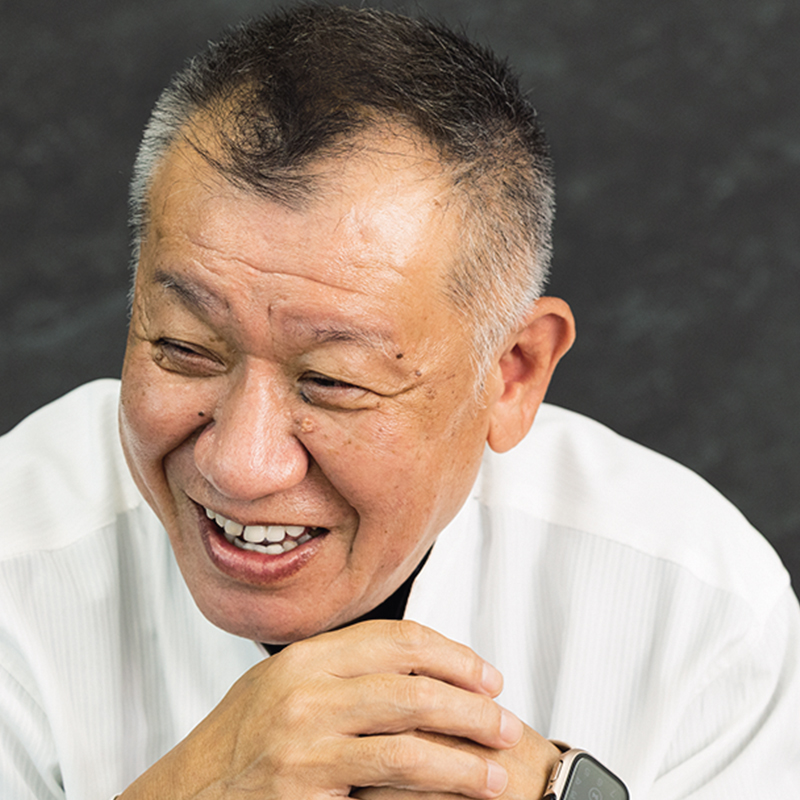
It is said that even now, the phone calls from his former students seeking advice are constant.
A scene at a convenience store witnessed in Japan
When I returned to Japan after a long absence for a family memorial service, I happened to see a child at a convenience store eating fried chicken that was full of additives and saying how delicious it was. I asked, “I see, but your mother’s fried chicken is tastier, isn’t it?” Then the child replied, “It’s the same.” I was shocked. Sensing a crisis—that the sense of taste in Japanese children might be becoming distorted—I felt that I had to return to Japan to promote cooking that does not use additives. That was when I was 46 years old.
When you are abroad, people sometimes say as a joke: “Japanese people don’t decompose even after they die.” This is said because Japan is a major powerhouse of additives such as preservatives. For instance, in EU countries, even those with many permitted additives only have about 20 types. In France and Italy, both famous for their food, only seven types are permitted as preservatives. Additives that alter flavor are not allowed. In contrast, Japan has the highest number in the world, exceeding 1,600 types.
—Why is it that there are so many?
I believe the primary reason is that things can be made “easily and quickly.” The deliciousness that used to take so much time to bring out can now be achieved with just a single spoonful. Naturally, that sells. I think the fact that people have had less and less time to spend on home cooking since the period of rapid economic growth is also part of the background.
Nothing added, nothing subtracted; yet, exquisite. The World of Chef Takashi Hishie (Part 2)