


Nothing added, nothing subtracted; yet, exquisite. The World of Chef Takashi Hishie (Part 1)
The land of Kumamoto, chosen as a base in Japan
After returning to Japan, I first lived in Fukuoka, my wife’s hometown. I didn’t take on hotel work in Fukuoka; instead, I opened a bento shop. This was because I felt that only a small handful of Japanese people would be able to afford expensive hotel cuisine. Since a bento costs around 500 to 600 yen, I figured it would be a faster way to spread the use of completely additive-free food.
However, since so many people visit you in Fukuoka, my wife suggested that we leave the city behind. So, the place we chose was near Kurokawa Onsen in Kumamoto. The reason for living in Kumamoto is that the tap water there is the cleanest and most delicious in Japan. Water is vital to cooking. Since establishing my base in Kumamoto, I have built a shop and a factory, and I am actively engaged in food supervision, giving lectures, and various other activities.
Young mothers are beginning to change
About 20 years ago, when I began my activities to promote additive-free food, there was a lack of understanding. Even when I spoke with food buyers, the prevailing perception was that additive-free food was not delicious and would not sell. I believe that has changed because health consciousness in society has increased. In particular, the awareness of parents with children has changed. As allergies and atopic dermatitis have become more widespread in the world, the desire for one’s own children to grow up healthy has intensified.
—What kind of topics do you discuss in your lectures?
I often target people who have children. I appeal to their love for their children and tell them that delicious food can be made without using additives. I give my lectures while emphasizing food safety and peace of mind. A child’s sense of taste is formed by around the third or fourth grade of elementary school. This is also the period when the variety of foods they eat increases all at once. If they consume foods with many additives during this stage, it can lead to taste disorders. Consequently, when they become adults, they will no longer be able to recognize authentic flavors.
The sentiments embedded in the words “Cooking is Love”
—Please tell us about your philosophy that “Cooking is Love.”
It means that if you cook with love, the food becomes delicious. Parents want their children to be healthy. Because they cook with that love and take the time and effort, the food becomes delicious. That is why I have always maintained that cooking is not about technique. A parent’s love for their child—I believe that is the most important thing for cooking.
What he aimed for was the hotel kitchen
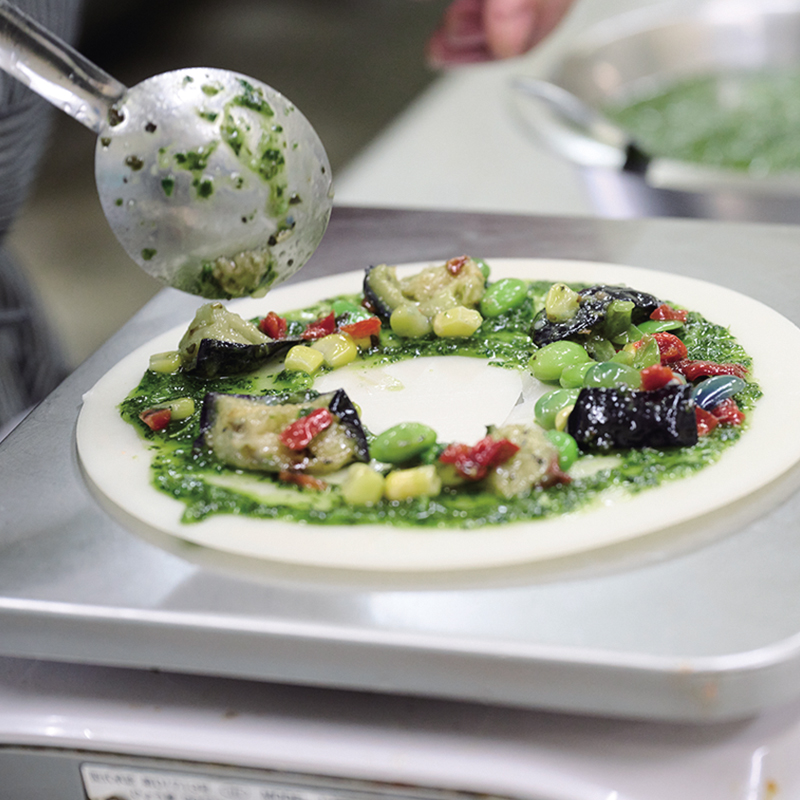
At Mr. Hishie’s factory, chefs are the ones who create the products.
Late October. Our editorial team visited Mr. Hishie’s factory in Minami-Oguni Town, Kumamoto. Currently, more than 100 varieties of products are produced at this facility. Of these, dressings and sauces account for 70 percent.
“It is a small factory, but I believe what we are doing here is cutting-edge.”
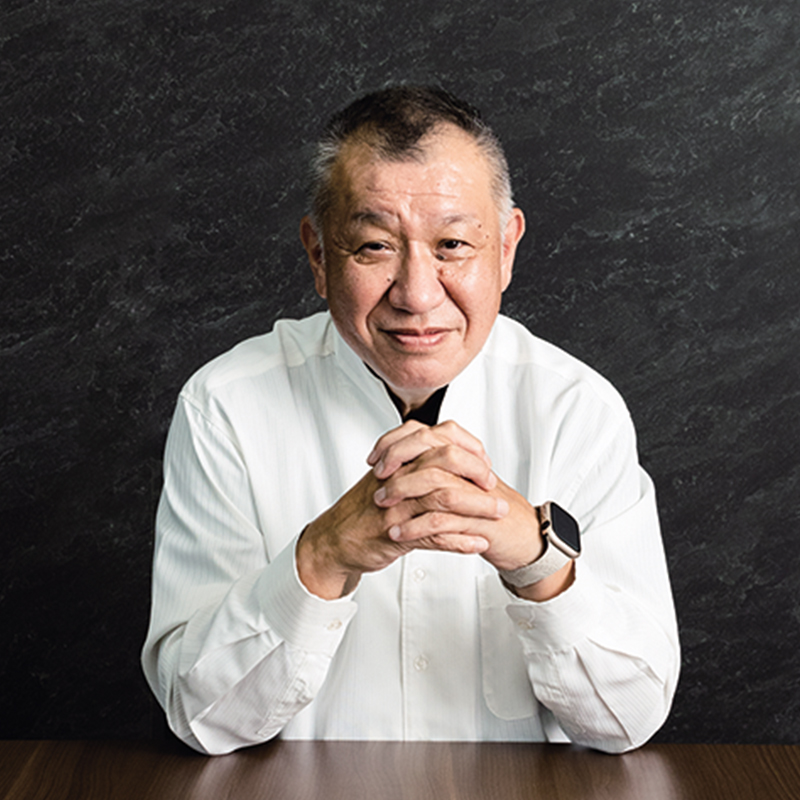
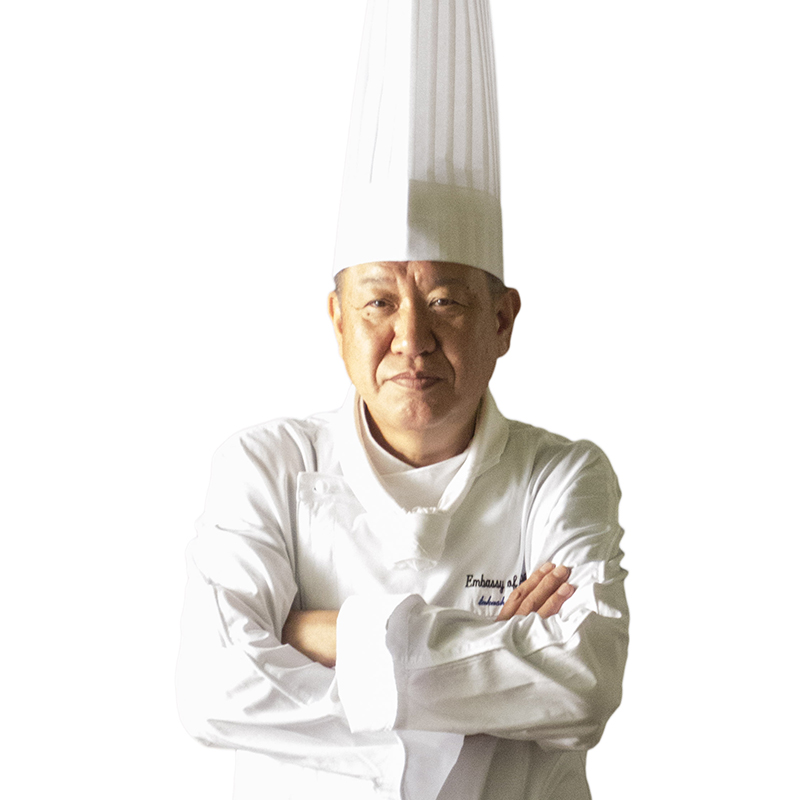
With these words, Mr. Hishie himself personally guided us through the facility.
“We modeled this place after a hotel kitchen, so we aim to craft everything by hand. Fundamentally, we do not rely on machinery. It is easiest to understand if you think about vegetables; even with the same vegetable, the water content differs depending on the season. If the water content changes, the concentration and sweetness change as well. Can a machine perceive those differences? No, it cannot. That is why a chef’s intuition is necessary. For this reason, our culinary staff consists exclusively of professional chefs.”
While they have currently suspended the program due to the pandemic, during normal times, they welcome chefs from across the country who come to learn. We were told that chefs from the Imperial Hotel are the most frequent participants. They train under Mr. Hishie for about six months, and the factory work is an integral part of their apprenticeship. In other words, King Foods products are all crafted by professional chefs.
Even more remarkable is that the dressings produced here last for 180 days at room temperature. While a typical factory would use preservatives, they are, of course, not used here. What makes this possible is the meticulous management of acidity levels. While one would expect a large-scale factory to have various measuring instruments, this facility is fully equipped with them as well. He explains that this is what sets them apart from other small-scale factories.
Furthermore, the threshold for additive use is set to the highest European standards. These are strict criteria where, fundamentally, only additive-free items are permitted. As a result, daily production is limited to approximately 700 bottles. To ensure the longest possible shelf life for the products, they operate on a made-to-order basis.
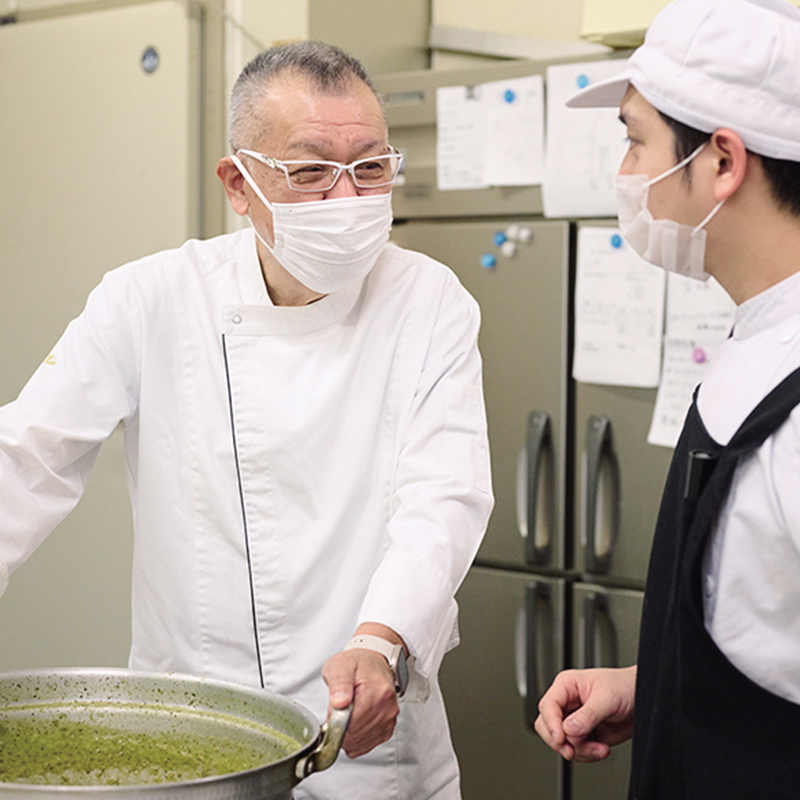
Additive-free and delicious. Such meticulously crafted cuisine spreads out from this very place.
All manner of food-related concerns arrive here from throughout Japan.
It is said that all manner of requests for food supervision and development reach the factory—from corporations, processors, and restaurants to local governments and individual farmers who have learned of Mr. Hishie’s existence. “We want to utilize surplus vegetables,” “We want to create canned goods,” “We want to develop a local specialty,” “The flavor just isn’t reaching its potential…” If they are unfamiliar with processing companies, he introduces them. At times, he even reproduces products that were once full of additives into additive-free versions, which is said to leave people astonished.
He is more than willing to cooperate as long as they understand his mission to promote the spread of additive-free food. Those who visit this place are helped, and at the same time, they discover that delicious food can be crafted without relying on additives. The number of creators who have experienced this firsthand increases, and the products they have developed make their way into the world. Such a movement is being born, with Aso in Kumamoto as its headwaters.