


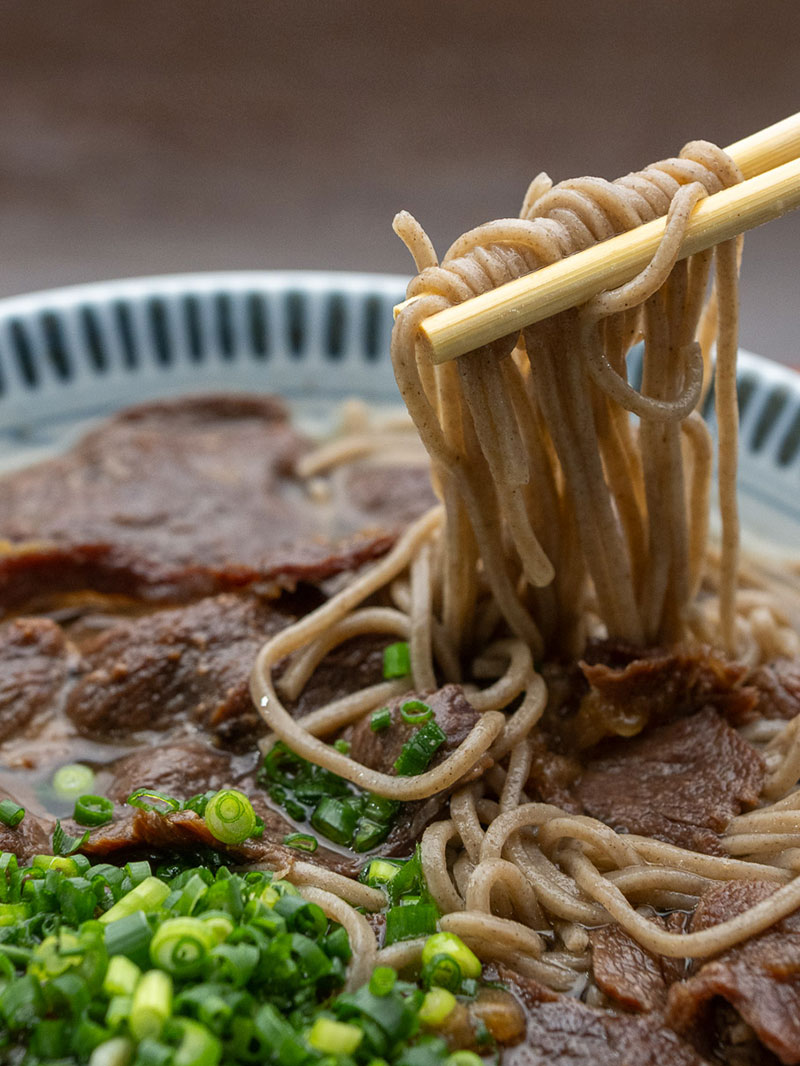
“Soba” — Renowned Higo Soba Masakiya
Another unique way to enjoy horse meat in Kumamoto is “Horse Meat Soba.” We spoke with Mr. Yuzuru Masaki, the fifth-generation owner of “Nadai Higo Soba Masakiya” (hereafter referred to as Masakiya), which has been serving horse meat soba for approximately 120 years, to ask about the characteristics of this dish.
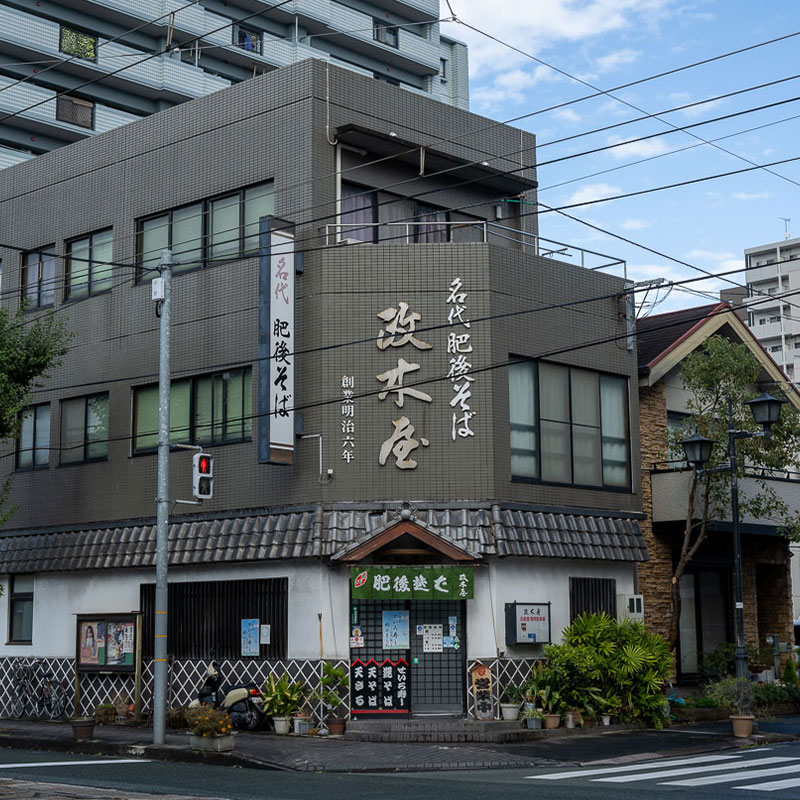
Its characteristic feature is horse meat simmered in a sweet and savory style.
The history of horse meat soba is said to have begun 120 years ago, when it was first conceived by the wife of the second-generation owner. While it is rarely seen in other soba shops today, the current fifth-generation owner, Mr. Yuzuru Masaki, explains: “Fifty years ago, horse meat was the cheapest meat available, so in Kumamoto, ‘meat soba’ specifically referred to soba containing horse meat. However, against the backdrop of the ever-growing popularity of beef and other factors, it gradually began to disappear.”
So, why does “Masakiya” continue to serve horse meat soba without change? “From the time of my father, the fourth-generation owner, we added the word ‘Higo’ to our shop’s name. This comes from our commitment to providing dishes made with Kumamoto ingredients. When you think of Kumamoto, you think of horse meat. That is exactly why ‘meat soba’ at our shop means horse meat,” says Mr. Masaki.
The horse meat soba at “Masakiya” is topped with sliced horse meat that has been seasoned in a sweet and savory style and simmered slowly until it becomes tender. The umami of the horse meat melts into the soba broth, and when combined with the sweetness of the meat and the rich aroma of the broth, you cannot stop slurping the noodles. The horse meat on top of the soba is tender yet retains a pleasant elasticity; the more you chew, the more the savory umami of the horse meat spreads across your palate.
The price for such horse meat soba is, surprisingly, only 800 yen including tax. I found myself asking, “Isn’t that too inexpensive, considering it contains high-priced horse meat?” “Not at all; this is the appropriate price,” he told me. “While the price of horse meat has risen, we are a soba shop, so we only revise our rates when the price of buckwheat flour increases.” According to Mr. Masaki, the purchase price of buckwheat flour is now approximately 1.5 times what it was ten years ago. He says that out of a desire to “have many customers enjoy delicious food at an affordable price while maintaining a commitment to domestic ingredients,” he is making an effort to avoid raising prices as much as possible.
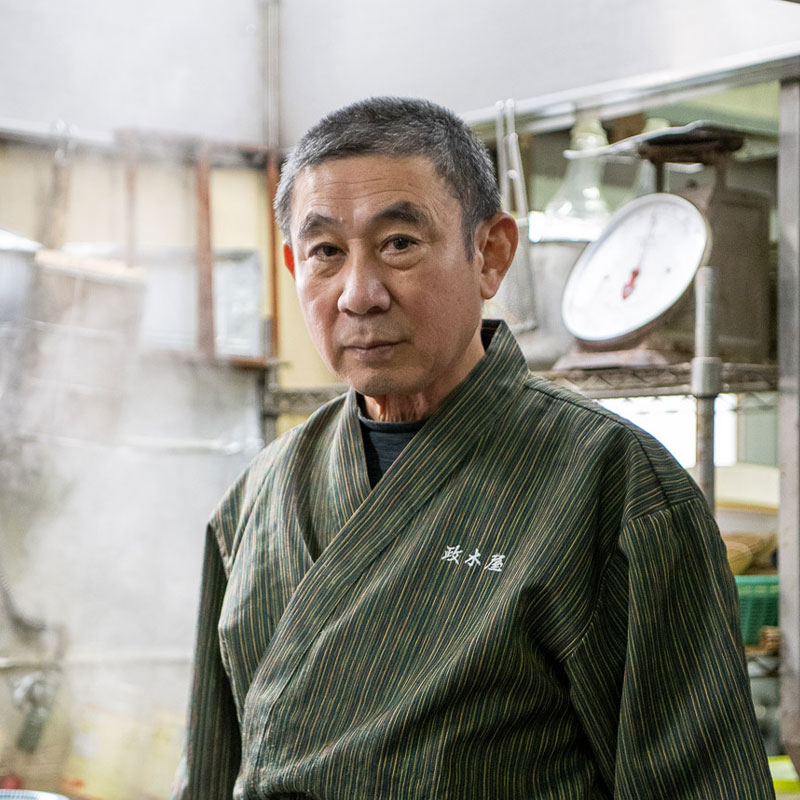
Mr. Yuzuru Masaki.
72 years old.
The ultimate secret to making soba is “First, kneading; second, kneading; and third, kneading.”
Mr. Masaki began helping with his family business when he was in middle school, thinking to himself, “Someday, I will take over this shop.” After graduating from high school, concluding that “starting to work at my father’s shop immediately would not broaden my horizons,” he went to train at the long-standing Tokyo establishment “Namiki Yabu Soba.” It is said that he was able to learn the foundations of soba-making there. According to Mr. Masaki, “With soba, it is first, kneading; second, kneading; and third, kneading. The flavor of the soba changes to such an extent depending on the skill of the person kneading it. Furthermore, if heat gets into the buckwheat flour, the flavor is compromised. Buckwheat flour produced in Kumamoto Prefecture is characterized by its strong aroma. Therefore, I use a wooden bowl (kibachi) to which heat does not easily transfer, and I make sure to prepare a maximum batch of 3kg (30 servings) at a time, as this allows for quick kneading.”
A single bowl of soba is filled with the owner’s passion and technique. Please, try it for yourself.
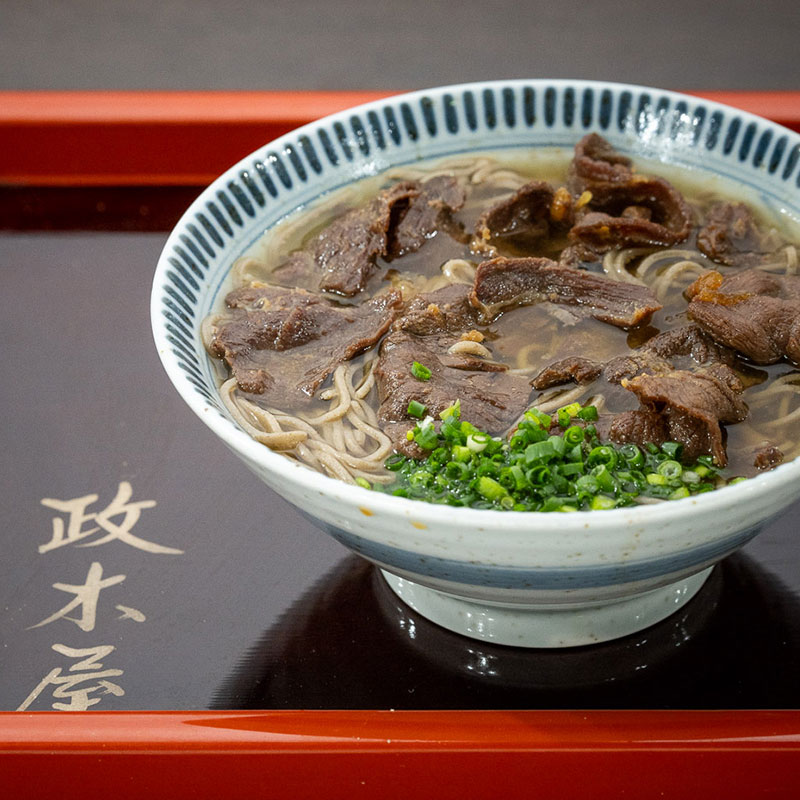
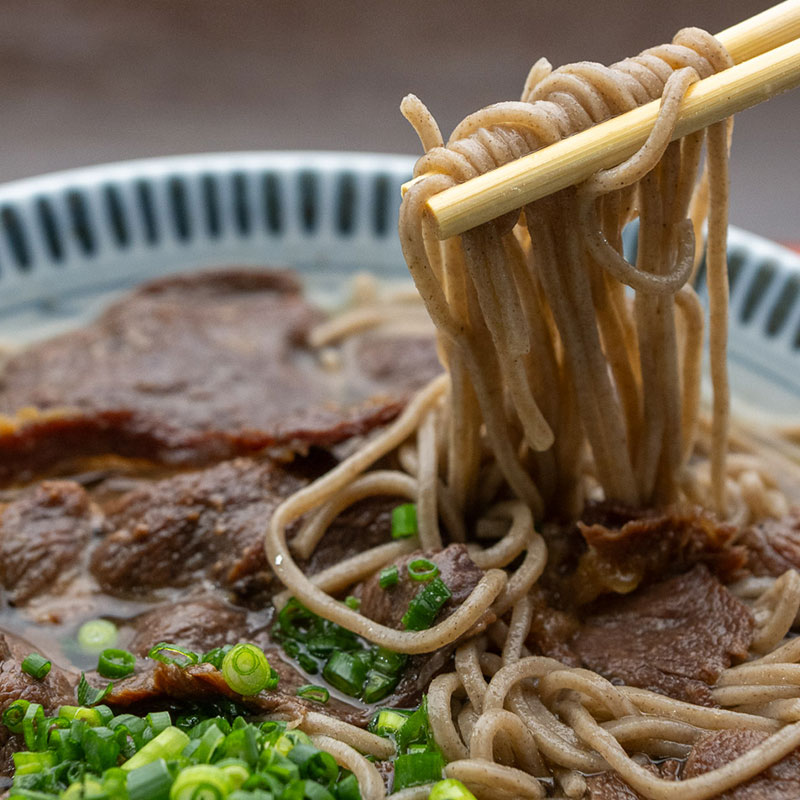
Masakiya’s signature dish, a tradition continuing for 120 years:
“Horse Meat Soba” – 800 yen (tax included).
The broth is prepared using ingredients such as kombu (kelp) and bonito flakes, and is seasoned with akasake (red sake), soy sauce, and sugar.
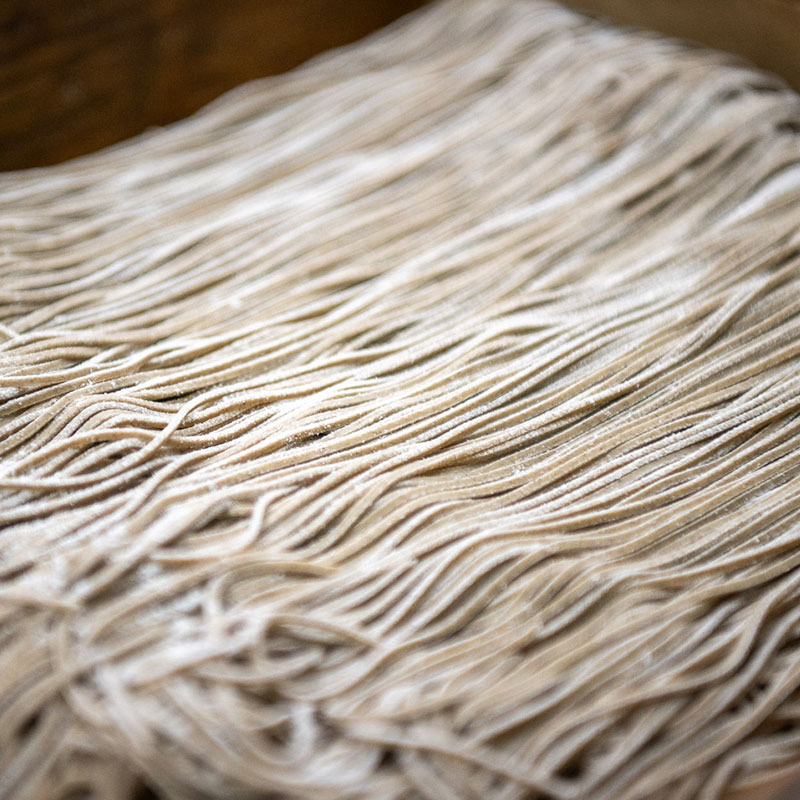
“Nihachi Soba” is made with a ratio of eight parts buckwheat flour to two parts wheat flour. It has a smooth texture on the tongue, and the flavor of the buckwheat can also be clearly felt.
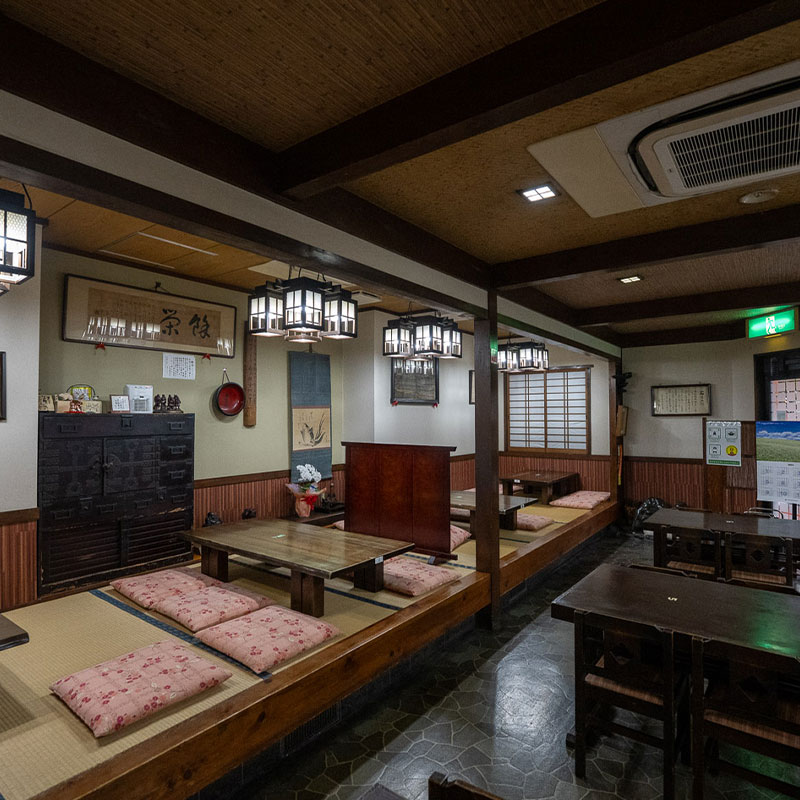
The shop’s interior is filled with items that evoke the history of “Masakiya,” such as hanging scrolls (kakejiku) and wooden bowls (kibachi).
This traditional soba has been woven together since the business first opened in 1873. The warm and gently flavored broth, which is perfect for the cold of winter, will warm both your body and your soul.