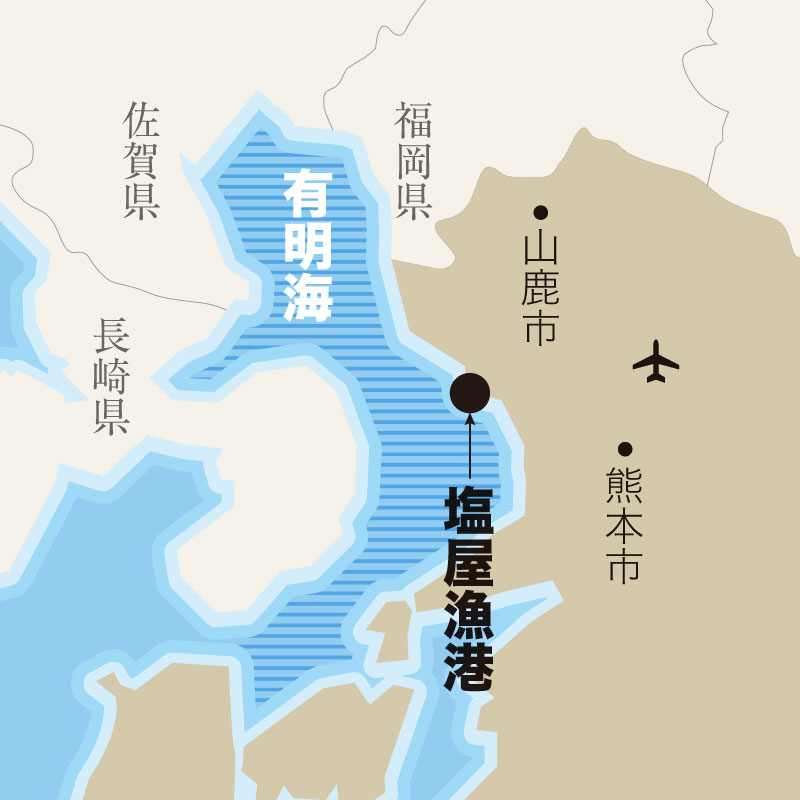



The Ariake Sea borders four prefectures in Kyushu, stretching from Kumamoto to Nagasaki.
We introduce the stories of the seaweed farmers hidden within Kumamoto’s renowned confectionery, “Fugamaki”—a delicacy that features Ariake seaweed grown in these shallow waters, which boast the greatest tidal range in all of Japan.
A melt-in-the-mouth texture and flavor like no other.
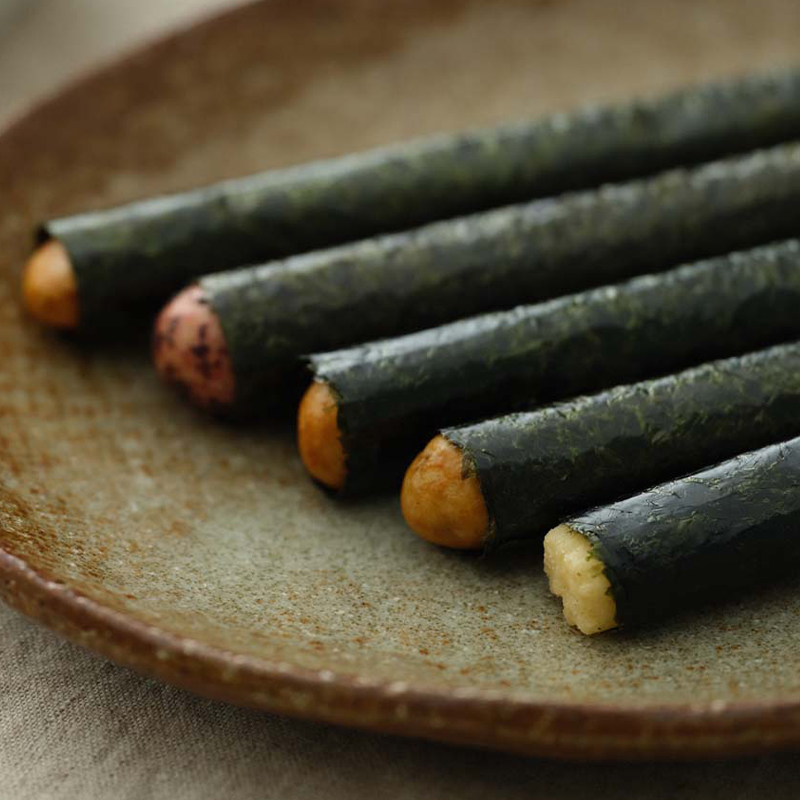
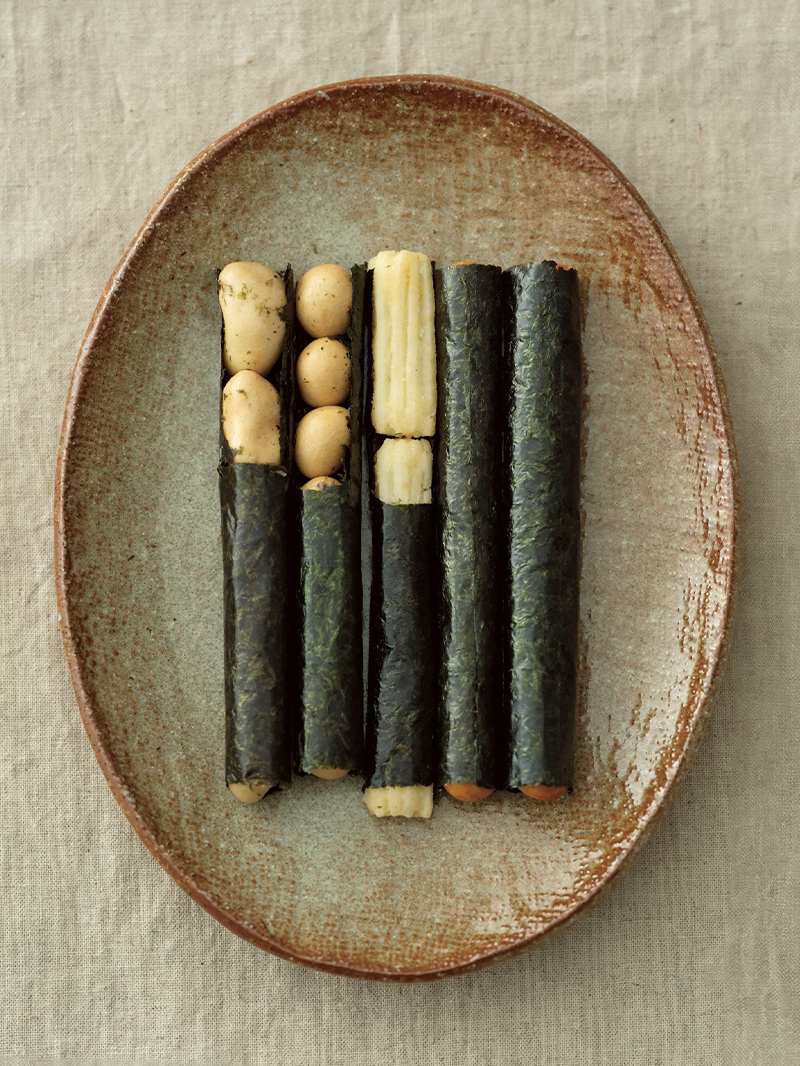
Fugamaki
Various types containing 6 to 10 pieces for 843 yen (tax included).
Only “Soy Sauce Pistachio” is 951 yen (tax included).
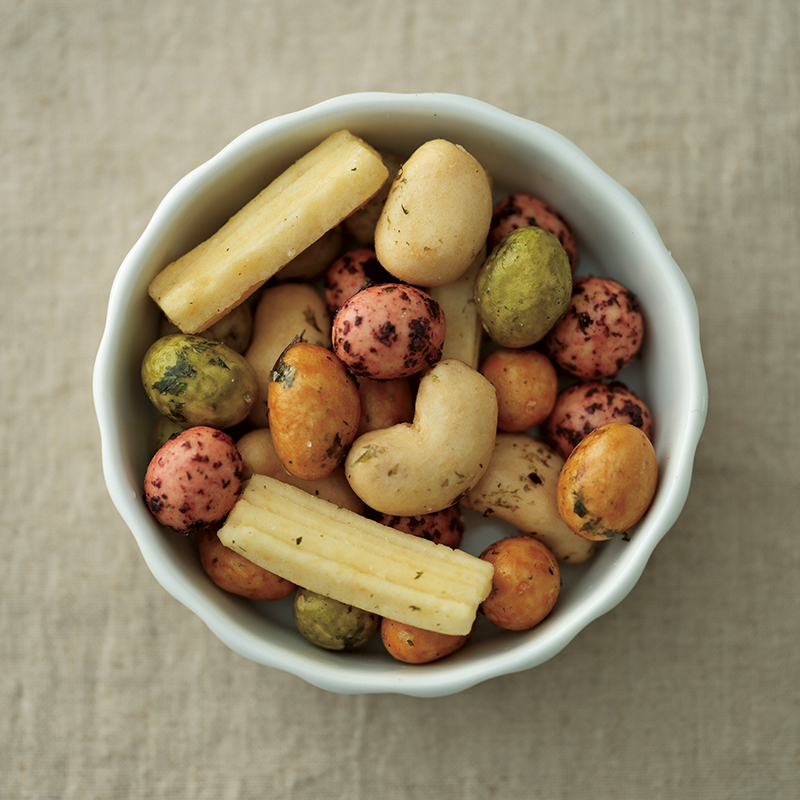
There are five types of ingredients inside “Fugamaki” (soybeans, cashew nuts, peanuts, pistachios, and rice crackers).
Fugamaki possesses a profound flavor despite its simple appearance of bean snacks wrapped in seaweed. The seaweed used is Ariake seaweed; when you taste it, a crisp texture is immediately followed by it melting in your mouth, as an elegant aroma of the sea passes through your nose. Then, the rich flavor of the seaweed spreads throughout your mouth, and the seasoned bean snacks increase their presence in perfect harmony with that flavor. There is an abundant variety, with nine types including “Soy Sauce Soybeans,” “Salt Cashew Nuts,” and “Plum Peanuts.” All of these were conceived based on their compatibility with Ariake seaweed, making it a true masterpiece created for the very purpose of savoring Ariake seaweed.
“Ariake seaweed is a top-tier product in every respect: its crispness, the way it melts in the mouth, and its flavor. I believe this level of quality is not to be found in any other production region.”
The one who shared this with us was Toshiro Tsukada (49), the president of “Fuga,” the company that sells Fugamaki. Due to its high quality, Ariake seaweed accounts for approximately 60% of the domestic seaweed circulation in Japan; it has become such a brand that products bearing the name “Ariake Seaweed” can be seen in supermarkets and restaurants even outside of Kyushu. Fugamaki was launched 40 years ago as a pioneer of this trend. Since then, while expanding the variations of internal ingredients and seasonings, its reputation gradually spread through word-of-mouth, and it has now become established as one of Kumamoto’s representative renowned confections.
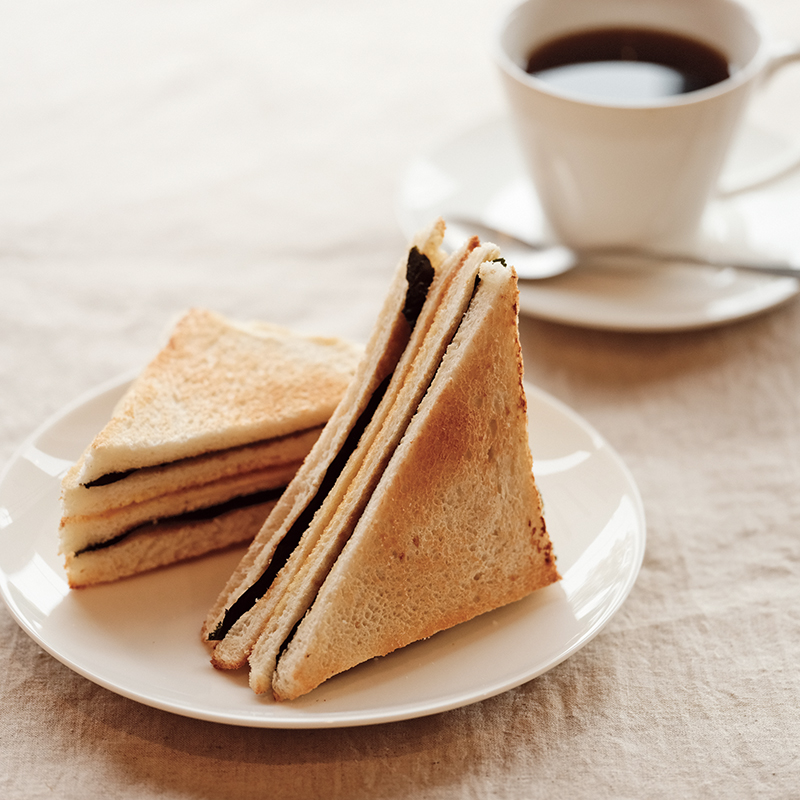
Nori Toast — 495 yen (tax included)
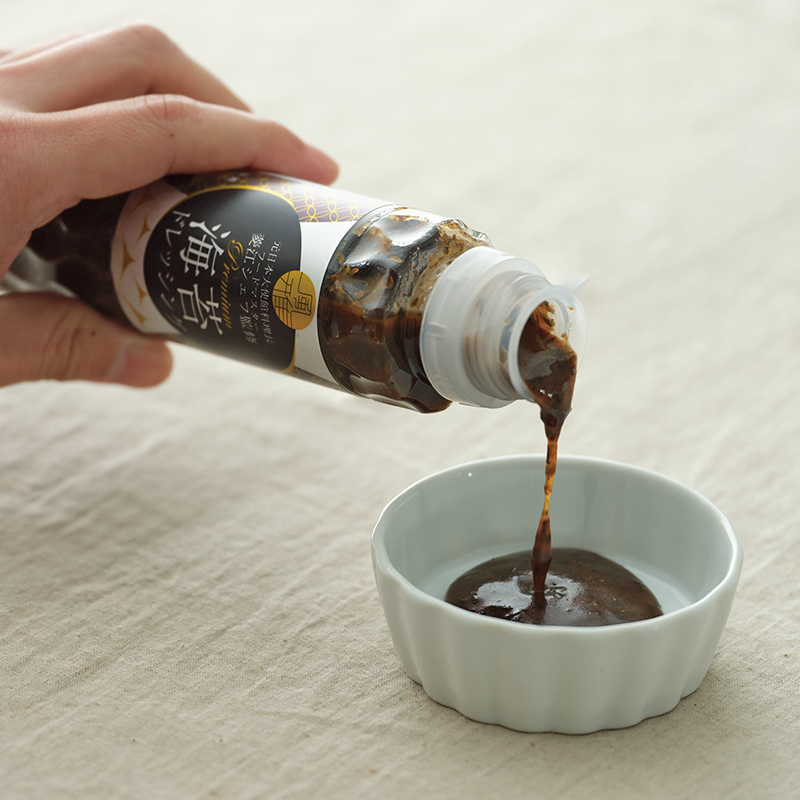
Premium Seaweed Dressing — 994 yen (tax included)
This dressing, which is created with a commitment to being additive-free, is supervised by Chef Takashi Hishie from Minamioguni.
At “Fuga,” they produce an extensive lineup of products using Ariake seaweed—including roasted seaweed and dressings—in addition to Fugamaki. Even within the category of Ariake seaweed, quality varies depending on the origin, and it is a delicate ingredient easily affected by weather and the cultivation environment. Consequently, Mr. Tsukada explains that to source high-quality items, a keen eye for connoisseurship regarding color, texture, and luster is essential during procurement. During our interview, Mr. Tsukada revealed a startling piece of information.
“In 2023, we won a bid for Ariake seaweed at the highest price in history. When converted per single sheet, it comes to 555 yen.”
According to Mr. Tsukada, a typical winning bid for Ariake seaweed is around 20 yen per sheet. In other words, it fetched a price nearly 28 times higher than usual. The seaweed in question was cultivated at Shioya Fishing Port in Kawachi-machi, located in the northwestern part of Kumamoto City. Seaweed cultivated here is also used in Fugamaki. Upon visiting and reporting from the site, we were able to learn about the history of hardship the fishing port has endured and the passionate resolve of the seaweed farmers who fought against it.
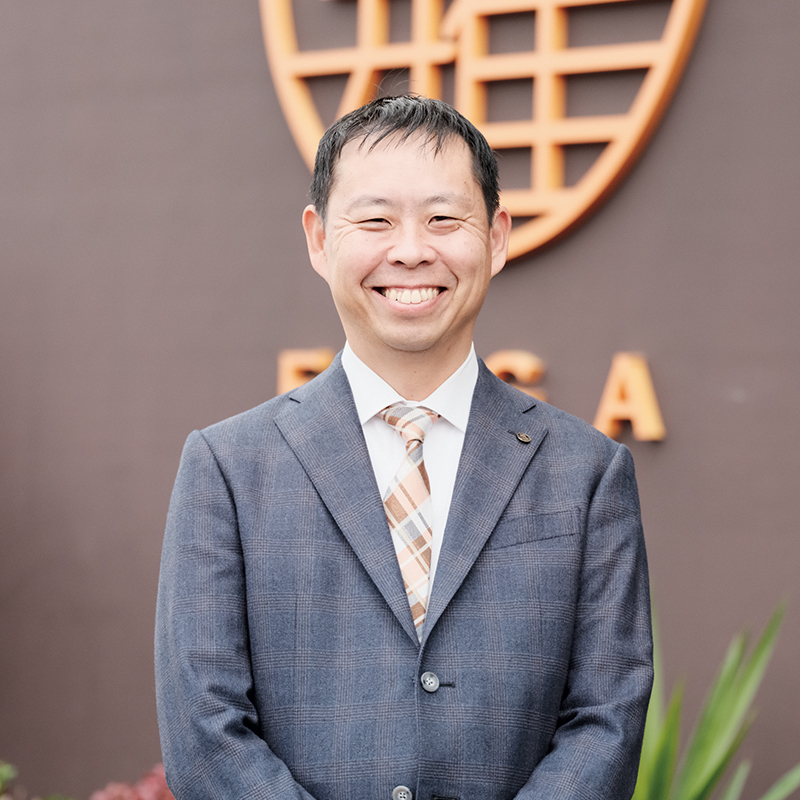
Toshiro Tsukada, the second-generation president of “Fuga.”
Ariake seaweed, nurtured in the waters near the Shioya district.
A spot on the sea, about five minutes by boat from Shioya Fishing Port. We were heading toward the cultivation farm, led by Mr. Noboru Saruwatari (50), who has been involved in Ariake seaweed farming for many years. Suddenly, on the water’s surface where the editorial staff was gazing, the figure of a pink creature that appeared to be a fish appeared for a brief moment.
“It’s a finless porpoise. They rarely show themselves, so you’re lucky.”
The finless porpoise is a relative of the dolphin; because they inhabit areas with abundant food, they are also known as “symbols of a rich sea.” The waters near Shioya Fishing Port are located at the mouth of the Kawachi River, a fishing ground where nutrient-rich underground spring water flows in from the mountains. Ariake seaweed is cultivated in this blessed environment.
At the cultivation farm—which one might call a field of seaweed—pillars about five meters long stand at regular intervals stretching for approximately one kilometer, with seaweed being grown on nets stretched between them. This is known as the pole-system cultivation method, a traditional technique unique to the Ariake Sea, where the tidal range reaches as much as six meters. It is said that by exposing the seaweed to the water during high tide and to the air during low tide, it is possible to grow strong seaweed that is less susceptible to disease.
“Depending on the state of the tide, we adjust the height of the nets, and we go to spray them with water so the seaweed doesn’t become too dry; raising high-quality seaweed takes a great deal of time and effort,” says Mr. Saruwatari. At Shioya Fishing Port, producers handle the entire process consistently, from the cultivation of seaweed spores called conchocelis to growth, harvesting, and processing. It is not only the richness of the sea but also the time and labor of the producers that result in the creation of exquisite Ariake seaweed. However, it is said that until about ten years ago, the seaweed farming industry at Shioya Fishing Port was like a flickering flame in the wind. Mr. Saruwatari reflects on those days and says:
“The seaweed from here was regarded as a third-rate product and could only be sold at low prices; everyone was in a situation where they couldn’t make ends meet without working part-time jobs.”
Believing in the dawn… The producers’ valiant struggle.
Mr. Saruwatari was 24 years old when he began working in his family’s seaweed farming business. At that time, about 60 households in the Shioya district were engaged in seaweed cultivation. Seaweed had once been treated as such a luxury item that it was nicknamed “black bundles of cash,” but high trading prices were reserved only for a few production areas equipped with proper processing facilities. Because the seaweed from the Shioya district was traded at low prices, it is said that the villagers, who lacked the capital to invest in processing equipment, were driven to the point of having to work part-time jobs in between their farming duties.
“Parents didn’t want their children to suffer, so they wouldn’t let them take over the family business. That is how seaweed farming in Shioya gradually began to fade away.”
Driven by the belief that nothing would change if they simply sat and waited, the younger generation, including Mr. Saruwatari, pooled their money and began visiting trading companies across the country. Their goal was to hear the opinions of buyers regarding what kind of seaweed the market demanded, apply that to their cultivation, and improve the quality of their seaweed as much as possible. By that time, Mr. Saruwatari was in his late 30s. The number of producers in the Shioya district had dwindled to about 15 households. One day, after five years of repeated visits to trading firms and efforts to improve cultivation methods and processing techniques, they met the person who would change the future of the Shioya district. That person was none other than Mr. Tsukada, the president of “Fuga.”
“He bought Shioya’s seaweed at a high price. Rather than feeling happy, I felt a sense of bracing myself—a sharpening of my resolve. I felt that from then on, I must never produce seaweed of a quality that would betray the president’s expectations.”
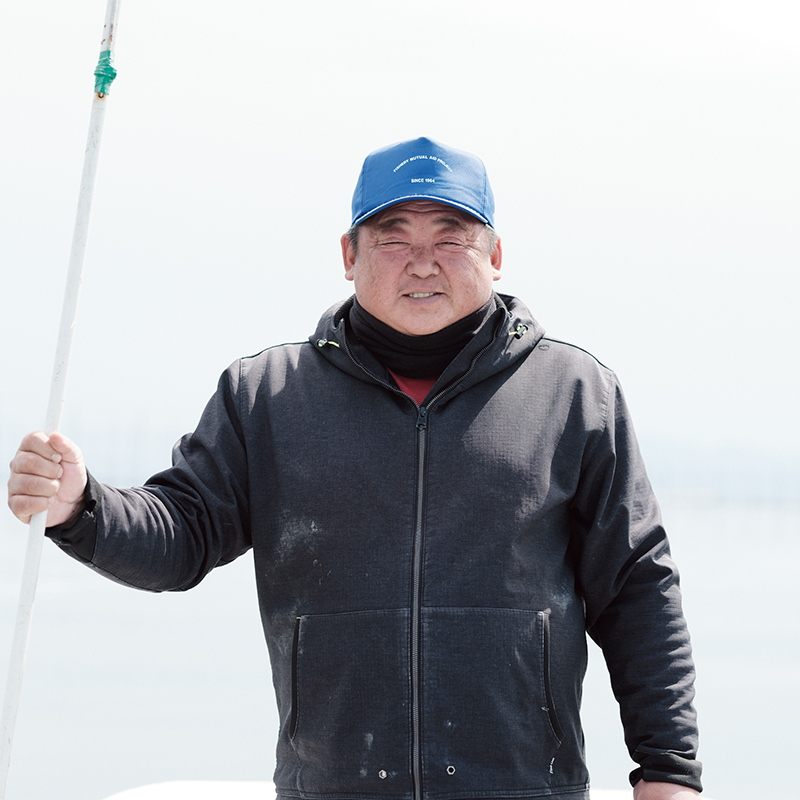
Mr. Noboru Saruwatari, who cultivated the Ariake seaweed that fetched the highest winning bid in history.
It is said that Mr. Tsukada once told Mr. Saruwatari, “Let’s make Shioya seaweed the best in Japan one day.” Ten years have passed since then. After repeated trial and error, President Tsukada’s words became a reality in 2023.
Japan’s primary industries stand at a crossroads due to various factors, such as labor shortages and a shrinking market scale. However, on the other hand, there are also people who confront adversity and strive to find a way forward. When you savor Fugamaki and Ariake seaweed, why not spare a thought for the journey these people have taken?
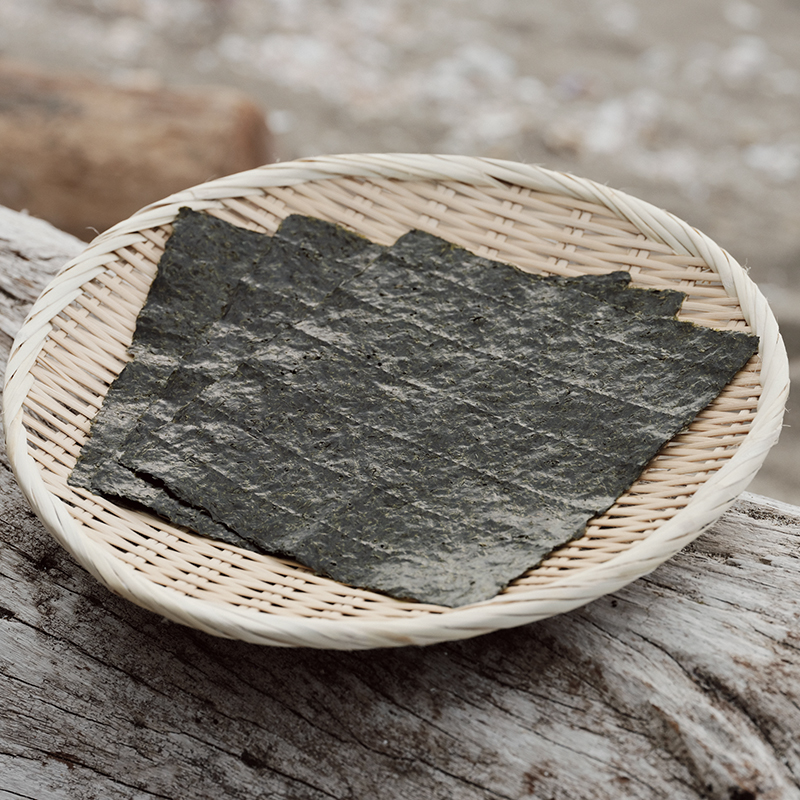
The Shioya district’s premium seaweed brand, “Shioya Ichiban Ebisu Roasted Seaweed.”
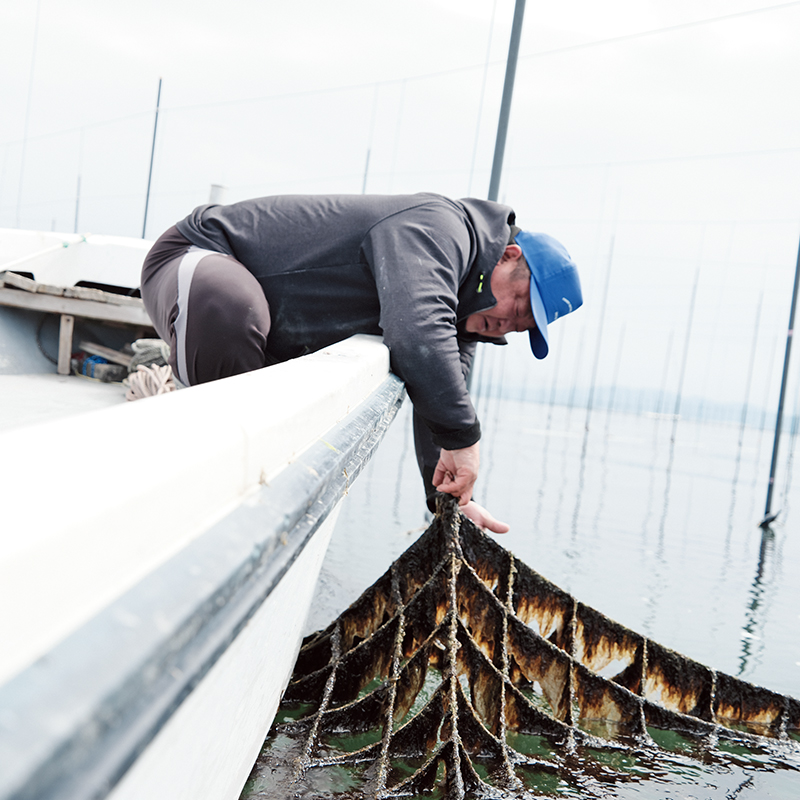
A cultivation farm constructed by planting over 1,000 poles per person every year.
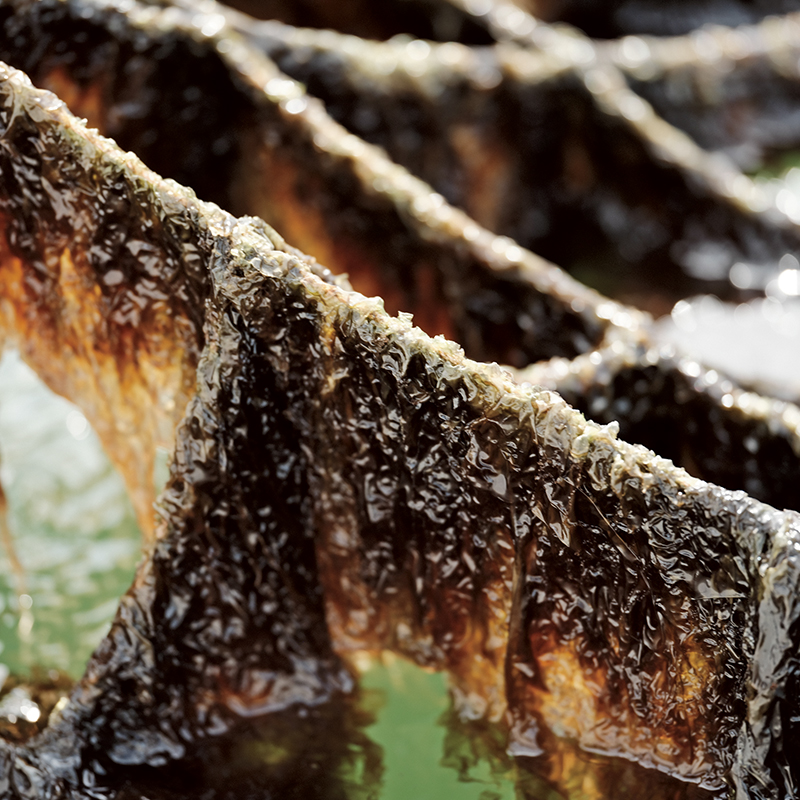
The first harvest—known as “hatsuzumi”—takes place approximately 35 days after the nets have been set.
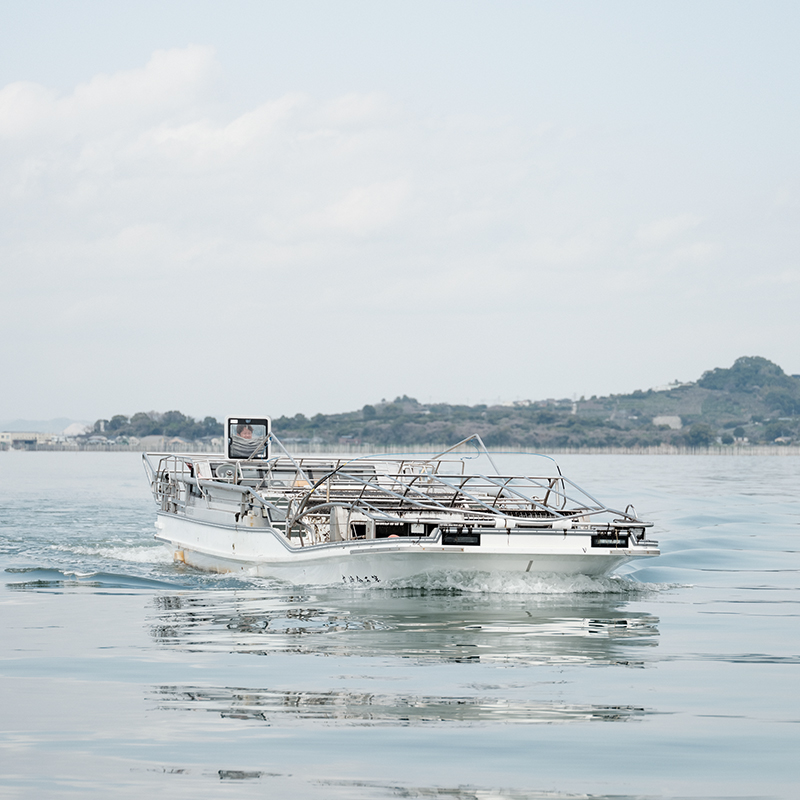
The peak harvest season is from December to February.
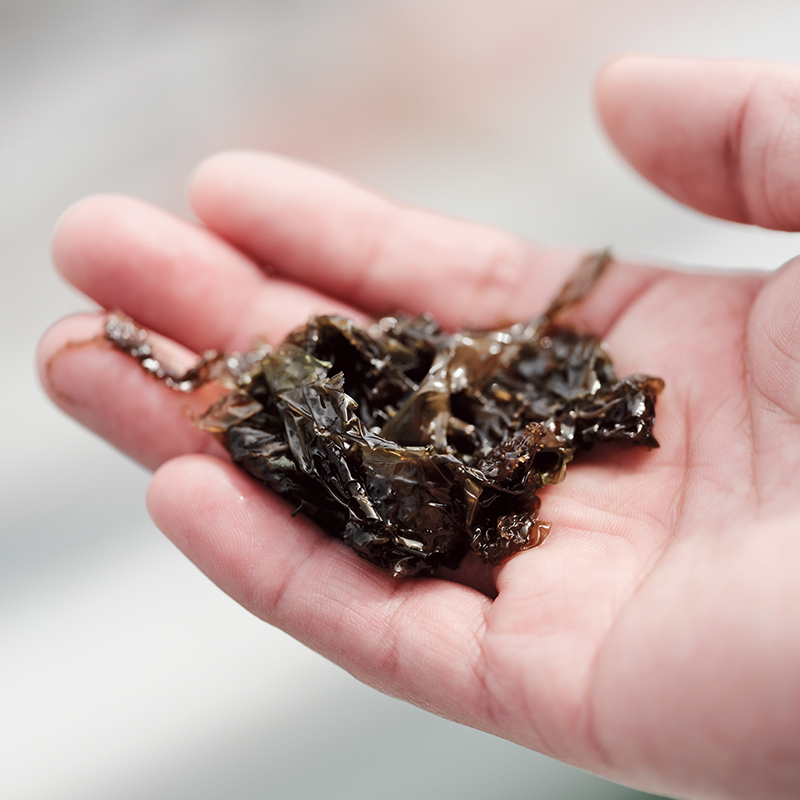
Freshly harvested seaweed has a supple, jelly-like texture to the touch.
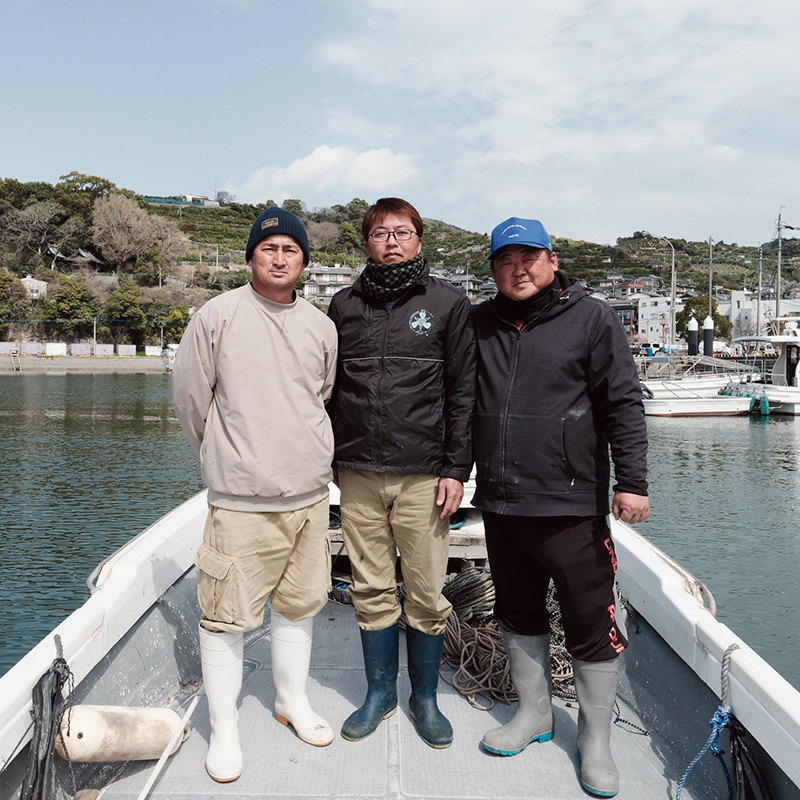
In the Shioya district, nine households are engaged in the business of cultivating Ariake seaweed.