


The Okunchi Festival—the great autumn festival—weddings, and Omiyamairi shrine visits. Alongside the memories of these special days, there is Tsubon-jiru, a regional dish that has been passed down through the generations in the Kuma and Hitoyoshi areas. With the hope of preserving the cuisine of this land for the future, we spoke with Ms. Setsu Honda, who runs the rural restaurant “Himawari-tei,” about the local dishes and her own personal reflections.
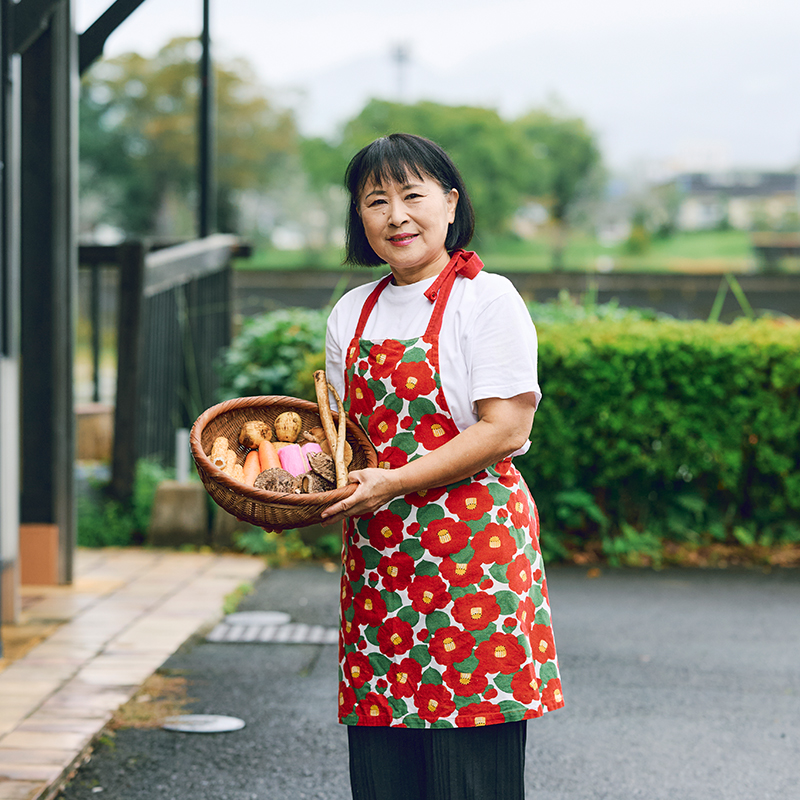
Ms. Setsu Honda
Setsu Honda / At the age of 37, she spent one year in recuperation while battling cancer, an experience that led her to re-examine food as the very origin of life. In 1998, she founded the “Himawari Group,” which conducts research into regional cuisine and engages in bento delivery volunteer work. She established the rural restaurant “Himawari-tei” as well as “Ryukinka no Sato,” a comprehensive research institute for food, agriculture, and people. She is actively engaged in the preservation of traditional food culture and regional revitalization through the medium of food.
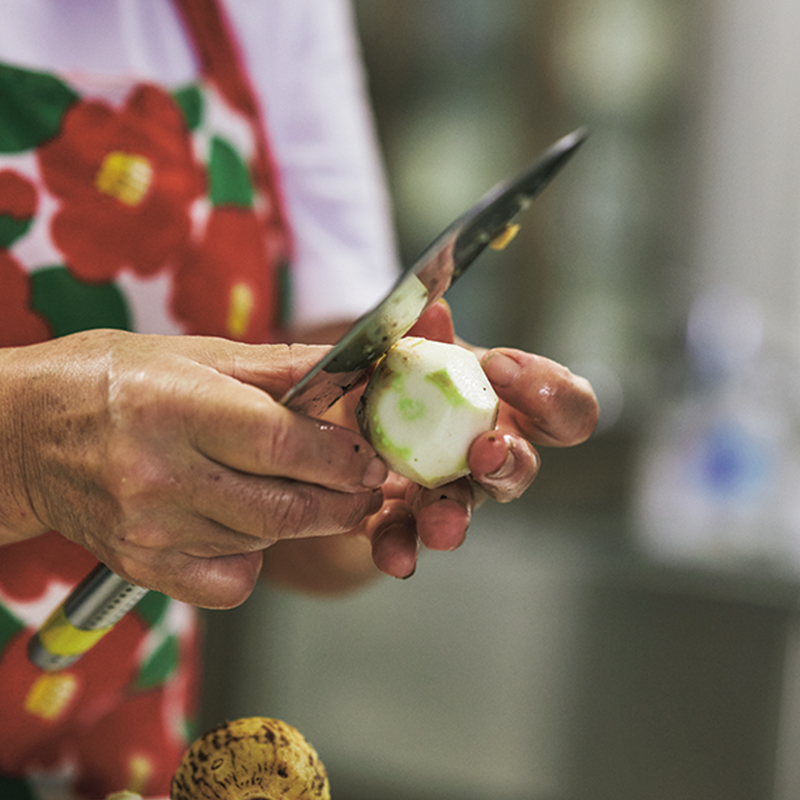
“To not waste ingredients as much as possible and to not throw anything away is her creed.”
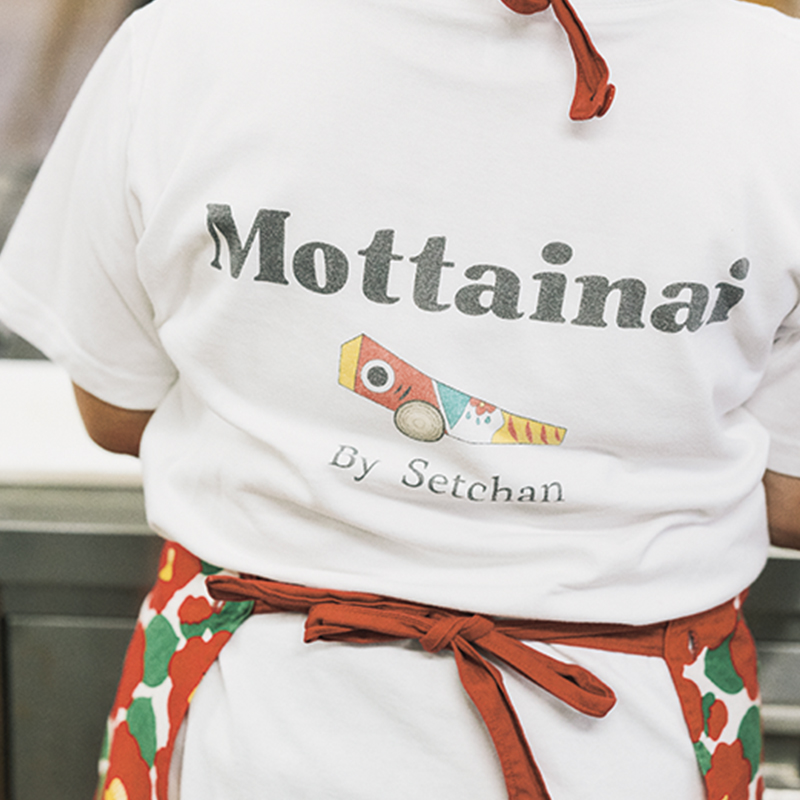
The watchword of Ms. Honda and her group, “Mottainai,” is even featured on T-shirts.
A soup dish for festival days.
The Okunchi Festival of Aoi Aso Shrine, a National Treasure, is held over nine days in early October. To welcome relatives who had returned from afar for the festival, Tsubon-jiru was what each household prepared as a seasonal taste of autumn. “For as long as I can remember, every year as the Okunchi Festival drew near, my grandmother and mother would prepare Tsubon-jiru along with sekihan (red bean rice) and onishime (simmered vegetables),” Ms. Setsu Honda says as she reflects on those memories.

The Shinkoshiki—the climax of the Okunchi Festival.
“As I watched the children walking with all their might with their unsteady steps, I imagined them a few years from now—having become adults, carrying the mikoshi (portable shrine), and parading through Hitoyoshi with a firm and steady stride.”
These are the words of Kumamoto-based photographer Tomozo Uchimura, who captured the photograph.
Ms. Honda serves as the representative of the rural restaurant “Himawari-tei,” which provides regional cuisine. At the age of 37, she suffered from cancer and spent one year in recuperation. While dealing with a body that would not always follow her will, what Ms. Honda came to realize was that as long as there is life, anything is possible. Furthermore, she thought, “Food is the origin of life. I will re-examine the subject of food.”
Around that time, she learned of Ms. Sachi Yamakita, who was practicing regional revitalization through food in the town of Yunomae within the same Kuma region under the slogan of “Mottainai,” and was deeply moved. Ms. Yamakita had formed a cooperative to process vegetables—those that were non-standard or scheduled to be discarded after being thinned out—into pickles. She had established a system to support the economic independence of local housewives through sales to tourists and those outside the prefecture.
Learning from those activities and wishing to start what they themselves could do, Ms. Honda, along with her fellow housewives, began a delivery service of bento (lunch boxes) to the elderly. Eventually, in 1998, she opened “Himawari-tei.”
“In this region, there are mountains and the Kuma River. We take the blessings of such a land as our ingredients and consume them. The immense repetition of that process has shaped our food culture.” Food culture is transmitted by cooking and having people eat the food. Furthermore, doing so leads to communicating the charm of the land. With such thoughts, Ms. Honda continues to create dishes in Kuma and Hitoyoshi, the place where she was born and raised.
Additionally, Ms. Honda—who says, “Even when things are painful, people are energized by food; I realized this during my days of recuperation”—reportedly drove a kitchen car to provide hot meals during the floods in the Hitoyoshi region in 2020 and the Noto Peninsula Earthquake in 2024.
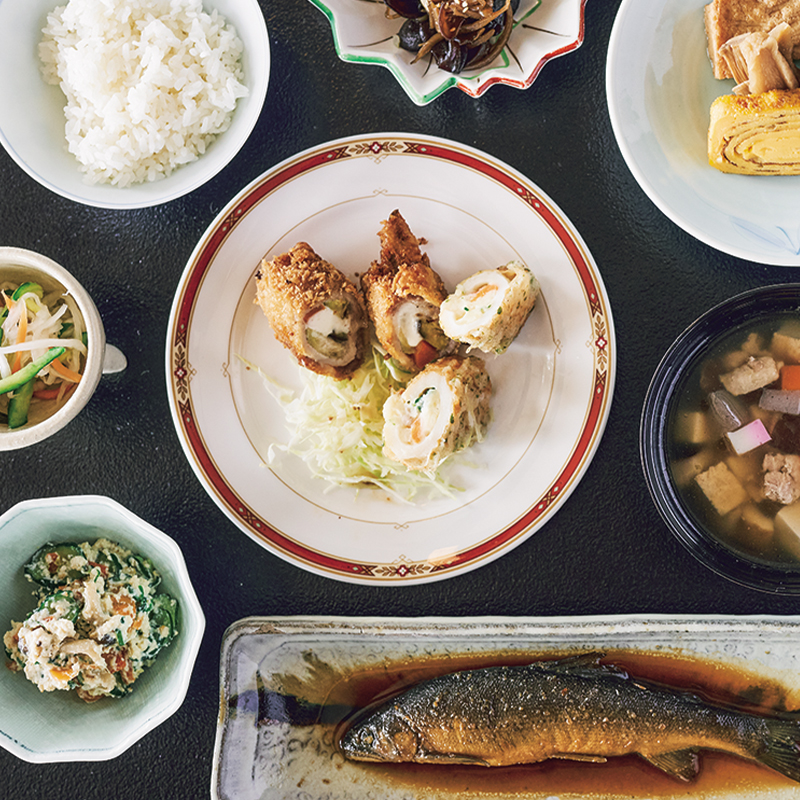
What I enjoyed alongside Tsubon-jiru was a traditional local set meal, featuring sweetfish caught in the Kuma River and simmered in Kuma Shochu, as well as a variety of simmered vegetables.
The spirit of “Mottainai,” alive within the cuisine.
Ms. Honda allowed us to observe her as she prepared Tsubon-jiru.
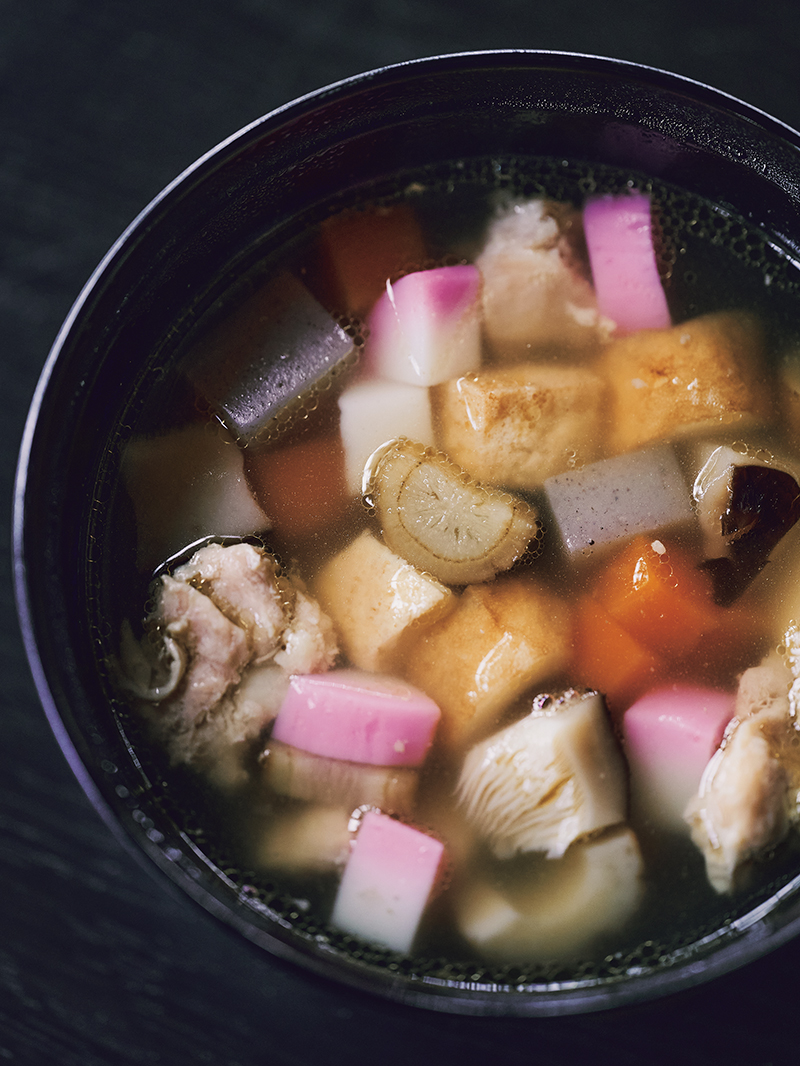
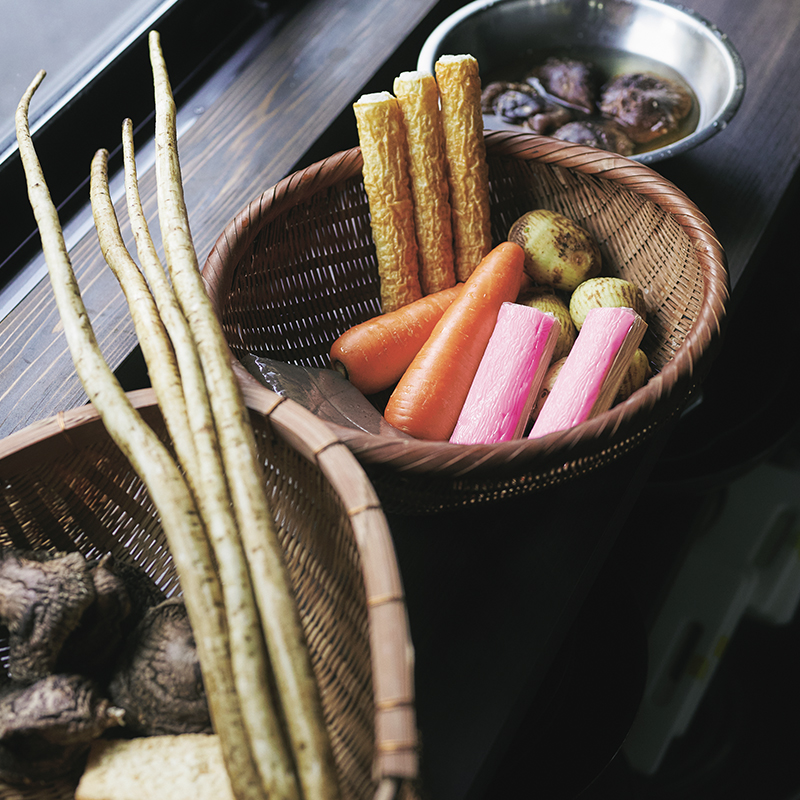
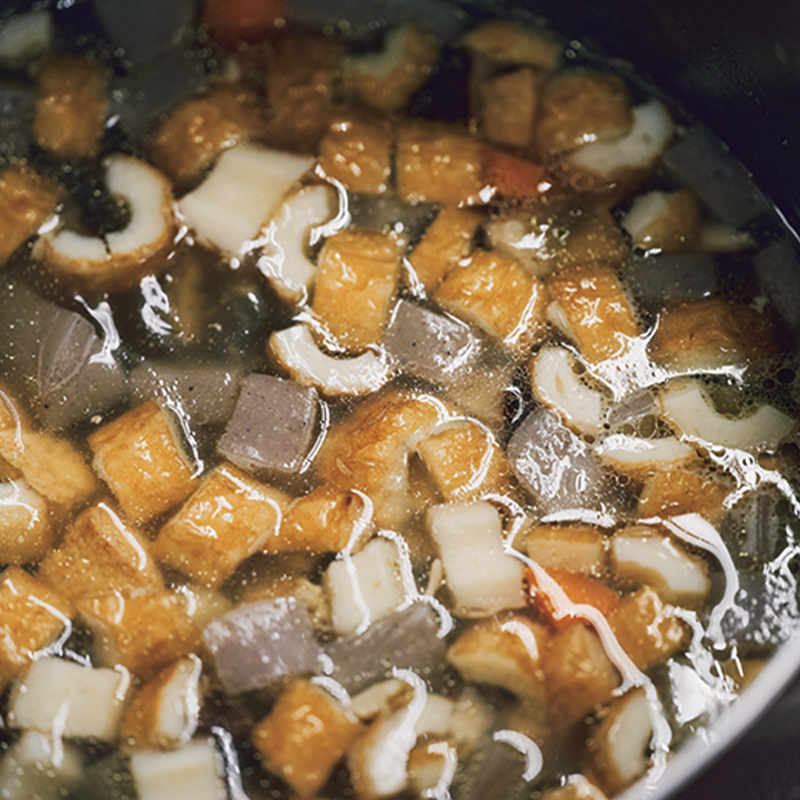
“In this area, the number nine has been considered the luckiest since ancient times,” says Ms. Honda. For this reason, there are nine types of ingredients: carrots, shiitake mushrooms, chikuwa (fish cake tubes), kamaboko (fish cakes), konnyaku (konjac), burdock root, taro, deep-fried tofu, and local chicken. It is said that each carries a wish for happiness: red and white carrots and kamaboko represent auspicious colors from olden times, burdock root symbolizes taking firm root in the earth, and taro represents a wish for family prosperity.
All ingredients are cut into uniform, small one-centimeter cubes. This is said to be a practice of our ancestors, intended to ensure even cooking while also making sure to use up every leftover scrap from other dishes. “One can feel the spirit of ‘Mottainai’—the heart of not wasting ingredients. We even use the liquid from soaking the burdock and shiitake as dashi stock.”
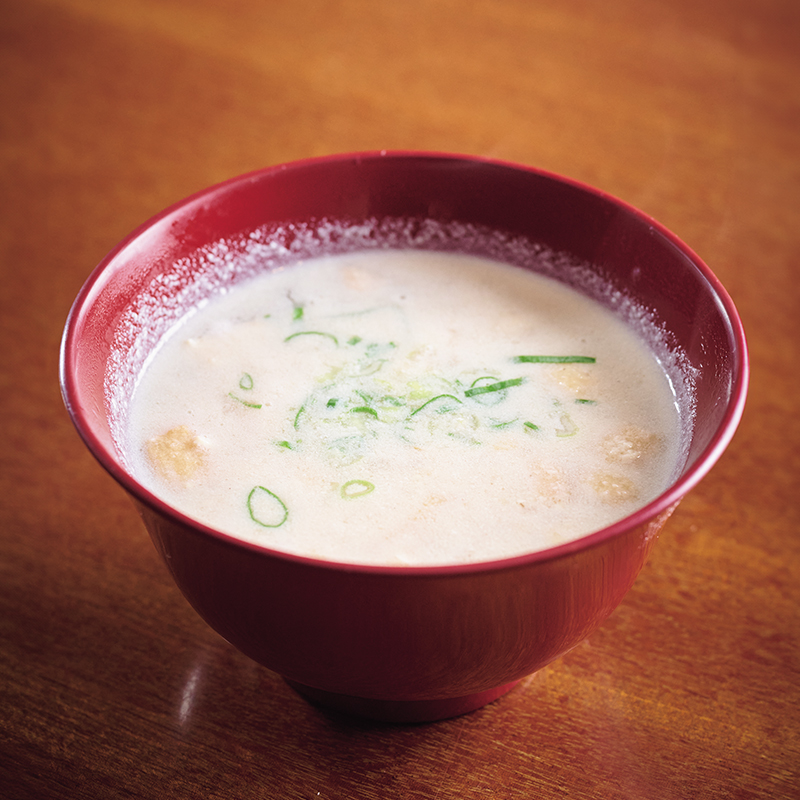
I tasted the completed Tsubon-jiru. It is said that the name Tsubon-jiru evolved from “Tsubo-no-jiru” because the soup was served in a tsubo (jar) carved out of wood. Upon sipping the clear broth, I noticed a refreshing citrus aroma and a sharp, spicy kick. “It contains Yuzu Kosho made by Setsu-san herself from yuzu and green chili peppers,” a member of the restaurant staff told me.
After that spiciness recedes, the earthy scent of burdock and the flavors of the dashi extracted from ingredients like shiitake and local chicken spread through the mouth one after another. Crunchy burdock, melting deep-fried tofu, and resilient konnyaku. Because they are all cut to the same size, the differences in texture become even more prominent.
Within a single bowl of soup, there is a story of the hometown.
“Tsubon-jiru is the dish that the people of Kuma and Hitoyoshi, who hold the festival of Aoi Aso Shrine dear, ate together to welcome home family members returning for the occasion. Within this single bowl, feelings for one’s hometown and love for family are deeply concentrated.”
Once a year, families gather in this region to drink this soup and celebrate a special day. It conveys to the present day the spirit of “Mottainai,” nurtured by that custom and a profound gratitude for the blessings of the land. Ms. Honda remarked that Tsubon-jiru is a symbolic presence among the various dishes of Kuma and Hitoyoshi. In Hitoyoshi as it prepares to welcome winter, I want you to experience it as well. It is a regional dish unlike any other.
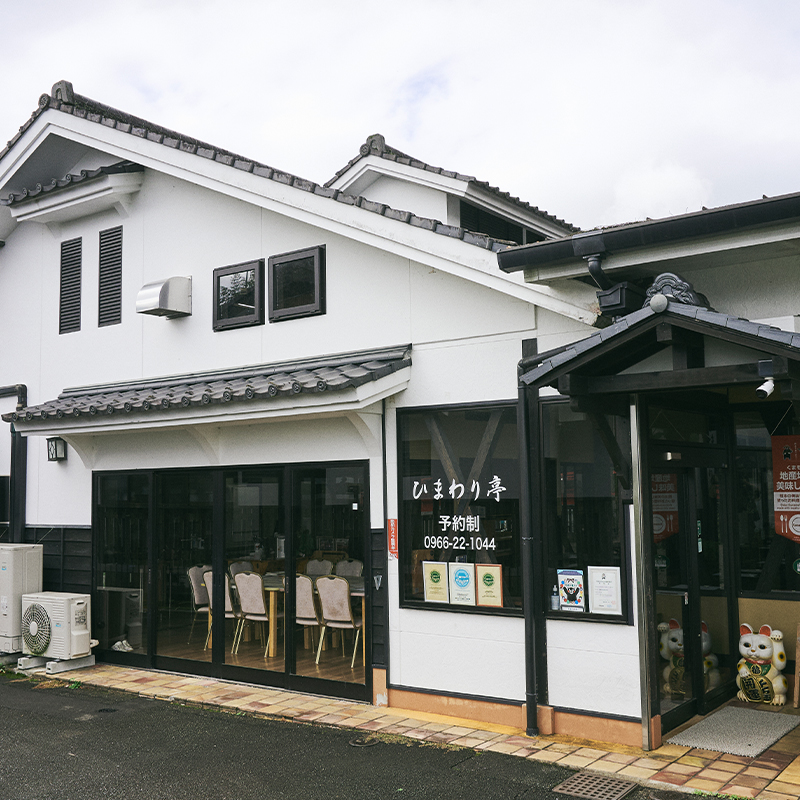
Rural Restaurant Himawari-tei
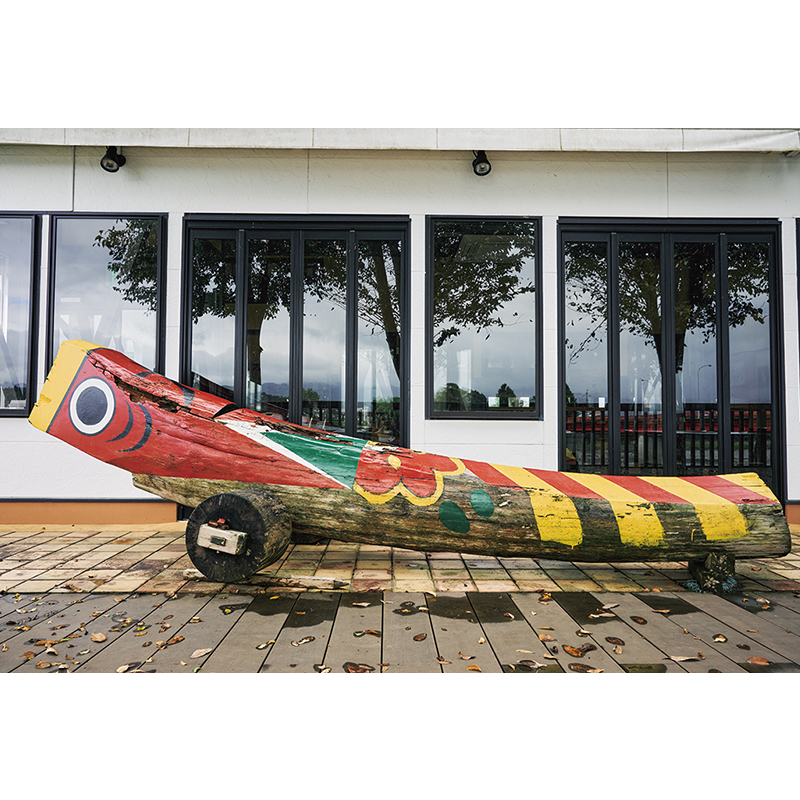
The shop’s symbol, a traditional “Kiji-uma” toy. Although it was washed away in the flood damage of 2020, it was reportedly found later in the sea and returned to the shop.

The Kuma River, flowing near the shop. While it is feared and held in awe as a “raging river,” it also brings the blessings of the river to the people.